
Find SEO Clients For Your Marketing Agency (10 Powerful Strategies)

Would you like to find SEO clients for your marketing agency without chasing them? Check out these 10 proven strategies to get SEO clients fast
If you’re googling “how to get SEO clients,” chances are your pipeline isn’t looking too pretty right now. Your inbox is empty. No new leads or referrals. It's just you, refreshing Gmail and wondering where the next client is coming from.
We’ve all been there. You’re great at the work, but the part about getting clients is a conundrum.
Knowing how to get SEO clients is the lifeline of your agency. This article breaks it all down with 10 strategies to go from invisible to absolutely unavoidable. From content plays and founder-led marketing to referrals, directories, and smart partnerships, these are the things actually working for agencies in 2025.
TL;DR: How to Find SEO Clients Without Losing Your Mind
- Define your niche and UVP. Be the go-to expert, not just another agency.
- Network where your clients hang out. Speak at their events, not yours.
- Partner with other agencies or SaaS tools. Shared clients = shared growth.
- Create helpful content. From video audits to playbooks, and niche guides.
- Build your founder brand. People trust people, not faceless logos.
- Launch a referral program. Make it easy, rewarding, and repeatable.
- Do thoughtful cold outreach. Personal, value-packed, and no spam.
- List your agency on Clutch, DesignRush and more. Reviews = leads.
- Show proof with niche case studies. Results > buzzwords.
- Run demand-gen campaigns. Free audits, mini-webinars, gated resources.
Final tip: Use Synup to streamline local SEO, manage reputation, and supercharge your client acquisition game.
#1. Define Your Agency’s Unique Value Proposition
Here’s the thing: nobody’s buying “SEO” anymore. At least as a checklist of activities. They're buying outcomes. Results. Specific solutions to problems they care about.
So if your pitch sounds like every other agency (“We help you rank higher on Google!”), you’ve lost the gig before the conversation starts.
Start by asking:
- What do we do that others don’t?
- Who are we really best at serving?
- Where have we delivered results that made clients go, “Damn, that was good”?
Maybe you’ve helped law firms rank in competitive metros. Or you’ve got a smart local SEO playbook that crushes it for multi-location businesses. Or maybe you’re a tech wizard using automation to do the work of three people.
Package that into a bold, punchy statement. Example:
“We help auto repair chains double walk-ins in under 90 days using local SEO playbooks and data-driven content.”
That's way stronger than “We do SEO for small businesses.”
Your unique value proposition isn’t only your offer but your identity. Build everything around it. From your pitch decks to your LinkedIn headline.
#2. Networking at Events
Conferences and meetups aren’t just for the big names. They’re lead magnets in disguise if you play it right.
Here’s the play:
- Find niche events your target clients actually attend, not just SEO industry stuff. If you serve dentists, go to dental expos. If you help SaaS brands, hit up product-led growth meetups.
- Don’t just attend. Speak. Pitch a talk that solves a real pain point. Example: “5 SEO Fixes That Will Actually Drive Bookings for MedSpas.” Share the stage, drop gems, and stay after to chat. That’s where the leads happen.
- Always follow up. Not with a pitch, but with value. A resource. A summary of your talk. Get personal.
- Don’t restrict yourself to physical events. Online SEO workshops can connect you with a larger group of people, often located in international locations.
Pro Tip: If you're invited to speak at a conference, share it on your social channels! It's a powerful way to build credibility and showcase your authority.
Networking doesn’t have to be stuffy. Just be helpful, be curious, and don’t try to close on the first handshake.
#3. Content-Driven Lead Generation
If you want to offer people SEO services, you have to first direct your services at yourself. Want people to come to you? Give them something worth finding.
But not just any content. Not another “10 SEO Tips” blog post. That’s been done. Instead:
- Break down actual case studies with numbers, wins, and lessons
- Publish industry-specific SEO playbooks (e.g. “SEO for Real Estate Agencies: The 2025 Playbook”)
- Try short-form content: Loom videos, LinkedIn carousels, even TikToks with quick SEO breakdowns
- Use original research: Run a local SEO audit across 100 gyms and publish the trends
- Publish “pillar content”: Avoid only publishing beginner or surface-level content aimed at complete novices in SEO. This doesn’t position you as an expert. Try creating long-form technical content (filled with interlinks to additional content) intended to empower intermediate or experienced marketers. A beginner will assume you know what you’re talking about, while a pro will want to repost your content, boosting your visibility. You’ll hit two birds with one stone.
Pro tip: Don’t just create, distribute. Share in relevant Facebook groups, LinkedIn communities, subreddits, and newsletters. Send it to past leads as a warm re-engagement.
#4. Founder-led Marketing
Here’s an unfair advantage most agencies overlook: you.
Founders who show up online, sharing insights, telling stories, and showing personality, build trust way faster than a faceless brand.
You don’t need to be a guru. Just talk about what you’re doing, what’s working, what you’re testing, and the results.
Post 2–3 times a week on LinkedIn or Twitter. Topics to try:
- A client SEO win, broken down step-by-step
- “Here’s how we fixed this local SEO disaster in 2 weeks”
- A rant (constructive) about bad SEO practices
- Behind the scenes of running an agency
Offer free audits, website teardowns, or “office hours.” These build authority and start sales conversations.
Clients love working with founders who are hands-on and genuinely care about their work. Show them that.
#5. Building Your Referral Program
A happy customer is your best advocate. If you want more leads without increasing your marketing spend, focus on building a strong referral engine.
Referrals are the most effective way to win SEO clients without cold emails, paid ads, and endless chasing. People trust a recommendation from a peer far more than a slick website or a polished pitch deck.
Yes, you’ll have to get used to facing some rejections, but the payoff is huge: referrals can dramatically shorten your sales cycle. A glowing recommendation often opens doors you’d never reach otherwise, and better yet, it skips the awkward early stages of building trust.

Here’s how to build a referral program that actually works:
- Make it official
Stop hoping clients might refer you. Create a clear, structured program. Something like:
“Refer a friend, get 15% off your next invoice, or a $150 gift card.”
- Keep it simple
One reward. One step. No complex forms. Use tools like ReferralCandy, PostAffiliatePro, or just a Google Form if you’re keeping it lean.
- Ask at the right time
The best time is right after you’ve delivered a big win. That moment when your client says, “Wow, this is amazing!” That’s the window. Strike while the trust is hot. Ask something like: “Is there someone you think would be a great fit for what we offer?"
- Make it feel VIP
Name your referral program. Add flair. Make referrers feel part of a club. “The SEO Insider Circle” has more appeal than “our referral discount.”
- Don't limit it to clients
Partners, freelancers, vendors, and anyone who knows your work can be a referral source. Just make sure they clearly understand your offer and know exactly who your ideal clients are. Read our next tip to learn how to set this in motion.
Bottom line: referrals are warm leads that already trust you. If you want to find SEO clients with ease, incentivize the people already rooting for you.
#6. Building Strategic Partnerships
If your ideal clients aren’t finding you directly, partner with the people they already trust. These include:
- Web design studios
- Branding agencies
- Ad agencies that don’t offer SEO
- SaaS platforms (like Synup) that serve local businesses
You can co-sell. You can white-label. You can offer bundled packages.
Say a web designer hands off clients once the site is done. You step in and handle ongoing SEO. That's a new revenue stream for both sides.
Here’s what makes partnerships work:
- Have a clear scope and process
- Offer a generous rev share or finder's fee
- Make them look good to their clients
Some of the most profitable agencies quietly rake in leads from a handful of strong partnerships.
#7. Cold Outreach and Prospecting Tactics
Cold outreach gets a bad rap. And fair, it’s often lazy.
But when done right, it works like magic. And it’s still one of the fastest ways to get SEO clients.
Here’s how to do it without sounding like a robot:
- Do your homework
Don’t just blast emails to a list. Look up each company. Is their meta title a mess? Is the site speed slow? Do they have low backlinks? Use free tools like Screaming Frog or Synup to spot red flags.
Then, lead with that. Example:
“I noticed your homepage takes 9 seconds to load, and you’re missing key title tags. Want me to send over a few quick ideas to fix that?”
It’s short. Helpful. And not spammy.
- Use LinkedIn like a human
Don’t pitch on first connect. Comment on a few posts. Like their content. Then send a personalized DM with value. Not “Hey, we do SEO,” but something like:
“Curious, have you ever tried schema markup to boost your listings? Saw your new site launch and thought of a few ideas.”
- Cold call if you’ve got the nerve
Yes, phones still work. Just keep it consultative. Not “Can I pitch you SEO?” Instead:
“Mind if I share one SEO thing you can fix in 5 minutes?”
Give, then ask.
- Automate smartly
Use tools like Lemlist, Instantly, or Smartlead. But personalize the first few lines.
- Follow up. More than once
Most replies come after follow-up 2 or 3. Keep them polite, friendly, and valuable. No guilt-tripping.
Cold outreach works, but only if you respect the prospect’s time and speak their language.
#8. Get Listed on Popular Directories
Want leads on autopilot? Get listed on SEO directories where buyers already hang out.
Think about:
- Clutch
- UpCity
- DesignRush
- Agency Spotter
- GoodFirms
These are strong lead sources. But there’s a trick.
- Fill your profile completely. Add case studies, client logos, testimonials, and awards. Write like it’s your homepage.
- Sponsor a listing. Some directories offer “featured” spots for agencies. If your ideal clients browse Clutch, this might be the best ad spend you've ever made.
- Optimize your tags. On directories, SEO isn’t dead. Use your keywords in titles, descriptions, and specialties. “Local SEO for Multi-location Brands” is clearer than “SEO Specialist.”
- Respond to inbound leads quickly. Some platforms notify multiple vendors. The fastest (and most human) reply usually wins.
If you’re serious about visibility, directories help find SEO clients who are already problem-aware and ready to buy.
#9. Create Industry-Specific Case Studies
Case studies sell. And what about generic portfolios? Not so much.
Would you like to attract more dental clinics? Show what you did for a dental clinic.
Here’s how to write a case study that actually gets read:
- Choose a vertical. Lawyers, plumbers, SaaS, or eComm, pick one. The more specific, the better.
- Tell a story, not just results.
Instead of:
“We increased traffic by 46%.”
Say:
“Smith Dental wasn’t showing up for ‘emergency dentist near me.’ We fixed their GMB, built 20 local citations, and in 8 weeks, they hit #2 in search, and booked 23 new patients that month.”
It’s relatable, clear, and builds trust.
- Show your work. Share screenshots, rankings before and after, CTR improvements, even heatmaps. The more tangible, the better.
- Include client feedback. A quote like “We saw results faster than expected and loved their transparency” hits harder than a graph.
- Use it in outreach. Include links to these case studies in your emails, pitches, and even proposals.
People trust people like them. So show them what’s possible.
#10. Ideas for Demand-Gen Campaigns
Don’t wait for clients to find you. Make them raise their hands.
Here are some industry-tested demand generation ideas to help you get SEO clients inbound:
- Free SEO Audits
Not the auto-generated kind. Real, short, punchy videos using Loom. Break down what they can fix and tease what else you’d do if hired. A few criteria you can check:
- Navigation
- Quality of content
- Linking
- Crawlability
- Google Business Profile
Of course, this takes some effort, but it significantly boosts your chances of closing a lead. You can also speed things up with tools like Synup, which generate detailed, client-ready reports in minutes, giving you more time to focus on closing the deal.

- Launch a lead magnet
Something like:
“2025 SEO Checklist for Real Estate Firms”
“How HVAC Companies Can Rank #1 in 30 Days”
Gate it behind a simple form. Then capture those leads.
- Run a mini-webinar
Pick a niche. Host a 20-minute Zoom workshop. Teach something practical. Invite leads via email or LinkedIn.
- Exhibit at industry events
Not marketing expos but client industry events. Rent a booth, then, give out SEO teardown reports. Talk like a peer, not a vendor.
- Create a “Request an Audit” landing page.
No forms with 20 questions. Just name, website, and email. Make it easy. Promote it with retargeting ads or even a small Google campaign.
Good demand-gen isn’t about being loud but being helpful and publicly so.
Bonus: Turn Client Reviews Into a Magnet for New SEO Clients
People don’t trust sales pages. They trust people. According to a research study, 79% of consumers trust online reviews as much as personal recommendations.
And when someone’s hunting for an SEO agency, they’re not looking for buzzwords but proof of work. Real results, real people and real stories.
That’s why you should take reviews serious. But not just any review, the right kind of review.
Here’s how to use testimonials to quietly sell your services and help you get SEO clients on autopilot.
Ask for Reviews That Tell a Story
Don’t just say “Hey, can you drop us a quick review?” That’s how you end up with five stars and a bland sentence that says nothing.
Instead, guide your clients a little. Ask specific questions like:
- “What made you reach out to us?”
- “What problem were you trying to solve?”
- “What changed after we started working together?”
- “Would you recommend us to someone else? Why?”
These turn reviews into mini success stories that hit home for potential clients.
Don’t Hide Testimonials in the Footer
A glowing review won’t do much if it’s buried at the bottom of your website next to the copyright.
Put them where they matter:
- Right after your pitch or offer
- On proposal PDFs (bonus if you match the testimonial to their industry)
- On your homepage, near the CTA
- In your LinkedIn posts
- Inside your SEO audit emails
If someone’s about to book a call, reading how you helped someone “get 40% more organic leads in 3 months” could be the final push.
Use Real Names, Faces, and Context
“John D., Business Owner” just doesn’t cut it anymore.
Ask your clients if you can use their full name, title, and company. Even better, link to their site or show their logo. The more real it feels, the more powerful it becomes.
And if they’re cool with it? Request a quick video testimonial. It doesn’t have to be fancy. A 45-second Zoom recording with decent audio is enough.
Just ask them to talk, naturally, about the results. Not a scripted ad or a fake commercial, but a client talking about what worked.
Showcase Industry-Specific Results
Got a great review from a medspa owner? Don’t just toss it into a generic testimonial carousel.
Build it into your pitch to other medspas. Say something like:
“Here’s what Dr. Lara from PureGlow said after we helped her double local traffic in 6 weeks.”
Now you’re not just sharing social proof. You’re making it feel personal to the person reading it.
Turn Reviews Into Lead Magnets
Here’s a little play most agencies miss:
Take three testimonials from one niche. Create a one-pager called:
“How 3 Local Accountants Grew with SEO: Real Stories & Real Numbers”
Put that PDF behind an email form. That's a lead magnet.
Or use snippets in a short LinkedIn post. Or plug them into cold email follow-ups. Or include them in your next webinar.
Your happiest clients are your best salespeople; you just need to let them speak.
Pro tip: Don’t Just Say Thanks. Respond.
If someone leaves you a review on Google, Clutch, or Yelp, don’t ghost them.
Reply. Say thank you. Add context. Maybe something like:
“Appreciate this, Mark! Loved working with you and can’t wait to see how traffic continues to grow.”
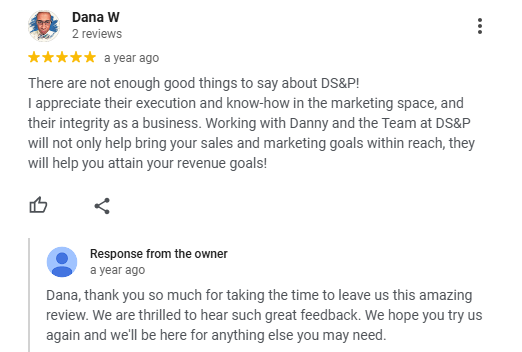
Public replies show future clients that you’re involved, appreciative, and not just collecting testimonials for show.
What NOT to Do
Now, here are a few ways to shoot yourself in the foot when trying to find SEO clients:
- Don't promise Page 1 rankings
It’s a red flag. Everyone’s heard it. Most have been burned by it. Focus on traffic, conversions, and business outcomes.
- Don’t skip onboarding
Even if it’s a small project, a sloppy kickoff makes clients question everything else.
- Don’t disappear after the proposal
Follow up even if they ghosted. Often, they just got busy. Be patient, not pushy.
- Don’t try to sell to everyone
Not every lead is a fit. Saying “no” actually builds authority. Better a tight niche than a bloated roster.
- Don’t automate too early
Before you scale, make sure your pitch works. Personal > Perfectly automated, especially in the early stages.
And finally, don’t be boring. Seriously. Everyone offers SEO. Your personality, your stories, and your approach are what sell.
Summing Up
If you want to get SEO clients without begging, spamming, or burning out, start with strategy.
Define your value clearly. Build strong partnerships. Speak at events. Post content that actually educates. Cold outreach still works when it’s thoughtful. And don’t sleep on referrals, directories, or founder-led marketing. Your face, story, and results are your best sales pitch.
In the end, the goal isn’t just to get SEO clients but to build a brand that attracts the right ones consistently.
Every strategy above works. But pick 2–3 and go deep. Track your results, tweak your messaging and be loud in the right rooms.
And when you're ready to scale your delivery without sacrificing quality, Synup can help you manage local SEO, listings, and customer acquisition at scale while you keep building the agency of your dreams. Book a demo.
Find SEO Clients For Your Marketing Agency: FAQs
How do I approach a client for SEO?
Start by offering free audits that show real insight. Specialize in a niche so your messaging resonates. Partner with web design or PR agencies, speak at events, and publish in-depth content. Use social media to share your wins, frameworks, and quick SEO tips. Then, use thoughtful LinkedIn DMs (not cold pitches) to connect.
How do I find local SEO clients?
Offer free audits to local businesses, especially ones with outdated websites or poor Google listings. Focus on one niche at a time, like dentists or law firms. Network through chambers of commerce or local expos. Create “local SEO playbooks” and share them on Facebook groups, LinkedIn, and your own email list.
How do I find SEO agencies?
If you're looking to partner or outsource, start by listing your needs. Then, research agencies that specialize in what you want. Verify their testimonials, review case studies, and ask for deliverables. A transparent agency will show clear results and won’t dodge your questions.
The 10 Rules of Awesomeness
1. Find Your Niche
It's extremely important that you establish your expertise in a niche that you understand, have worked with for a long time and have a passion for.
The basic tenets of local SEO hold true in all sectors, regardless of the type of business/industry. However, if you know the niche well enough, it will be easier for you to learn and execute your plan for a particular business. Moreover, when the business owner or decision-maker sees that you really understand their industry, they are more likely to open up to you and trust you. Dentists will not be impressed if you start talking about how they can optimize their marketing plan for customers who are looking for orthodontists now, will they?
When you understand the industry, it will be easier for you to leverage your knowledge of the industry in your favour. It will also be easier for you to understand where the money is. If it's a niche where people can't afford to pay you more than couple of hundred dollars a month it wouldn't make sense to pitch your whole plethora of services. At the end of the day you are running a business and you need to be profitable.
The massive advantage that you will have by being niche-focused when you're selling to the local business audience cannot be overstated. After all, even large local business sales-focused companies like Yodle and ReachLocal use industry-specific reviews to sell to the market.
Read about how industry guru Mike Ramsey is trying to build a multi-million dollar local marketing business focused on lawyers.
How to go about finding your niche:
- Look at your existing customers. If a majority of them are coming from one industry, then it makes sense to go after that particular niche, provided there is enough demand.
- Figure out the markets that need Local SEO and online marketing the most in your local area. For instance, if you're in a state with fluctuating weather like Alabama, you should be targeting HVAC contractors who are probably going to be in high demand.
- If all else fails you can go after the golden targets: legal services, home services and medical services. These industries all are very good prospects for local SEO services; you should just pick one of them.
2. Brand Yourself
For a business owner to trust your words and for people to refer your work or seek your expertise, they need to know you. For that to happen, you'll need to do some amount of groundwork that helps establish your expertise on a given subject/industry. After all, as a marketing professional, you should practice what you preach and market yourself.
You will need to create a solid presence for yourself, both on and offline.
#1 - Establish your own website and social media following
Make sure you have an active presence on Facebook, Twitter and Google+; post regular updates on these sites and respond to interactions frequently. You can use software like Buffer and HootSuite to save time managing your social media accounts.
#2 - Frequent industry blogs and forums
Provide regular and easy to understand content updates in industry forums and blogs that business owners visit often. Take genuine interest and involve yourself in local chamber of commerce, business gatherings and social events. It will help develop trust and bonding before you go ahead and try to sell your services to the businesses.
For example, if you're focusing on contractors, you might want to visit forums like Contractor Talk regularly; there are plenty of online forums focused on specific industries that you can participate in and engage with potential customers. Just do a Google search for forums relevant to the industry you're attacking and you're bound to find a few.
#3 - Work towards becoming a "thought leader"
The holy grail of Local SEO marketing is becoming a "thought leader" or someone who creates content that is widely shared. This can result in a surge in customer inflow and can gradually get you to the point where you're regularly obtaining a few customers a week.
i. Create useful content on your blog on a weekly basis; and by useful, we mean something that will help a local business (your potential customer) get more from their online marketing or business
ii. Start a newsletter and curate this list to include businesses who want to hear from you.
iii. Write on other blogs to leverage on their existing readership. This can be a good start when you don't have a brand and would much rather have your content reach a larger audience.
3. Partner Up
It is extremely difficult for small firms to survive the local SEO game alone. You will need people to build, develop and execute your plans. You will need designers, web developers, content writers, assistance in responding to phone calls & emails to sustain your business and grow.
Find likeminded people that you can work with. People who have the specific skillsets that complement your own will help you support and sustain growth in the long run. It will also give you the opportunity to specialize and work on things that you do best rather than trying to be a generalist
While partnering, it is also important that you "spread the riches" - don't try to micro-manage or be involved in everything. Focus on your core expertise (i.e online marketing) and split other work (content, design etc.) with others. What you'll need to do is create a "mastermind group" - eventually, as group members succeed, they will also start sharing with you and you'll all grow together.
5. Lead Generation
Closing sales is one thing, but generating leads is something completely different. Lead generation is mostly a numbers game where you'll need to get as many (high quality) leads as you possibly can in the process of doing it.
The general mantra with this activity is experiment, track and expand the strategy that's working out well for you.
Typical sources for leads include:
#1 - Cold Calls
The most abused lead-gen strategy there is. Works for some, doesn't work for many. The secret to this strategy is volume, a proper script and quick hand-off to a real consultant. Stay away from this strategy if you're afraid of rejection.
#2 - Direct Mail Campaign
Contrary to popular belief and opinion, this still works. While sending out direct mail, it makes sense to personalize it a little bit. Go one step further and tell them something they don't already know.
#3 - Your Online Presence
Making the best use of the internet to make sure that your name is visible to people who could end up potential clients is an absolute necessity. Some of the things that you can do to achieve this are:
- Optimizing your website
- Posting on SMB forums
- Referrals
#4 - The Conventional Approach
The fact that people spend most of their time online has not rendered the conventional way of doing things obsolete. The good ol’ tried and tested methods to reach your customers and thereby keep the leads coming in are:
- Advertisements on Online Directories/Newspaper sites
- Flyers
- Radio ads
- TV Ads
- Newspaper Ads
Each of them have their pros and cons. You will need to try them you to find out what suits your need the best.
4. Solution Provider
Let's be honest - we are all skeptical of the dreaded sales pitch. The over the top promises, the hyperbole, the lure of the Promised Land that fails to be delivered.
Rather than selling them a cookie cutter rehearsed sales pitch, provide a solution to their problem.
#1 - Do your homework about the business before you go in for the meeting or get ready to send out a proposal
Do they have a website? If yes, is it responsive? Are their title tags optimized? How big is the company? How long have they been in business?
You should be able to find all of this information fairly easily just by looking at a business' website. To make things easier, analyze the important steps in the Local SEO Checklist to see if the business is doing everything right.
#2 - Take a look at how their business is doing online, and more importantly, what their competitors are doing
Nothing closes a sale as fast as telling a business owner what their competitors are doing and how that's helping them outrank. It drives the point across with evidence and helps you sell better. You can use a whole host of tools to check on competitor data including Synup, Ahrefs, Spyfu and SEMRush
#3 - Ask the business owner the most important questions you need to ask without wasting their time
Before you take the time and effort to prepare a proposal for a business, make sure you spend a few minutes with them on the phone asking the right questions. Ensure that your questions are short, concise, easy to understand and don't take a long time to answer. The last thing you want to do is waste the business owner’s time on something you could have already gotten the answer for looking at their website.
Some questions I like asking when I'm doing pre-sales are:
- Are they doing any online marketing right now? Have they used consultants in the past?
- What kind of results have they seen with online marketing so far?
- What kind of budget do they have for online marketing?
You should structure your questions based on what you think is important to ask.
#4 - Create an uncomplicated, easy-to-follow proposal
Break everything down to steps that the business can implement with your expertise that can help improve their performance. Show the business owner in steps what you'll be doing, how long it'll take and how it'll impact their performance.
This will help them understand how you're going to go about doing things and will also allay any unrealistic expectations they may have of you.
Be straightforward and promise what your can deliver. Believe me, it will take your business relationship to a new level when businesses know that you are not bullshitting them.
The business owner will actually appreciate the fact that someone is being honest with them unlike 1000 other cold callers who all promise them the first spot in Google overnight.
6. Customers First
Every business has their strengths and unique set of problems. Do not go to meet a prospect thinking you know exactly what their problems are. You'll end up alienating the client by trying to find problems to suit that services you can sell to them rather than finding a solution to the problems they are facing.
Listen to them closely, ask probing questions for more information and take a genuine interest in their affairs before you start talking money. They will appreciate it if you tell them that you may not be a good fit for the kind of services they are looking for. It’s good to say ‘NO’ upfront, rather than delaying the inevitable.
7. Don't talk Jargon
We all understand that SEO is a complex process that takes a while to understand. Do not expect your customers to be familiar with the technical terms that are prevalent in the industry.
Do not use jargons like robots.txt, xml, disavow, penguin, panda, pigeon, goat, unicorn etc and complicate things. Most business owners will not understand what these words mean.
All they understand is "leads" and "revenue". Educating the client on what we do is part of the job description. However, we do need to know where to draw the line, as we are not trying to train them to become local SEO specialists.
8. Diversify Revenue
Cashflow is the lifeblood of every small business. Keep tracking that at all times and make sure that one client alone doesn't make up more than 15-20% of your revenue source.
1. One big client = bad news
The biggest mistake you can make running your consulting business is to have more than 50% of your revenue coming from one client. A lot of us have been guilty of doing this and have learnt our lesson the hard way. Always keep looking for ways in which you can diversify your revenues to come from multiple clients.
You shouldn't be a single-client’s “hostage”, so to speak, and should have the freedom and liberty to drop a client if you need to.
2. Always collect money upfront
There is nothing wrong in collecting an advance from your customers. You are providing top quality services and need to be paid well in advance. If you feel guilty collecting money from a customer, or have a customer who doesn't trust you paying in advance, you should just fire them.
Never make the mistake of giving a customer a line of credit, whenever a client asks you this, ask them if they would work without getting payment from their own customers.
9. Engage
Even the experts need help at times in this ever changing world of Local SEO. With the number of animals & birds (a-la penguin, panda, pigeon etc.,) the search engines are throwing into the mix every few months one needs to take a step back and learn about the latest and greatest in the industry.
Here are our top 3 forums run and frequented by industry experts who can be of tremendous help -
- Linda Buquet's : Local Search Forum
- Max Minzer's : Local Search Google+ community
- Local U forum : Frequented by industry stalwarts
10. Sell
Now that you know all the things that you need to do to become an expert at local SEO sales, the only that is left to do is sell your product. Though I agree that this is much easier said than done, there are a few things that you can do or keep in mind before you successfully close deals week in, week out.
1 Set Targets
There is no absolute number when it comes to the sales targets that one should set, for it differs depending on the size of your firm. In any case, the intention behind founding any firm is to grow, and having a high yet achievable sales target for the growth of your firm will be instrumental in making you reach greater heights. A growth rate of 20% in sales will be a fantastic target to maintain, though it is completely up to you to come up with a practical figure on this front. Set a target that will help your firm scale rapidly with time.
2 Make Friends
Nobody wants to be the client of a firm that doesn't make them feel like that they're their biggest customer. May it be with your partners or your clients, make sure that you have a healthy relationship with them that makes them feel happy to be associated with you. Establish a dedicated client success/support team for this purpose. This doesn't mean that you shouldn't cut ties with a customer that demands more for less or treats you badly. Weed them out if you need to. But make sure that the customers that you have feel comforted by the fact that you are taking care of their online marketing and local SEO. This especially helps when the client likes you a lot, to the point where they start recommending what a good job your firm is doing to other businesses. And other businesses = more potential customers, and more potential customers = more sales
3 Practice
This might seem like something too basic to read so far down the post, but no expert became one without months (if not years) of practice and experience. Countless hours of trying and failing at something is the key to honing your skills, because failing helps you develop an instinct that will tell you what will work when you're selling and what won't. Don't expect the time spent reading and writing about the subject to get yourself to the top. As much as they will help you, the only way to truly becoming a rockstar in sales is to sell, sell and sell even more.