How to Find Clients for Social Media Marketing: Guide for Agencies
Struggling to find social media marketing clients? This guide breaks down all the strategies that work for agencies in 2026.

If you’ve spent any time pitching local businesses for social media marketing, you've probably seen it all. Before you’ve even opened your laptop, the owner is leaning back with their arms locked tight, daring you to waste their time.
You’re there to help, but they’re braced for a sales pitch they’ve heard ten times this year. Usually, you don’t even get through your intro before they cut you off:
“Look, we did the social media thing. We posted every day for six months. We got some likes, but nobody walked through the door.”
That tells you the real challenge agencies are facing in 2026.
Business owners aren’t actively searching for “social media management.” They’re searching for certainty. They want booked calendars, full tables, and a clear line between what they spend and what comes back in leads or foot traffic.
We’ll look into the high-level, practical strategies that scaling agencies use to land $1,000 to $5,000 monthly retainers without competing on price with offshore content farms.
TL;DR: How to Find Clients for Social Media Marketing
Here are some high-level strategies to move from chasing $100 gigs to landing high-value SMB retainers:
- The audit hook: Start by sending personalized Loom videos that identify specific “leaks” in a prospect's revenue, like broken links or ignored customer comments.
- Specialization over generalization: Productized services for specific industries (like real estate or law) allow for higher rates and repeatable workflows.
- The outreach pivot: Use “permissionless value.” Give the prospect a win, like a transcribed caption or a fixed bio, before asking for a meeting.
- The aggregator strategy: Scale faster by partnering with SEO and web design firms.
- Authority & local SEO: Optimize your Google Business Profile and attend Chamber meetings to build high-trust, face-to-face connections.
- The referral engine: Automate referral asks when clients hit performance milestones and use double-sided incentives to turn clients into a sales force.
- Operational health: Use automated reporting and live dashboards to prove ROI every week, effectively killing churn and scope creep before they start.
Strategy 1: The “Audit First” Value Offer (Inbound/Outbound Hybrid)
One of the mistakes agencies make in outreach is “lead-gen narcissism.”
What that means is…
They start the conversation by talking about their own years of experience or their proprietary process. Most local business owners honestly don't care. They care about their own headaches. To break through the noise, you need to stop pitching services and start pitching solutions through a value-first audit.
Ask yourself:
Why would a busy HVAC business owner open your email? Is it because you have a fancy logo? No. It is usually because you’ve identified a literal leak in their revenue bucket.
The Loom Video Pitch
Instead of a cold email that looks like every other piece of junk in their inbox, record a 3 to 5-minute video. Use a tool like Loom to record your screen while scrolling through their current social media presence.
Alternatively, you can access detailed analytics of their social media platform that lay bare engagement metrics over a period of time.
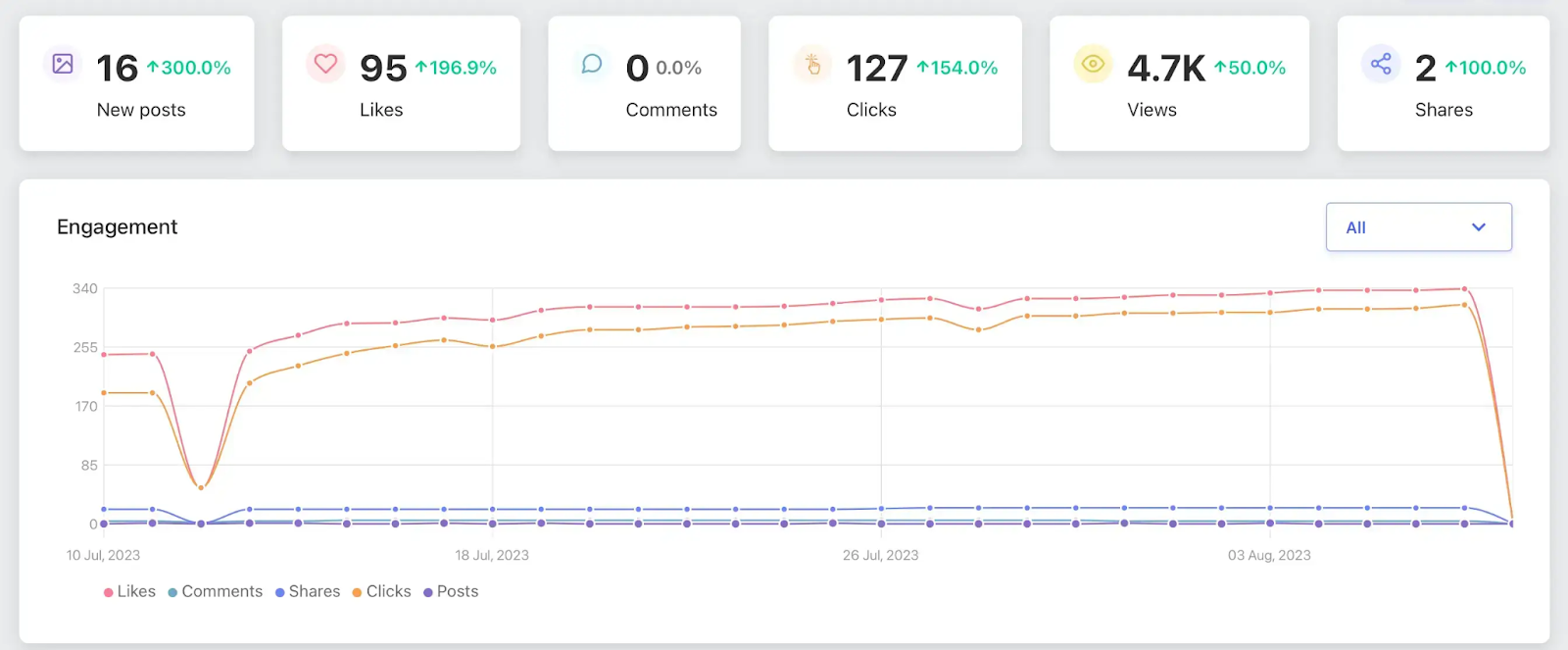
Don’t stop there, and definitely don’t just say their content is bad. Find a problem and be surgical about it. Here are some common issues to inspire your approach:
- The lurker problem: Show them how a massive percentage of their views (maybe over 95%) are coming from non-followers while their follower growth remains stagnant because they lack a clear “follow” call-to-action in their high-performing Reels.
- The engagement cliff: Use a line graph to illustrate a sharp, sudden drop in likes and clicks, proving that their current “post whenever” strategy is causing them to lose hard-earned momentum with the algorithm.
- The content imbalance: Point out that while Reels are driving a high number of their views, they're wasting effort on static posts that barely reach their audience, signaling a need to shift their entire production budget toward short-form video.
- Broken link discovery: Show them, for example, that the Link in Bio on their Instagram leads to a 404 page or an unoptimized home page instead of a lead-capture form.
- The “ghost town” comment section: Point out three questions from potential customers in their comments that have gone unanswered for over 48 hours.
- The first conversion gap: Explain that while they have 2,000 followers, they aren't using Action Buttons for appointments, effectively leaving 20 to 30 leads on the table every month.
By showing your face and their specific problems, you move from random solicitor to trusted advisor in three minutes.
The “Gap” Analysis
Numbers talk. Show the prospect exactly where they stand against their top local competitor. If Main Street Dental is posting twice a week but Oak Ridge Dentistry is posting five times a week with video testimonials, show the data.
You’ve got to consider the psychological impact of seeing a rival win. That alone forms a compelling pitch foundation.
Consider this:
If a competitor is generating 15% more engagement on local-intent posts, that translates to roughly 200 to 500 local residents seeing the competitor's brand instead of theirs every single week. Over a year? That is 10,000+ missed impressions. When they see a visual representation of how they are losing the local digital land grab, the urgency to hire you spikes.
Pro Tip: No matter your approach to the audit, you’ve got to send it through with the right messaging. Keep reading to learn how!
Strategy 2: Niche Down to “Productize” Your Service
Generalist agencies are currently dying a slow death. If you’re the one for everybody, you’re also the one for nobody at all.
Think about it: if you need heart surgery, do you go to a general practitioner or a cardiovascular surgeon? The specialist always commands the higher fee.
Why Generalists Fail Operationally
Beyond the low rates, being a generalist is an operational nightmare.
- Constant context switching: One hour, you're researching roofing regulations, the next you're looking for trending audio for a boutique yoga studio.
- Inconsistent SOPs: You can't build a repeatable workflow because every client needs something custom.
- Higher churn: Because you aren't an expert in their specific industry, your results will naturally be more average.
How Agencies Can Productize Their Offerings
When you niche down, you can productize your offerings. This means creating a fixed scope of work for a fixed price that is easy to sell and even easier for your team to fulfill.
Some examples:
- The Content Engine for Real Estate: You provide 12 short-form videos per month. You handle the hooks, the captions, and the local SEO tagging. Price: $1,500/month.
- The Local Authority Pack for Law Firms: 4 high-value LinkedIn articles, 8 community-focused Facebook posts, and 1 hour of daily engagement on local community groups. Price: $2,500/month.
Not only does this command premium pricing, but it also simplifies your internal workflow. Your account managers become experts in one industry, reducing the time spent on research and increasing the quality of the output.
Also, it makes your sales process binary: they either need the Content Engine or they don't.
Strategy 3: Cold Outreach That Actually Converts (+Templates)
Cold outreach is only dead if you are doing it poorly. Most agencies blast out 500 identical emails and wonder why their open rate is 2%.
In 2026, permissionless value is the only way to get a response from a busy SMB owner. The standard for outreach has shifted from “Can I have some of your time?” to “Look what I did for you already.” This is the theory of permissionless value.
Permissionless Approach: What is it?
It's the practice of performing a small portion of your core service for a prospect before they even acknowledge your existence.
For a social media agency, this might mean creating one high-quality “Hook” for a Reel or rewriting their entire Google Business Profile description to be more SEO-friendly.
Examples of How It Works
Don't ask for a 15-minute discovery call. That sounds like work for the client. Instead, give them a small win upfront.
Here's the first example:
Imagine you’re reaching out to a local roofing company.
“I saw your recent post about the hailstorm damage. Great timing. However, the video didn't have captions, and 80% of people watch social videos on mute. I actually transcribed the first 30 seconds for you: here is the text you can add to the description to help it rank better in local search.”
And another example…
For B2B-heavy clients, LinkedIn is king. But skip the long-form text blocks. Use the voice note feature in the LinkedIn mobile app. A 30-second voice note feels much more human.
“Hey [Name], I was just scrolling through your feed and loved that case study you shared about the Smith project. I had one quick idea on how you could turn that into a 3-part video series to get more leads. Just thought it'd be a good fit for you!”
It shows you actually took the time to visit their profile. Local business owners are often more active on LinkedIn than you’d think, especially if they are involved in local business associations. Along with that, it breaks the pattern of the hundreds of text-based InMails they get weekly.
Why It Works
When you do the work first, you bypass the “skepticism filter.” You aren't promising that you can do the work; you are proving that you have done the work.
Plus, it triggers the psychological principle of reciprocity. When someone gives us something of value for free, we feel a natural urge to give them something back, usually, in this case, a 15-minute conversation.
Strategy 4: White-Label Partnerships (The Hidden Goldmine)
One of the fastest ways to scale an agency with 10+ employees is to stop looking for individual clients and start looking for aggregators. Here's the math of partnerships to look into:
To land 10 clients at $1,000/month, you might need to send 1,000 cold emails, conduct 50 discovery calls, and send 20 proposals.
OR
You find one web design agency that builds 20 sites a month for local businesses. You become their preferred social media partner. Suddenly, you have a pipeline of 2 to 5 new clients every single month without sending a single cold email.
Who to Partner With
Identify firms that offer complementary, but not competing, services.
- SEO agencies: They handle the pull marketing (Search) but often lack the push marketing (Social).
- Web design firms: They build the car (the website), but the client needs gas (traffic/social engagement).
- Traditional PR/ad agencies: They understand the big picture but often struggle with the day-to-day grind of social community management.
The Pitch
Your pitch to these partners is simple: You handle the core service you're great at. Let us be your white-label social partner.
Using a proven platform like Synup’s white-label solution, you can resell fully managed social services under your own brand, mark up the services by 20%, keep the profit, and stay completely hands-off on execution while everything runs invisibly in the background.
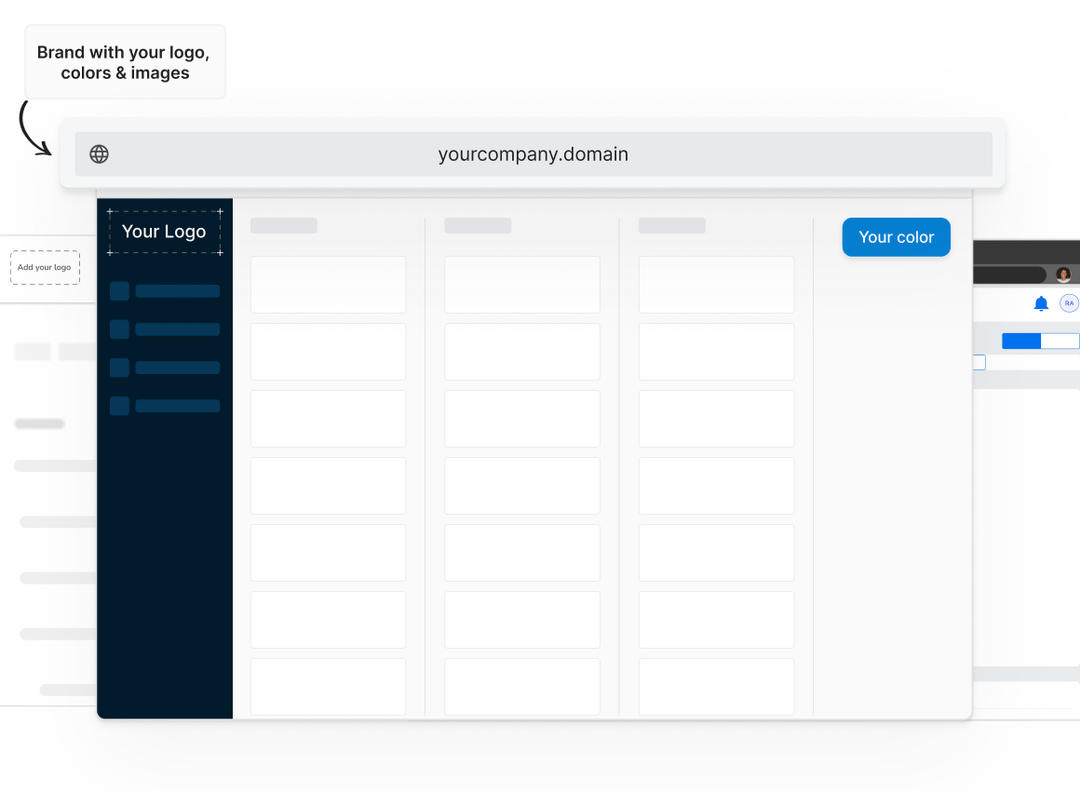
This is a win-win. The partner agency increases its average contract value (ACV), and you get a steady stream of warm leads.
Strategy 5: Building Authority via “Inbound Social”
You can’t credibly sell social media services if your own agency’s profiles look inactive. It’s the classic “cobbler’s children have no shoes” problem.
Practice what you preach. If a prospect looks you up and sees your last post was from 2023, they will immediately disqualify you. If you can't grow your own brand, how can they trust you with theirs?
You can start by building authority with content pillars:
- Case studies with real numbers: “How we helped a local 3-location gym increase its lead volume by 22% in 60 days using only Instagram Stories”.
- The anti-guru tips: Share honest truths. Why do most local businesses waste $500/month on Facebook Boosted posts?
- Behind the scenes (BTS): Show your team in the office or on a Zoom call. It humanizes the agency. It proves you aren't just a bot or an outsourced farm in a different time zone.
The Lead Magnet Funnel
Drive your profile traffic to a high-value resource.
Instead of Contact Us, offer a 2026 Social Media Calendar Template for Local Retailers. This allows you to capture their email address.
Most SMB owners won't hire you the first time they see you, but they will hire you after you provide them with something useful for free. On top of that, it establishes you as the subject matter expert before they even hop on a call.
Strategy 6: Harvesting Leads from Expert Communities
There is a specific grey area of social activity on forums that most agencies completely ignore.
Many agency owners ask where to find clients for social media marketing. But they forget that their best prospects are currently complaining about their problems in public. Here are a few examples:
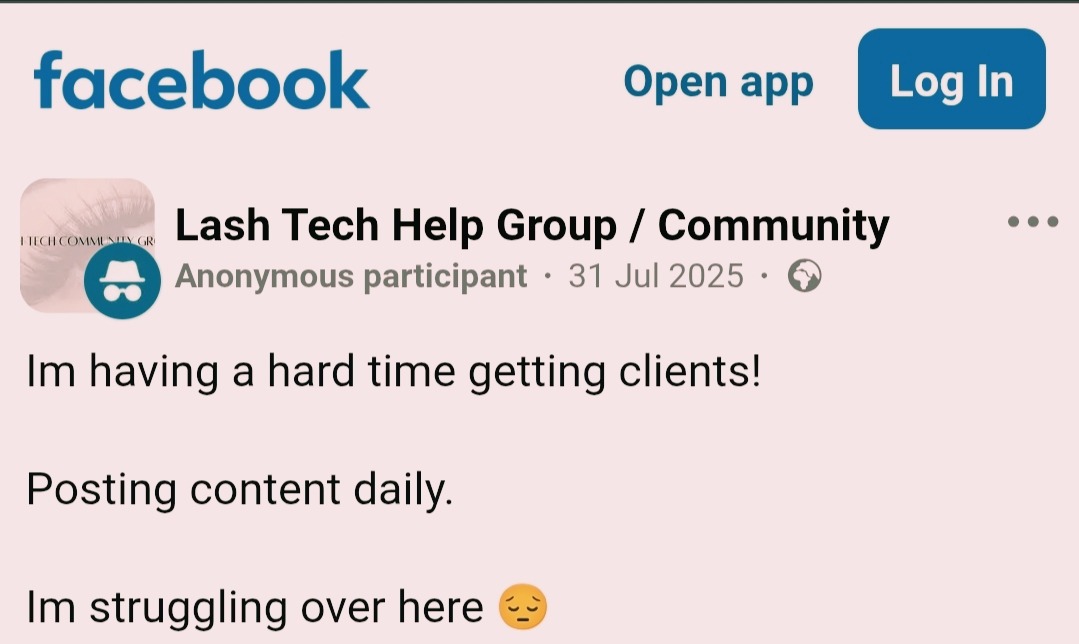
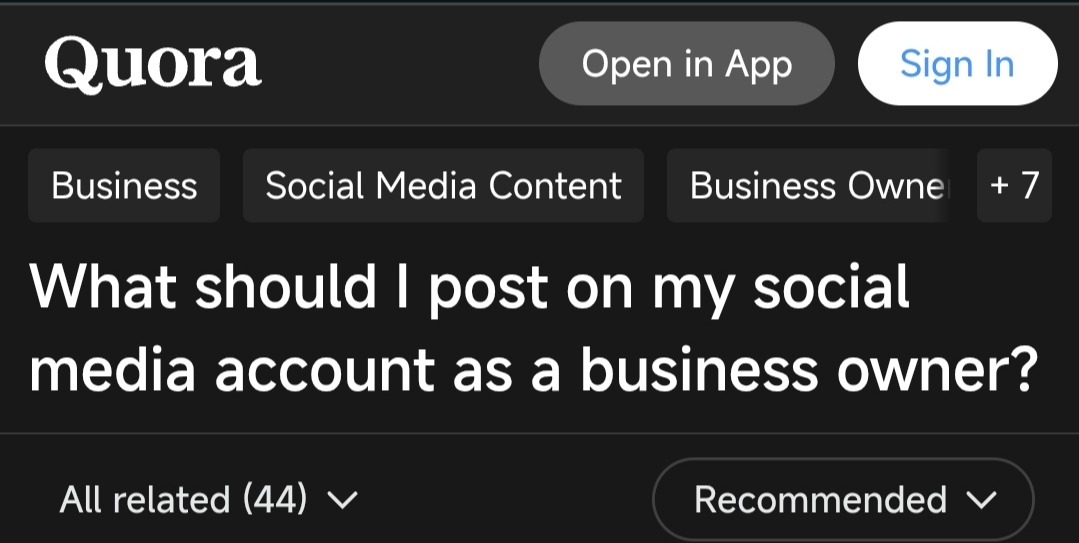
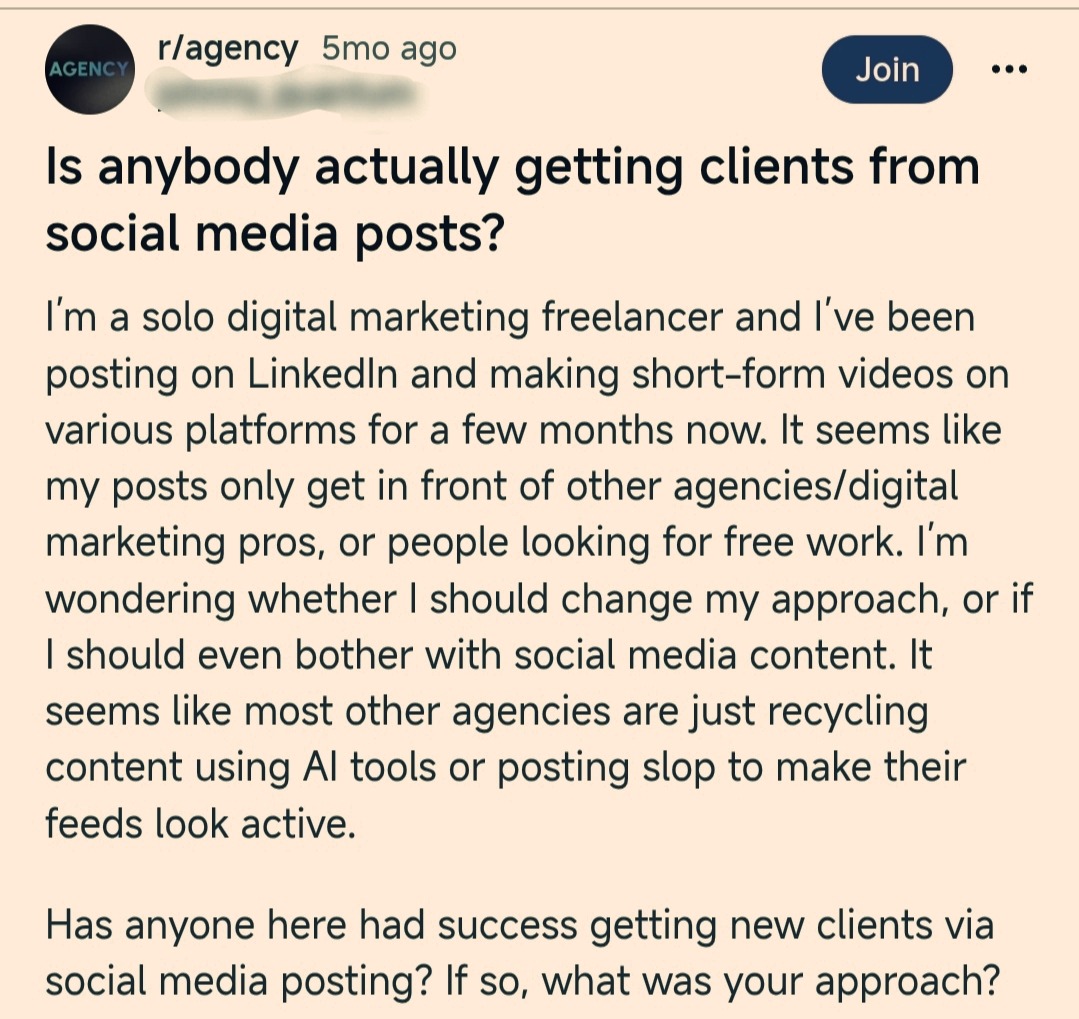
You just need to find out what common problems are there that your agency is positioned to solve for clients:
- Inconsistent posting
- No leads or sales from social media
- Low reach and engagement
- Not knowing what content to post
- No clear content strategy
- Poor ROI tracking
- Inconsistent branding and messaging
- Over-reliance on one staff member
- Negative comments and review handling issues
- Weak local visibility
- Wasted ad spend on boosted posts
- Algorithm changes are hurting performance.
Now, search for these problems on forums and support sites, and you’ll find a potential match.
The cycle usually looks like this:
- A business owner posts a specific technical problem (e.g., My Instagram shop isn't syncing with Shopify).
- An expert marketer provides a detailed, step-by-step solution for free.
- The business owner realizes the solution is complex, and they don't have the time to do it.
- The business owner DMs the marketer to ask for their rates… or you beat them to it.
The Implementation Gap
Clients scope these groups to find solutions, but they hire for implementation.
They have the how-to, but they lack the time-to.
By sharing high-level tactics and deep knowledge with your peers in these groups, you aren't just talking shop. You are signaling your expertise to the lurkers, the business owners who are quietly watching the comments to see who actually knows what they are talking about.
Equally important is the fact that these interactions build a searchable history of your expertise. When a prospect Googles you, they see you solving problems in real-time. Plus, another thing that happens is you build a referral network with other marketers who might be overloaded.
Strategy 7: Using Local SEO for Agency Clients
If you are targeting local businesses, you need to be visible where they look for help: Google. Many agency owners focus so much on social that they forget to optimize their own near-me presence.
The “Near Me” Strategy
Optimize your Google Business Profile for keywords like Social Media Agency [Your City].
- Local Intent: Local business owners often prefer hiring someone they could potentially meet for coffee.
- Social Proof: A local plumber is much more likely to trust an agency that has 50 five-star reviews from other local contractors.
Local Networking
Don't underestimate the power of being the digital expert in a room full of non-digital businesses.
Attend local Chamber of Commerce or BNI meetings. While these can feel old-school, they are prime hunting grounds.
Imagine being in a room with 30 local business owners. Most are overwhelmed by TikTok and Reels.
When you explain how a simple video strategy helped a local hardware store get 20 new customers last month, you become the most valuable person in that room.
Not just that, but the trust factor in a face-to-face meeting is 34x higher than any email sequence, according to the Harvard Business Review.
Strategy 8: The Referral Engine
The most profitable client you will ever have is the one you didn't have to pay to acquire. Yet, most agencies leave referrals to chance.
You can have a referral engine by learning to automate the ask. Set a trigger in your agency's operating system.
- The happiness trigger: When a client hits a specific milestone (e.g., 1,000 new followers or a record sales month), send an automated note.
- The message: “We are so pumped about the results this month! We are looking to take on one more client in a non-competing niche. Is there anyone in your network you think we can chat with?”
Incentivize It
Offer a double-sided reward.
Refer a friend, and you get $500 off your next month's bill, and they get $500 off their first month.
This turns your current client base into a motivated sales force. Besides that, referred clients are typically more loyal and profitable than customers who came in from just any other source.
That's because they come in with a pre-established level of trust.
Along with that, they are usually much easier to onboard because they’ve already heard good things about your workflow.
Common Mistakes to Avoid
Mistakes that were minor when you were a solo freelancer can become terminal for a larger firm. Here’s where to remain wary:
Racing to the Bottom on Price
If your main selling point is that you are the cheapest, you are in trouble.
Competing on price attracts the nightmare clients. You know the ones... they pay $300 a month but expect a response to their texts at 9 PM on a Sunday.
These clients have the highest churn rates. Stand firm on your value. If you charge $200 per location, explain why that $200 produces more ROI than a $50 offshore package. Besides, cheap clients are usually the ones who will suck up 80% (or more!) of your account managers' time.
Over-Promising “Virality”
Never promise a client they will go viral. That’s simply not something you (or anyone) can definitively predict.
Virality is a lightning strike; strategy is a power plant.
Promise them consistency, community growth, or lead quality. When you set realistic expectations from day one, you build long-term relationships.
Ignoring Retention and Reporting
Churn is a silent killer.
Most clients leave not because of bad results, but because they don't see the results.
If a client doesn't see a report, they assume you aren't doing anything.
Use shareable live reports to keep them in the loop. Tools like Synup Social Analytics allow you to send automated, easy-to-read dashboards that prove your worth every single week.
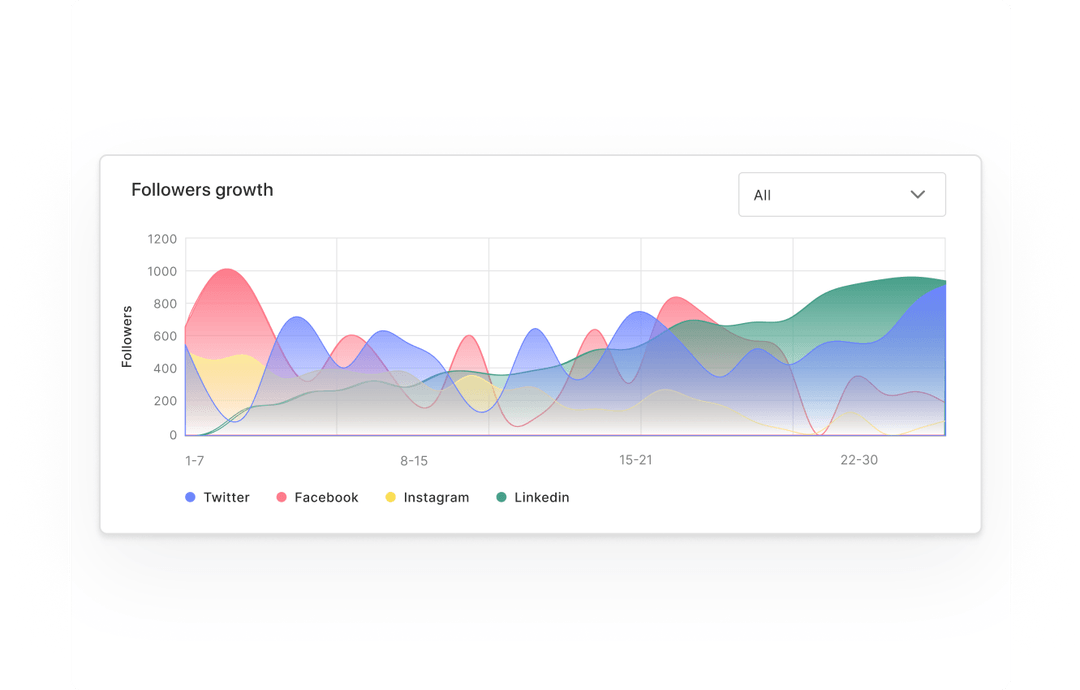
When a client can see their growth on a live dashboard, they are much less likely to question your monthly invoice. Plus, another thing this does is reduce the number of check-in calls your team has to take.
Learn More: Client Reporting for Marketing Agencies: Useful Tools and Resources
Scope Creep
“Can you just quickly edit this one extra video?”
‘Can you also manage my personal LinkedIn?”
For most scaling agencies, scope creep is a profit killer. Every quick favor is billable time being lit on fire.
Have a clear contract and a standard add-on price list. On top of that, make sure your account managers are trained to say “No” with a smile, or rather, “Yes, and here is what that costs.”
Conclusion
Landing high-quality social media clients in 2026 requires a mix of high-tech efficiency and high-touch human connection. By moving away from generic pitches and focusing on value-first audits, niche specialization, and strategic partnerships, you position your agency as a vital business partner rather than a line-item expense.
Stop getting bogged down in manual posting and reporting. As a founder or senior strategist, your role is to steer the ship and drive new business. Automate fulfillment with the right tools so you can focus on the relationships that actually scale revenue.
Finding clients for social media marketing becomes far easier when you have the data and the delivery system to back up your promises.
FAQs
- What is the 50-30-20 rule in social media marketing?
This rule suggests that 50% of your posts should be designed to engage (asking questions, running polls, or sharing relatable memes to build a community). Another 30% should be informative, providing genuine value or industry tips that establish your client as a local authority. Finally, the remaining 20% should be promotional, where you directly pitch the business’s services or special offers.
- How do I price my social media services for local SMBs?
Move away from hourly rates and toward value-based, productized packages. For local businesses with 1-3 locations, a sweet spot is often $1,000 to $2,500/month. Frame the cost against potential revenue: if you bring in 5 high-value leads, the service pays for itself.
- How do I stop clients from churning?
Churn happens when clients feel “in the dark.” Provide a live dashboard through a tool like Synup. When a client can see engagement trends and lead clicks in real-time, they view you as a tech partner rather than a mysterious monthly expense.