Best 6 Openmart Alternatives for Prospecting SMB Clients

Best Openmart Alternatives

If your agency targets SMBs and local businesses, you already know two things: (1) data quality matters more than fancy outreach sequences, and (2) most top-tier B2B databases are optimized for enterprise contacts, not local SMB signals. 

Most agencies don’t struggle with finding SMBs. They struggle with finding SMBs worth calling.

Sales reps waste 5–10 hours a week manually researching prospects, and nearly 3 out of 4 leads go nowhere. Not because SMBs don’t need help, but because the data is shallow, generic, or straight-up wrong.

Openmart is strong on local SMB signals, but it’s not the only option. This guide compares 6 practical Openmart alternatives for agency prospecting.

We’ve tested SMB-specific data quality and identified exactly which platforms give you the digital footprint intelligence that actually matters when selling to dentists, plumbers, restaurants, and retail shops.

TL;DR

  • Openmart is strong for local discovery, but agencies often switch due to credit-based pricing and limited sales workflows.
  • 6 Openmart alternatives: 
    • Synup OS
    • Apollo
    • Lusha
    • Leadfeeder
    • ZoomInfo
    • BuzzBoard
  • Synup OS and BuzzBoard offer the deepest SMB-specific data; Apollo, Lusha, and ZoomInfo skew enterprise; Leadfeeder is best for inbound intent.
  • For SMB agencies, the best tools combine accurate local data, digital gap insights, and end-to-end sales workflows, not just contacts.

Why Switch from Openmart?

Openmart is a focused AI prospecting/search product optimized for local businesses. While it’s good at what it claims, agencies often switch from Openmart for various reasons:

  • Credit anxiety: Like many prospecting platforms, Openmart operates on a credit-based model. Credits burn unevenly. Phone numbers cost more. And “verified” contacts still bounce even when they consume credits. 
  • Direct SMB signals & operational workflows in one place: Agencies usually need prospect lists, outreach templates, and pipelines in one place. Openmart excels at the top of the funnel, i.e., finding businesses and exporting contact lists. Once you find a lead, you’re exporting CSVs and duct-taping 3–4 tools just to move the deal forward.
  • Better SMB-specific enrichment: Agencies often need insights on local listings, open hours, review presence, and website gaps to create higher-converting outreach. Because knowing who to call isn’t enough. You need to know why they should care.

What Features to Look for in an Openmart Alternative?

When evaluating alternatives for SMB prospecting, prioritize these features:

  1. Local/SMB-specific signals: Listings, review presence, business category, opening hours, multi-location detection.
  2. Freshness & verification: How often the dataset is updated and how it’s verified.
  3. Search filters tuned to SMB needs: Industry, employee size, revenue band, and radius or zip filters.
  4. Outreach workflow: Ability to export or push prospects to sequences/CRMs.
  5. Affordability & credit pricing: Cost per prospect and scale economics for agencies.
  6. Integrations: Ability to sync with CRM, outreach, and agency OS.

SMB-friendly enrichment: Digital gap signals (e.g., lacks listings, no reviews) used to personalize outreach.

Synup OS

Best Suited For: Mid-sized Marketing & Advertising Agencies

What Synup Does

Synup is an agency operating system that includes a prospecting product (Synup Leads) engineered for SMBs and local businesses. Synup’s AI and prospect search filters let agencies discover local businesses and surface marketing gaps (e.g., missing listings, low review scores) to craft high-intent outreach. The OS combines prospecting with delivery apps (listings, reviews, social) and finance features, enabling a handoff from lead to sale and then to delivery inside one platform.

Synup OS treats SMB prospecting as step one of a client lifecycle, not the finish line.

Instead of just contacts, every SMB comes with a live digital audit:

  • GBP status
  • Review volume & sentiment
  • Website & SEO health
  • Social presence
  • Local visibility gaps
  • Competitive benchmarks

Key Features

🏆40M+ SMB database with local business focus

🏆AI-powered prospect discovery & pitch suggestions

🏆Advanced prospect filters (industry, spend, opening hours, digital gaps, reviews, location radius, etc.)

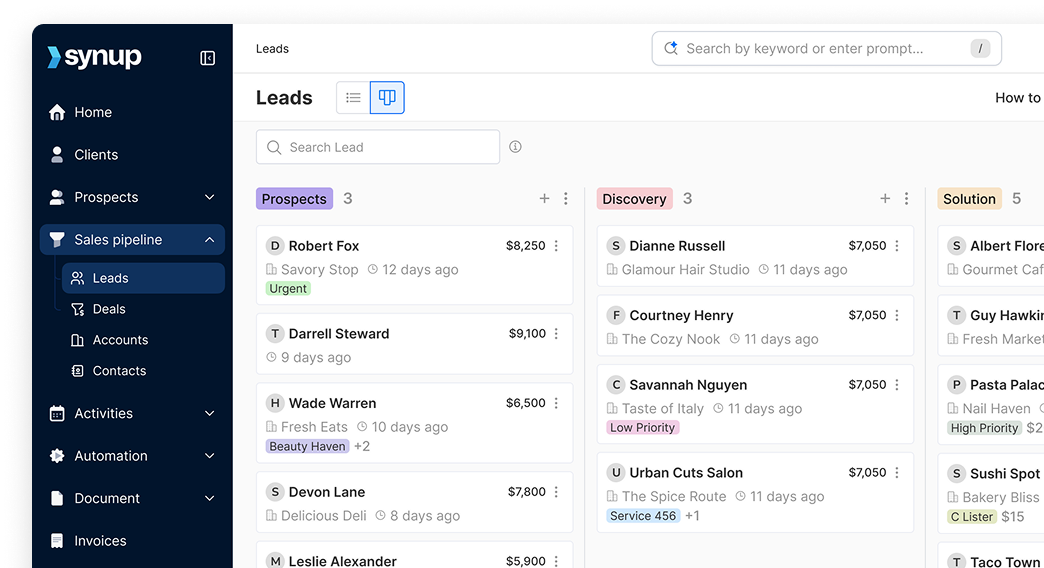
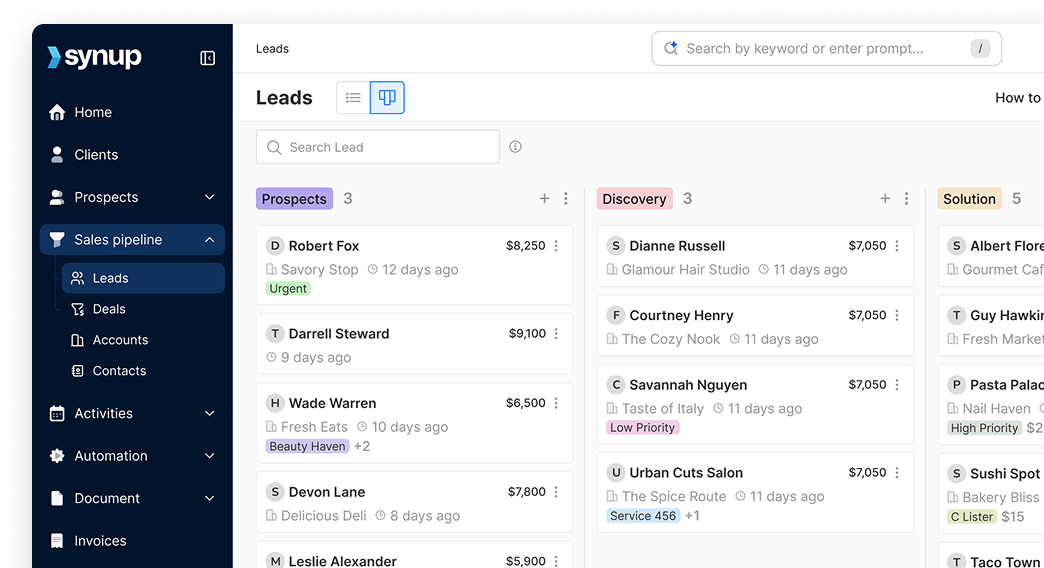
🏆Integrated sales pipeline to move leads

🏆Ability to prioritize leads with likelihood-to-buy and pitch angles.

🏆Export & integration with CRM/agency workflows (OS connectors)

🏆Custom search with AND/OR logic (e.g., restaurants in Chicago with 10-50 employees AND less than 20 reviews OR missing Google Business Profile)

🏆White-label client portal (once you close a deal, clients get a branded portal where you deliver actual services)

What Sets Synup Apart from Other SMB Prospecting Tools

  • Prospecting with context: Tools like Apollo and Openmart focus on contact data breadth (millions of records). Synup focuses on SMB intelligence depth. You’re not guessing pitch angles. The data gives it to you.
  • No dead-end leads: Prospect, pipeline, proposal, invoice, and service delivery all in the same platform with just one login.
  • Built for SMB Data: Synup’s 40M database wasn’t scraped from LinkedIn profiles of enterprise employees. It’s local-business-native from public data sources on local SMB businesses.
  • No credit gambling: Pricing is predictable. No credit-based models where you’re constantly calculating costs.
Benefits of Using Synup for SMB Leads

Shorter Sales Cycles

Less time wasted on enterprise contacts and faster list building for local campaigns. When you open conversations with specific, provable problems (backed by actual data), decision timelines are reduced.

Higher Conversion Rates

Digital audit intelligence means you are only calling businesses that actually need what you sell. Highly personalized pitch angles lead to higher reply rates and higher-quality conversations. 

Better Margins on Client Services

You can resell white-label marketing apps (listings, reviews, social) immediately at no extra platform costs. More revenue, controlled expenses.

Reduced Tool Sprawl

Consolidating prospecting, pipeline management, proposal generation, invoicing, and service delivery into one platform eliminates the monthly costs and team friction of managing 5-8 separate tools.

Predictable Revenue Growth

The integrated approach means you’re not just filling the top of the funnel, you’re moving prospects through the entire lifecycle with systematic follow-ups, automated proposals, and service delivery that keeps clients retained long-term.

Pros

✅SMB-focused data & digital gap signals

✅Integrated handoff from prospect to delivery & finance inside Synup OS

✅Transparent pricing without credit anxiety

✅ Informed pitching data and easy contact information

Cons

🚫May not be ideal for solo freelancers who just want a list

How to find SMB prospects with Synup OS

  1. Set up your ICP (industry/category, location, digital gaps).
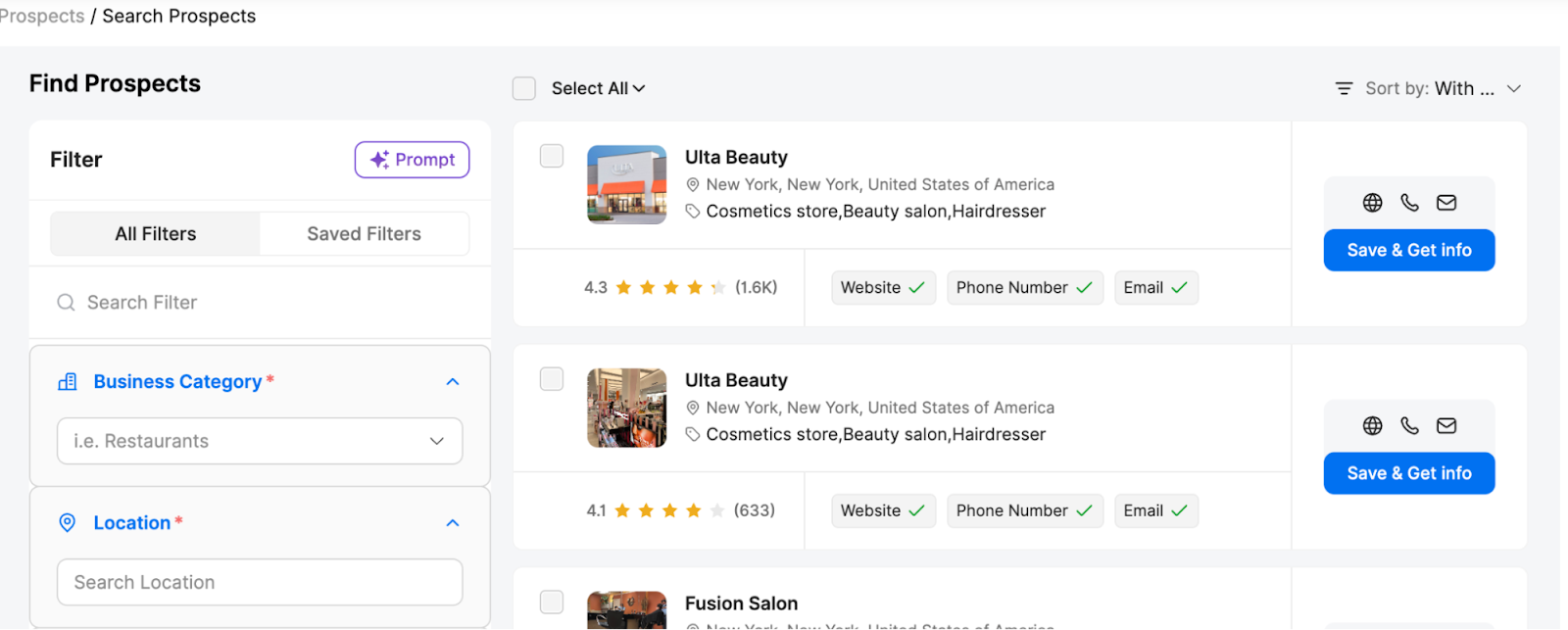
  2. Use Prospect Search with advanced filters (such as business category, location, and GBP details) to generate a targeted list.
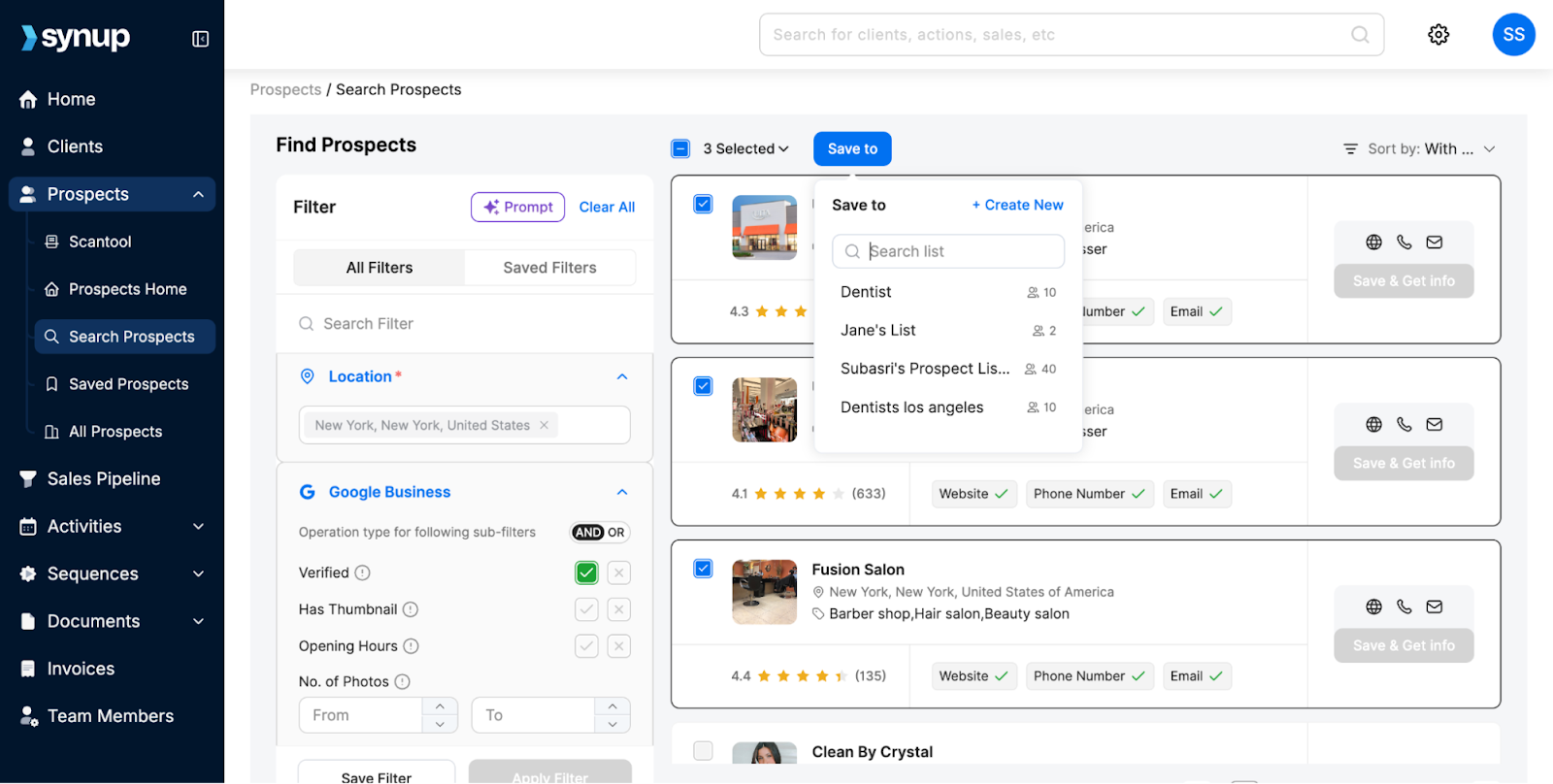
  1. Or use Leads AI prompts to auto-discover matching prospects.
  2. Save prospects to a list to reveal full contact data.
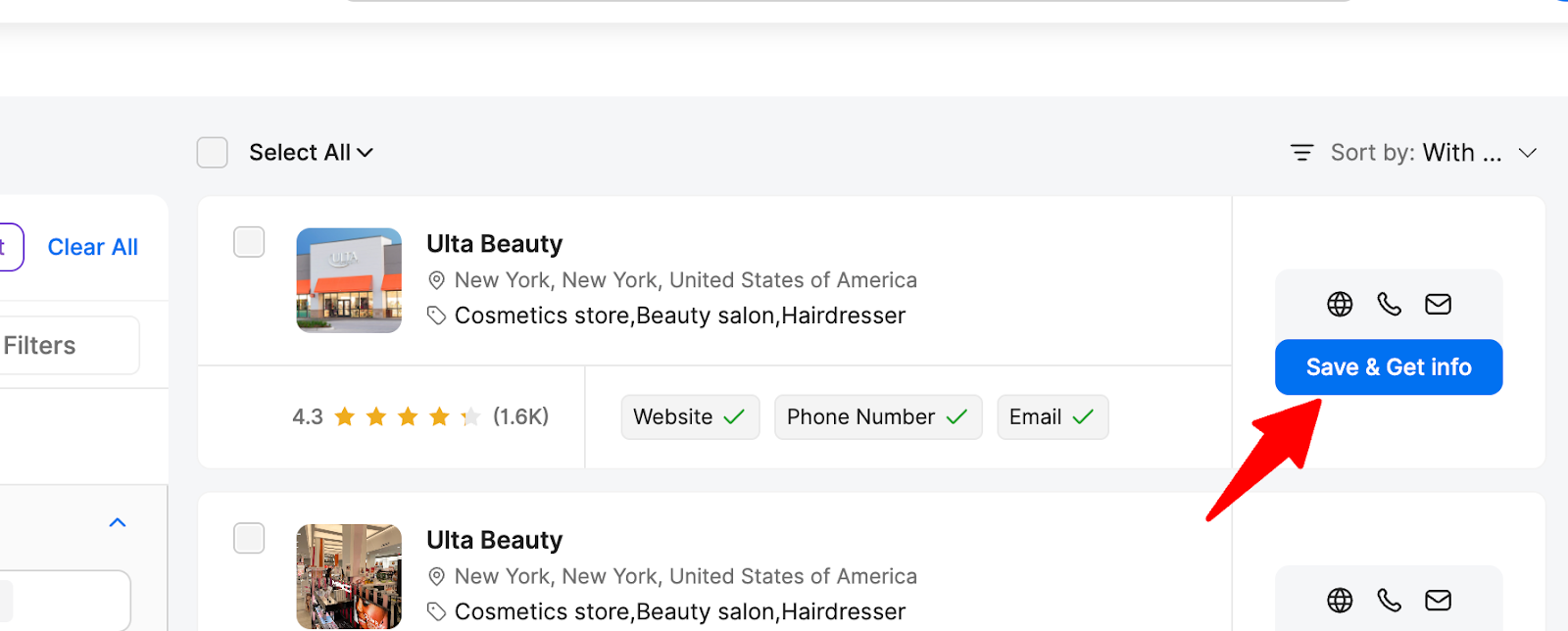
  1. Enrich and export your list to outreach sequences or Synup client onboarding.

What Customers Say

“The customer service is outstanding, and they say their relationship with their clients is more important than the money. I can testify to that. They have gone above and beyond to assist and ensure that we have what we need in order to effectively use their platform. I love how simple it is to set up a business on Synup and how simple it is to manage the reviews and updates. The lead generation tool is a great way to grow your business and it is a very effective 'sales' demonstration for a prospect's lack of listing citations.”

- Review collected by and hosted on G2.com.
Apollo

Category: B2B Sales Intelligence & Engagement Platform

What Apollo Does

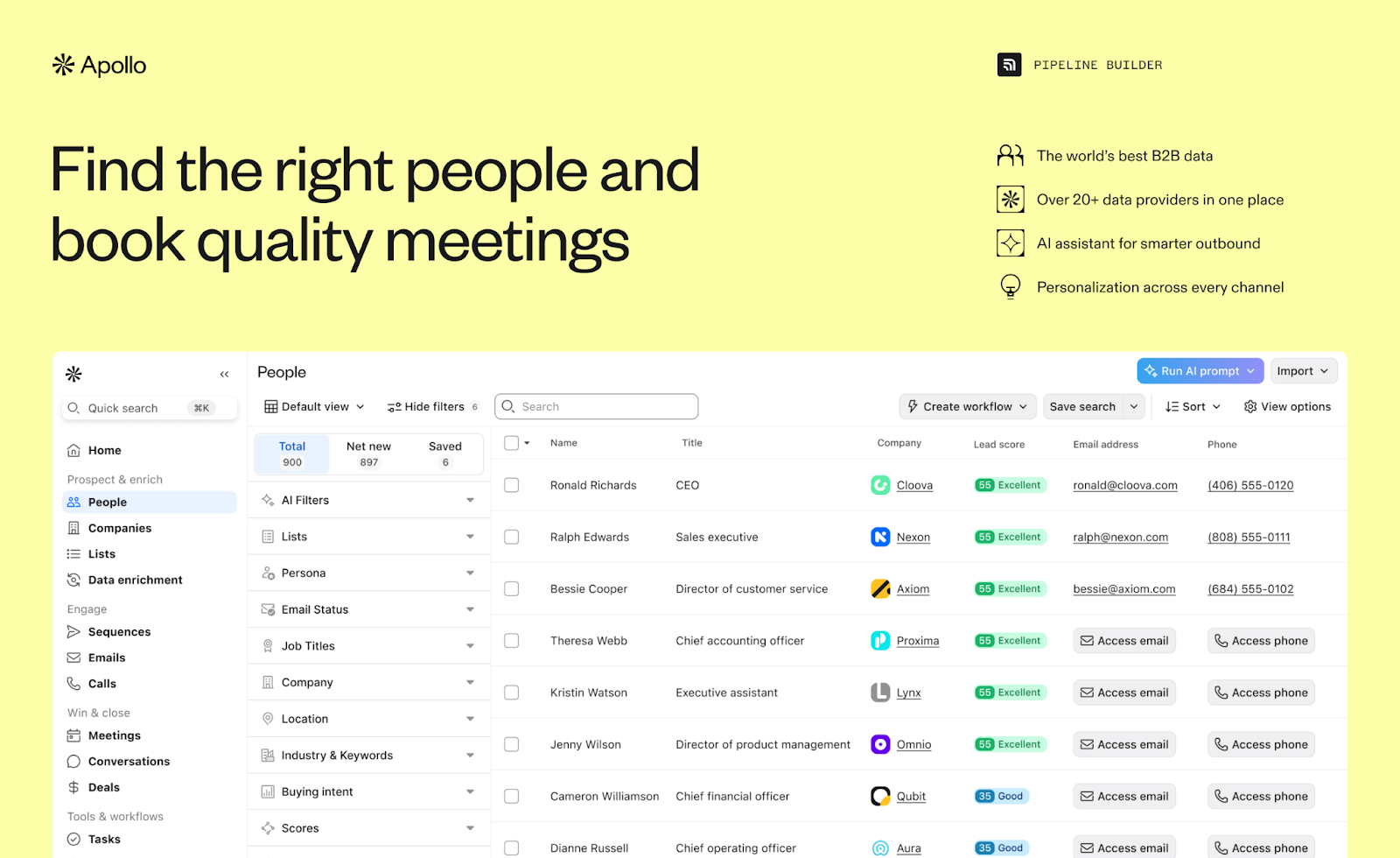
Apollo is an all-in-one sales intelligence, data, and engagement platform with a large B2B database and outbound automation features. It emphasizes workflows for revenue teams, including prospecting, outreach sequences, calling, and performance analytics. Apollo is a broad, well-established platform that works especially well for mid-market and enterprise B2B teams.

Apollo is best suited for agencies that need to run high-volume outbound campaigns to mid-market and enterprise clients and want prospecting, sequencing, and basic calling capabilities built into a single platform.

Source: G2

Key Features

  • Large B2B database (contacts & companies)
  • Engagement sequences and outreach automation
  • Prospecting filters, scoring, and CRM sync
  • AI-powered call summaries, follow-ups, and deal insights

Benefits of Apollo

  • Quickly scale outbound sequences with a massive contact pool
  • Manage outreach and pipeline inside the same tool

Pricing

Apollo offers a free trial. 

  • Basic: $59/user/month
  • Professional: $99/user/month
  • Organization: $149/user/month (Min. 3 users)

Usage is governed by a credit-based model. Discounts are available on annual billing.

Pros

✅Huge contact coverage and integrated sequences

✅Affordable entry point

✅Consolidating prospecting, enrichment, and outreach into one tool reduces friction

✅Email sequences and task automation reduce manual work

Cons

🚫Large database but often skewed to enterprise data

🚫More expensive per user as features scale

🚫Credit-based model creates budget unpredictability

🚫Data accuracy varies significantly for SMBs

🚫Feature complexity overwhelming for simple needs

What Customers Say

“One of the best modern tools with a bunch of marketing features, it has replaced multiple tools for Data Mining, Email Marketing that we used to subscribe to, and will definitely be replacing one of the most costly CRM that we've been using for years. Our new team members were able to use it pretty quickly and have now started to use it daily.

We've observed around 75 to 80% data accuracy so far, which could have been better, also I would recommend Apollo to have its own email server.”

- Review collected by and hosted on G2.com.
Lusha

Category: B2B Contact Data & Enrichment

What Lusha Does

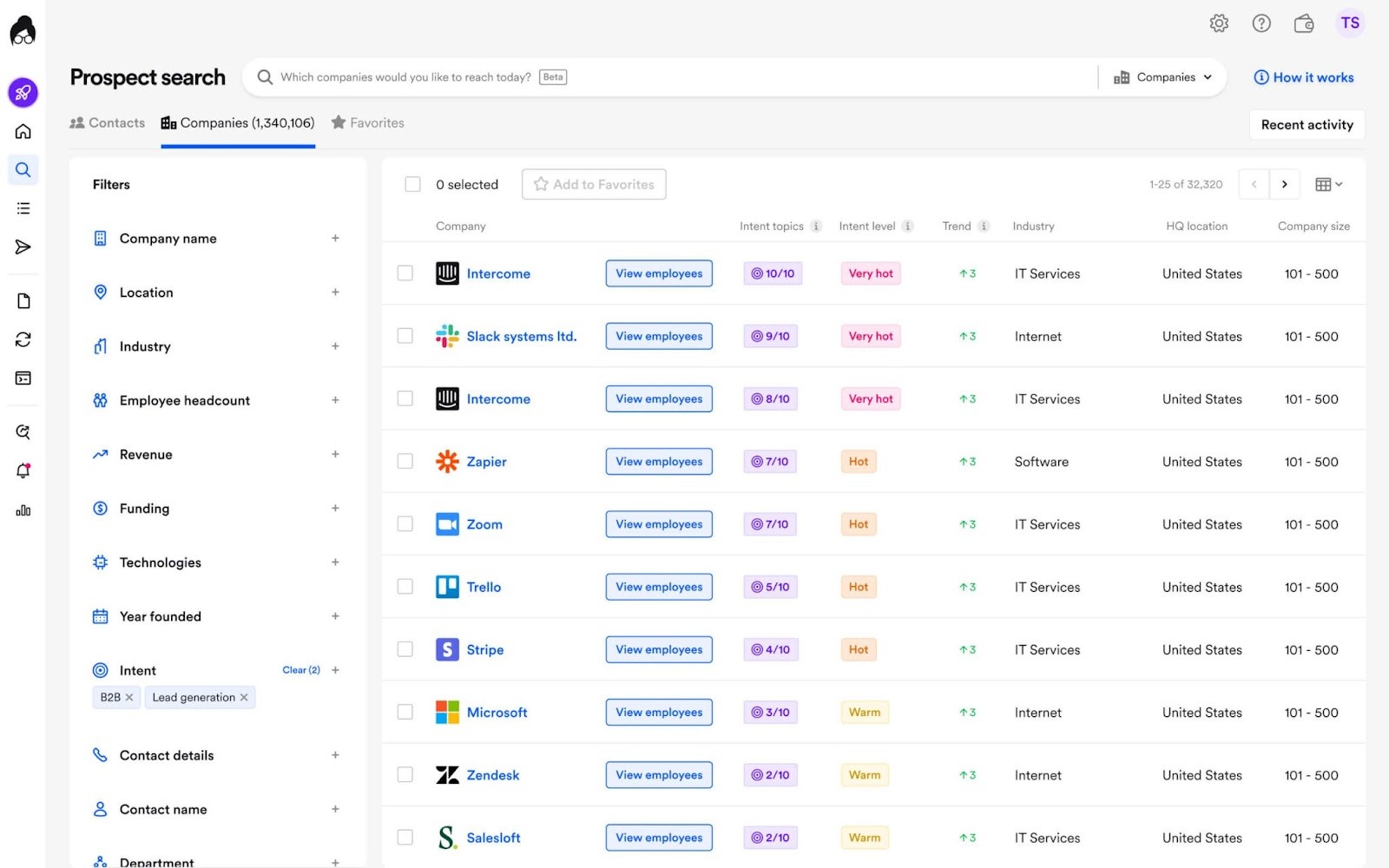
Lusha provides contact and company data, including verified emails and direct dials, using a credit-based pricing model. Agencies get access to B2B contact data with built-in compliance for GDPR and CCPA. Lusha is widely used for fast contact enrichment and tight Chrome and LinkedIn integrations.

Lusha is best suited for SDRs and agency teams that need quick access to verified contact details and simple enrichment directly from LinkedIn or the browser, rather than full outbound sequencing or campaign management.

Source: Lusha

Key Features

  • Global contact database (285M profiles)
  • Browser extension & CRM integrations for enrichment.
  • Credit-based pricing for contact reveals.
  • Buyer intent signals to identify companies showing active buying behavior.
  • Job change alerts when decision-makers change roles.

Benefits of Lusha

  • Fast contact discovery and enrichment that helps teams quickly personalize outreach.
  • Works well with LinkedIn-led prospecting.
  • GDPR compliance for European prospecting

Pricing

Lusha works on a credit-based system and offers a free trial.

  • Pro: $29.90 to $65.90/month (250 to 550 credits)
  • Premium: $69.90 to $737.90/month (600 to 7,500 credits)

Discounts are available on annual billing.

Pros

✅High-quality contact data with strong global coverage

✅Extremely fast contact lookup with the Chrome & LinkedIn extension

✅Fast enrichment and easy CRM integration

✅Strong European data coverage

Cons

🚫Cost per contact can add up; phone data consumes credits quickly

🚫Less focused on SMB signals (more enterprise B2B)

What Customers Say

“What I like best about Lusha is how quickly and accurately it finds contact information for prospects. It saves a lot of time on lead research.

Sometimes the contact numbers are outdated or unavailable for certain industries, which requires cross-checking from other sources.”

- Review collected by and hosted on G2.com.
Leadfeeder

Category: Website Visitor Intelligence

What Leadfeeder Does

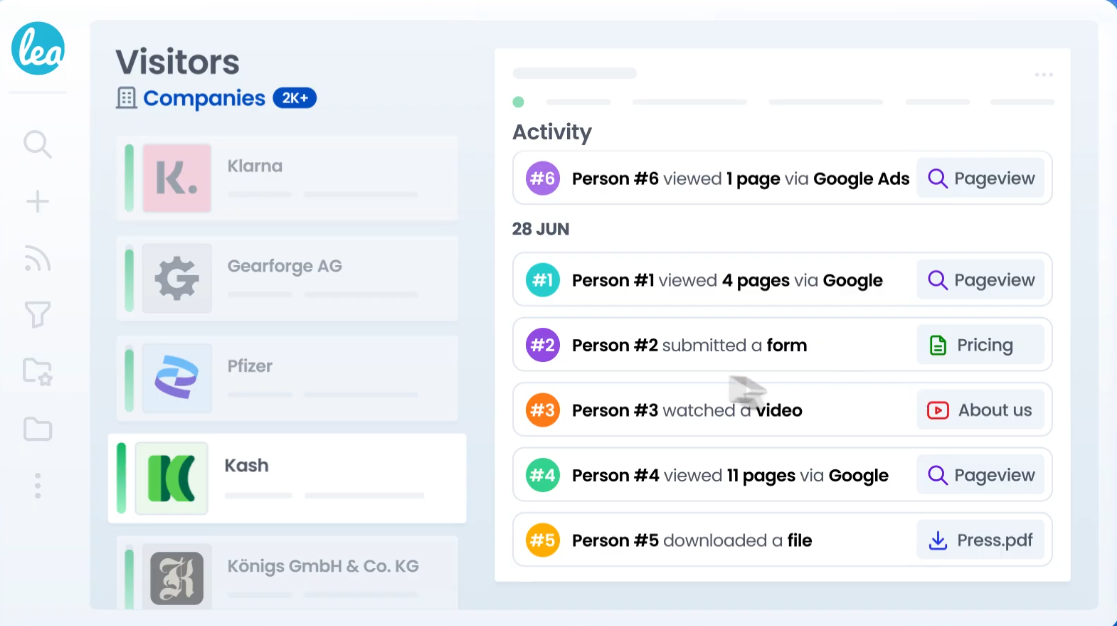
Leadfeeder identifies companies visiting your website (even without form fills) and enriches visits with company data and behavior signals. It’s focused on turning anonymous traffic into warm leads.

Leadfeeder is best for agencies that run lead magnets, SEO/ads, and want to capture mid-funnel intent signals.

However, Leadfeeder only helps if you have meaningful website traffic. If you’re primarily doing outbound prospecting with no inbound strategy, this tool won’t surface any leads.

Source: Leadfeeder

Key Features

  • Company visitor identification from web traffic.
  • Daily lead feeds and visit detail pages.
  • Integration with CRMs and marketing workflows (Salesforce, HubSpot, Pipedrive, Slack, Google Ads).
  • Firmographic enrichment for identified companies
  • Alerts for target account activity
  • Filtering to remove bots, ISPs, and low-quality traffic

Benefits of Leadfeeder

  • Capture mid-funnel intent (visitors who researched but didn’t convert).
  • Prioritize warm leads who already visited your site.
  • Marketing attribution clarity on which campaigns, content, and channels drive high-value visitor traffic
  • Enable faster follow-up on high-intent accounts

Pricing

Leadfeeder offers a free forever plan and usage-based paid plans: Paid plans start at €141/month. A discount is available when choosing to bill annually.

Pros

✅Great for surfacing warm prospects and campaign attribution.

✅Easy setup with Google Analytics

✅Strong visibility into buyer behavior and content engagement

Cons

🚫Not a cold prospect database; must have decent inbound traffic to be useful.

🚫Company-level identification only (no guaranteed individual contacts)

🚫Identification rates vary significantly

What Customers Say

“I can view website visits and see exactly what they were looking at on website.

The only thing I wish was different is that it only says a person viewed your website from xyz company, not actually who it was.”

- Review collected by and hosted on G2.com.
ZoomInfo

Category: Enterprise Sales Intelligence & GTM Platform

What ZoomInfo Does

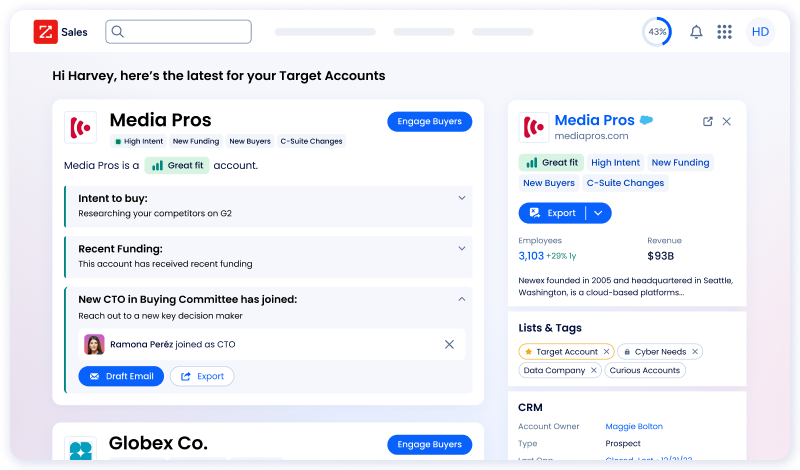
ZoomInfo is a comprehensive go-to-market intelligence platform that offers AI-powered B2B contact data, account intelligence, and buyer intent signals. It is enterprise-grade and widely adopted by large sales and marketing organizations. ZoomInfo helps enterprise revenue teams identify in-market buyers, prioritize high-fit accounts, automate GTM workflows, and accelerate pipeline growth across both sales and marketing.

ZoomInfo is best suited for enterprise sales, RevOps, and ABM teams that rely on intent data and account-level insights. It is generally not a strong fit for agencies or teams targeting local SMBs.

Source: ZoomInfo

Key Features

  • Extensive company & contact database.
  • Intent signals and firmographic enrichment.
  • AI-driven account intelligence and prioritization
  • Org charts, buying committees, and stakeholder insights
  • Salesforce and CRM integrations.

Benefits of ZoomInfo

  • Powerful account intelligence and intent scoring for ABM programs.
  • Identify and engage in-market buyers earlier in the buying cycle
  • Seamless CRM integration for enterprise workflows.
  • Scale GTM execution across large teams and territories

Pricing

ZoomInfo Sales pricing is custom and contract-based. Plans are tailored based on seats, data access, and selected product modules. 

Pros

✅High-quality data 

✅Enterprise-grade integrations and automation

✅ Strong buyer intent and account-level intelligence

Cons

🚫Cost-prohibitive for many mid-sized agencies and SMB-focused prospecting.

🚫Requires onboarding and operational maturity to fully leverage

🚫Can be overly complex for simple outbound use cases

What Customers Say

“Zoominfo Sales has made it much easier for our team to locate contact information for prospects that were previously difficult to find. In addition, their AI-powered emails are well-crafted and have noticeably improved our open rates. The Webtracks feature also provides valuable insight into who is visiting our website, which helps us run nurture campaigns to engage and warm up potential leads.

One drawback is that it’s easy to feel overwhelmed by the amount of information available. However, refining your searches can help manage this.”

- Review collected by and hosted on G2.com.
BuzzBoard

Category: SMB Meta-Intelligence & Enrichment

What BuzzBoard Does

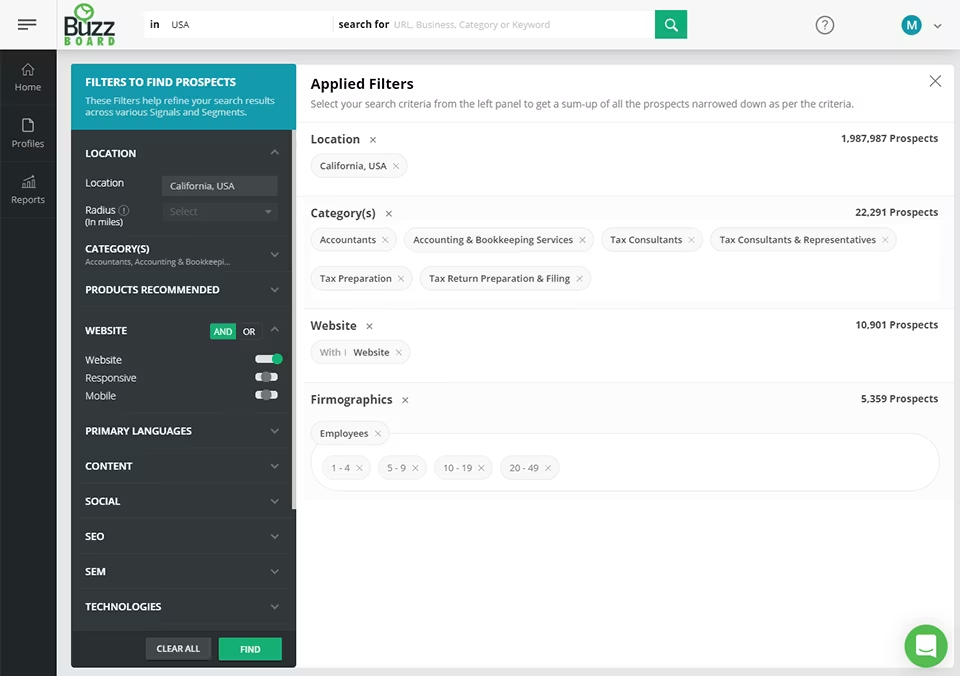
BuzzBoard provides extensive SMB coverage with multi-signal enrichment, offering 30M+ SMB profiles and thousands of data signals. It is built specifically for agencies, media groups, and resellers that need deep SMB attributes to support personalized outreach, sales enablement, and campaign fulfillment.

BuzzBoard is best suited for agencies and resellers that require enterprise-grade SMB intelligence, advanced segmentation, and micro-segmentation to target and engage local and regional businesses at scale.

Source: Buzzboard

Key Features

  • Large SMB dataset (30M+ profiles).
  • 6,000+ digital, local, and behavioral SMB signals
  • AI-driven prospecting and recommendation engine
  • Reseller integrations and API access.
  • AI-generated ads, emails, social, SEO, and website content at scale

Benefits of BuzzBoard

  • Very good at micro-segmentation and personalized SMB outreach.
  • Useful for agencies that sell packaged services and need precise SMB targeting.
  • Reduces manual sales research and production effort dramatically

Pricing

BuzzBoard offers value-based and volume pricing by module (Ignite, Zylo, Ember). Contact sales for exact pricing.

Pros

✅Accurate SMB signals and rich enrichment for local businesses.

✅AI agents that turn insights directly into execution

✅Digital health scoring (BuzzScore) is genuinely useful

Cons

🚫Custom pricing and setup 

🚫May require more integration work.

🚫Overkill for small teams or low-volume SMB prospecting (only useful for digital marketing sellers)

What Customers Say

“What I find most helpful is when I'm on a business website, just by simply clicking on the downloaded extension at the top will provide me a Buzz score, a profile, and category insights on that business. This feature is extremely helpful.

It's kind of intimidating at first because there is so much to it with all the different filters. Luckily, there are many tutorials and webinars that will get you up to speed.”

- Review collected by and hosted on G2.com.
Summing Up…

Choosing an SMB prospecting tool isn’t about chasing the best platform. It’s about choosing the tool that fits how you actually sell.

You need to consider your ICP, your sales motion, and your budget reality.

The right prospecting tool should match three things:

  1. Who do you sell to? SMBs vs mid-market vs enterprise.
  2. How do you sell? Cold outbound vs inbound follow-up vs hybrid.
  3. What do you sell? Digital marketing vs broader services.

For most agencies targeting SMBs, the winning combo is:

  • SMB-specific data (not generic B2B junk)
  • Digital footprint intelligence (not just emails)
  • Sales & delivery infrastructure in one place

That’s exactly why platforms like Synup OS are gaining traction.

If you need end-to-end infrastructure (from prospect discovery to closed deal to service delivery) with real SMB audit data, then Synup OS is built for exactly that.

Industry studies show that agencies that consolidate prospecting and pipeline management don’t just “feel” more efficient; they perform better.

Disconnected tools slow deals down…and every handoff leaks momentum.

Get Started with Synup

Synup helps you find SMBs, but it distinguishes itself by allowing you to close and keep them.

Instead of duct-taping 5–8 tools together, Synup connects prospecting, pipeline, proposals, service delivery, and retention in one system.

What that actually means in practice:

  • 40M+ SMB profiles with live digital audits showing what’s broken
  • No credit anxiety: Flat pricing, no per-contact math
  • Built-in pipeline: Move from discovery to signed contract without tool-hopping
  • White-label delivery included: Listings, reviews, social without margin erosion
  • Churn forecasting: AI-backed signals to keep clients longer

Best Openmart Alternative: FAQs

  1. What’s the best Openmart alternative for small agencies?

If your budget is tight and you need general B2B outreach, Apollo offers solid value at a low entry price. But if you’re targeting SMBs specifically and want insight beyond contact info, like listing issues, review gaps, or visibility problems, Synup OS delivers far more relevant data and replaces your CRM and proposal tools in the process.

  1. Which tool actually has the best SMB data?

Synup OS and Buzzboard have some of the best SMB databases. They’re built for SMBs, not retrofitted for them.

Synup’s edge is depth:

  • Owner contact data
  • Google Business Profile status
  • Reviews, listings, social presence, SEO health

Most B2B databases struggle with SMB accuracy because SMB data is messy. Synup is designed to untangle that.

  1. Which tool is best for capturing local intent (searches/reviews)?

Synup and BuzzBoard specialize in SMB/local signals. Leadfeeder captures web intent from visitors.

  1. Can I export Synup leads to my CRM or outreach tool?

Yes, Synup supports exports and integrations to push prospects into outreach workflows or your CRM. 

Arbeiten Sie noch heute mit Synup zusammen!

Vereinbaren Sie einen Anruf mit unserem Partnerschaftsmanager, um maßgeschneiderte Wachstumslösungen für Ihre Agentur zu finden.