Add And Launch New Agency Services Smoothly
Want to grow your agency without spending on more clients? This 8-step guide shows how to launch new services that boost revenue and fit your existing workflow.
Add and Launch New Agency Services Smoothly: 8-Step Guide
Running an agency is like conducting a very large (and sometimes out-of-tune) orchestra. To achieve lasting success, you’ve likely heard from countless industry veterans that you must stay open to adopting new technologies and expanding your services.
If you want to grow your agency and revenue without spending on chasing more clients, the most effective way is to start selling more to the ones you’ve already got.
Yes, that’s it!
Scaling doesn’t always mean budgeting thousands on paid ads, squeezing in more leads, or burning out your team. Sometimes, the way to go is to launch a new service that fits right into your existing workflow and gives clients one less reason to go elsewhere.
Since 2014, Synup has helped over 600,000 businesses globally (mostly agencies like yours) improve customer acquisition, reputation, and brand visibility by doing things a little smarter. Let’s walk you through how to launch new agency services without breaking your operations, budget, or confusing your clients.
TL;DR: How to Add and Launch New Agency Services Smoothly
- Start with strategic fit: If your team can’t deliver it or the margin’s bad, don’t offer it.
- Validate demand: Talk to clients, review lost deals, and test with a small paid pilot before rolling out.
- Define your offer properly: Know your buyer, scope, pricing, and delivery timeline; write everything down.
- Build solid delivery systems: Create SOPs, automate workflows, and assign roles clearly across in-house or outsourced teams.
- Price around value: Package your service in tiers and upsell it to existing clients where possible.
- Track real results post-launch: Monitor turnaround time, CSAT, margin, and client feedback closely in the first 90 days.
- Prep your team: Train with playbooks, battlecards, and case studies.
- Optimize as you grow: Use real feedback to tweak your offer, packaging, and sales pitch until it clicks.
Step 1: Evaluate Strategic Fit
Most agencies often bite off more than they can chew.
You get excited about a new trend, a client asks for something “extra,” or you see a competitor offering something and feel the fear of missing out (FOMO).
That’s where it all starts going wrong.
Before you jump in, ask:
“Is this a good fit for how we work, or is it just shiny object syndrome?”
Here’s a dead-simple Service Fit Scorecard to sanity-check yourself in the quest for new service addition:
- Do clients keep asking for it?
One-off requests don’t count. You need to look out for patterns.
Here’s what counts as real demand:
- 20% or more of clients requesting it in discovery calls or during your onboarding stage
- Recurring mentions in CRM notes, email replies, or client surveys (more on this later)
- Lost opportunities where prospects said, “We went with someone who also does [X]”
- Can your team actually deliver it?
Adding a new service shouldn’t require hiring three specialists or duct-taping processes overnight.
Ask yourself:
- Does anyone on the team have direct experience delivering this?
- Do we have the right tools or tech stack in place?
- Will it affect turnaround time for existing projects?
If you’re a content agency considering paid ads, but no one on your team has ever run a live campaign or managed $1,000+ in ad spend per month, you’re not ready.
That’s how burnouts happen and how sloppy results lead to churn.
Outsourcing might feel like a shortcut, but if you’re handing over strategy to a white-label partner you barely know, you’re rolling dice with your reputation.
Please, slow down. Don’t stretch the crew thin or hand over client trust to a random white-label partner you found last week.
- Is there a good margin with it?
If you can’t earn at least 30–50% gross margin after labor, tools, and time, it’s not worth the hassle.
Here’s a breakdown:
- Paid ad management with proper tracking tools: around $200/month in tools, $400–$600/month in labor
- Your monthly retainer: $1,200
- Margin: Maybe $400, before revisions or strategy calls
Compare these to content services you already offer, which might cost $300 to produce but bring in $1,000+ retainers. See the gap?
Here are the warning signs of poor margin:
- High dependency on external platforms (e.g. Meta Ads or Google Ads)
- It usually involves manual reporting or ongoing optimisation
- It requires too much client education to upsell
Don’t fall into the “it’ll scale later” trap. If it doesn’t pay well early, it won’t later either.
- Does it complement what you already do?
Great service expansions feel like a natural extension of what you already offer. You shouldn’t have to spend too much time and energy re-educating your clients or your team.
Here are a few questions to ask:
- Does it share the same KPIs as our current services?
- Can we package or bundle it with existing offers?
- Does it fit our brand promise and expertise?
For example, if you’re a web design agency, and you’re considering adding SEO, it might be a fit, but only if clients ask for it frequently, your team understands basic SEO structure (titles, schema, image optimisation), and you can build repeatable SEO packages (not ad-hoc fixes).
Otherwise…
You’ll end up like one agency owner on r/agency, who added email marketing because a long-term client asked.

They didn’t price it, had no SOPs, but ended up delivering four months of free work!
At the end of the day, you end up doing loads of free work, confusing the team, and losing the original client over poor results.
Step 2: Make Sure People Actually Want It
Let’s say your new service ticks the right boxes internally. Now what?
Like we said, you’ve got to check and confirm if the market cares.
This step is where a lot of agencies drop the ball. They assume that if one client asks, the rest will follow. But that’s a huge gamble and the risk you should be wary of taking on.
Here’s how to test demand the smart way, without spending months on R&D.
- Talk to your Top 5 clients
Not with a survey or a Mailchimp form. Schedule an honest-to-god call: Zoom, Teams, Google Meet, physical meeting, or whatever works.
Focus on asking these (or varieties of these) questions:
- “What do you wish we offered but currently don’t?”
- “What marketing or operations work are you outsourcing elsewhere?”
- “If we rolled out (your service idea), would you want early access?”
Keep it unscripted and real. Your best clients will give you more usable insight in 15 minutes than a 30-question Typeform ever will.
- Dig into your CRM, sales notes, and support threads
Your clients have likely been asking for something specific already; you’ve just been too busy to notice.
Here’s where to look:
- Lost deals: Look at the last 25 lost leads. If 5 or more mention a need for the service you’re considering, that’s real demand.
- Client onboarding forms: Any repeated requests under “what else do you need help with?”
- Support tickets: Look for pain points you’re not currently solving but could with minimal effort.
For instance, maybe you are a B2B SaaS-focused content agency that noticed 6 clients in Q1 asking about managing their company’s Google Business Profile, which wasn’t part of your core offer. After tagging those mentions in HubSpot, you have enough signal to run a test.
- Check what similar-sized agencies are bundling
What you’ll be doing isn’t copying but pattern-spotting.
Spend 30 minutes researching 5 to 10 agencies in your niche and similar size range. Focus on lean teams (under 50 employees), not massive, $100M VC-backed operations.
Here’s what to look out for:
- Are they bundling new services with their existing ones? (e.g. content + GBP optimisation, SEO + review management)
- Do their newer case studies focus on one new service?
- Are they hiring for roles that hint at new offers?
If you notice 3 or more doing something similar, there’s a market shift underway.
- Run a paid pilot with real clients
This is where most agency owners often chicken out; they either go full launch or wait endlessly for the “right moment” (and we know that never comes).
Here’s your middle ground: a low-stakes pilot offer. Here’s how to do it:
- Build a lean one-page proposal
- Service name
- What’s included (3–5 bullet points)
- What’s not included (manage scope)
- Monthly price (keep it fixed)
- Send a personal email to 5 to 10 clients
- Subject: “Trying something new – want in?”
- CTA: “We’re testing this with 3 clients in [month]. Want early access?”
- Set expectations early
- “It’s new. We’re refining as we go.”
- “You’ll get founder-level support and discounted pricing.”
- Collect structured feedback
- What worked?
- What was confusing?
- Would they pay more for it if refined?
Example:
If you want to add local SEO for multi-location clients, don’t build a service line yet. Instead:
- Create a GBP Audit Template using Google Docs or Notion
- Offer it for free to 3 current clients
- Ask: “Would you like us to fix this and manage it monthly?”
As an agency, you can turn that into a $750/month retainer and build a scalable package later.
Still Wary? Here’s a Quick Demand Validation Checklist
- 3+ clients said yes on a call
- Found 5+ mentions in CRM/support logs
- 3+ competitors are bundling it
- At least one client paid for a test version
If you can check 3 out of 4, it’s time to build.
If not, hold your horses!
Why This Step Matters
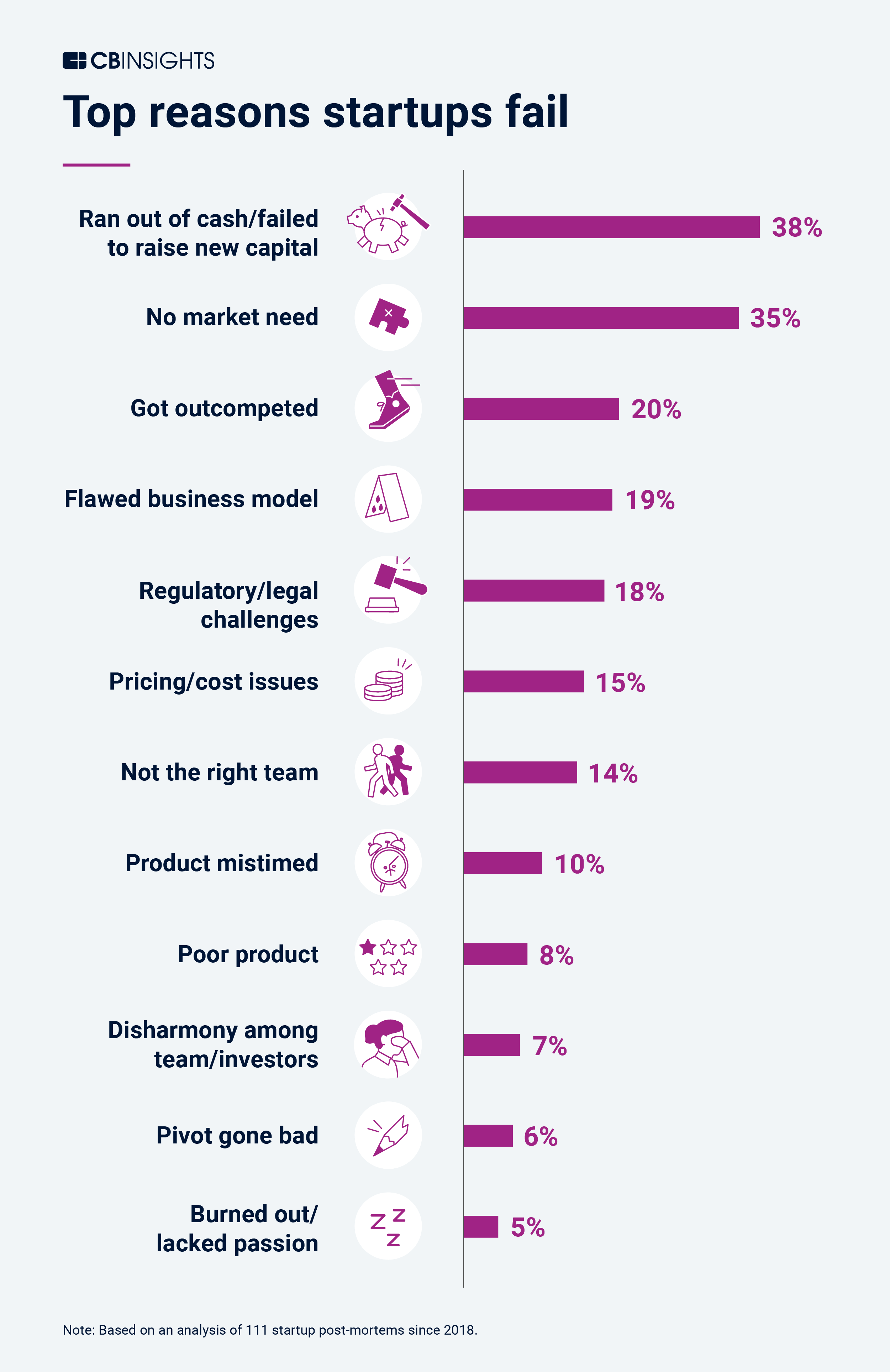
According to a CB Insights 2023 study, 35% of new product failures happen because there’s no market need.
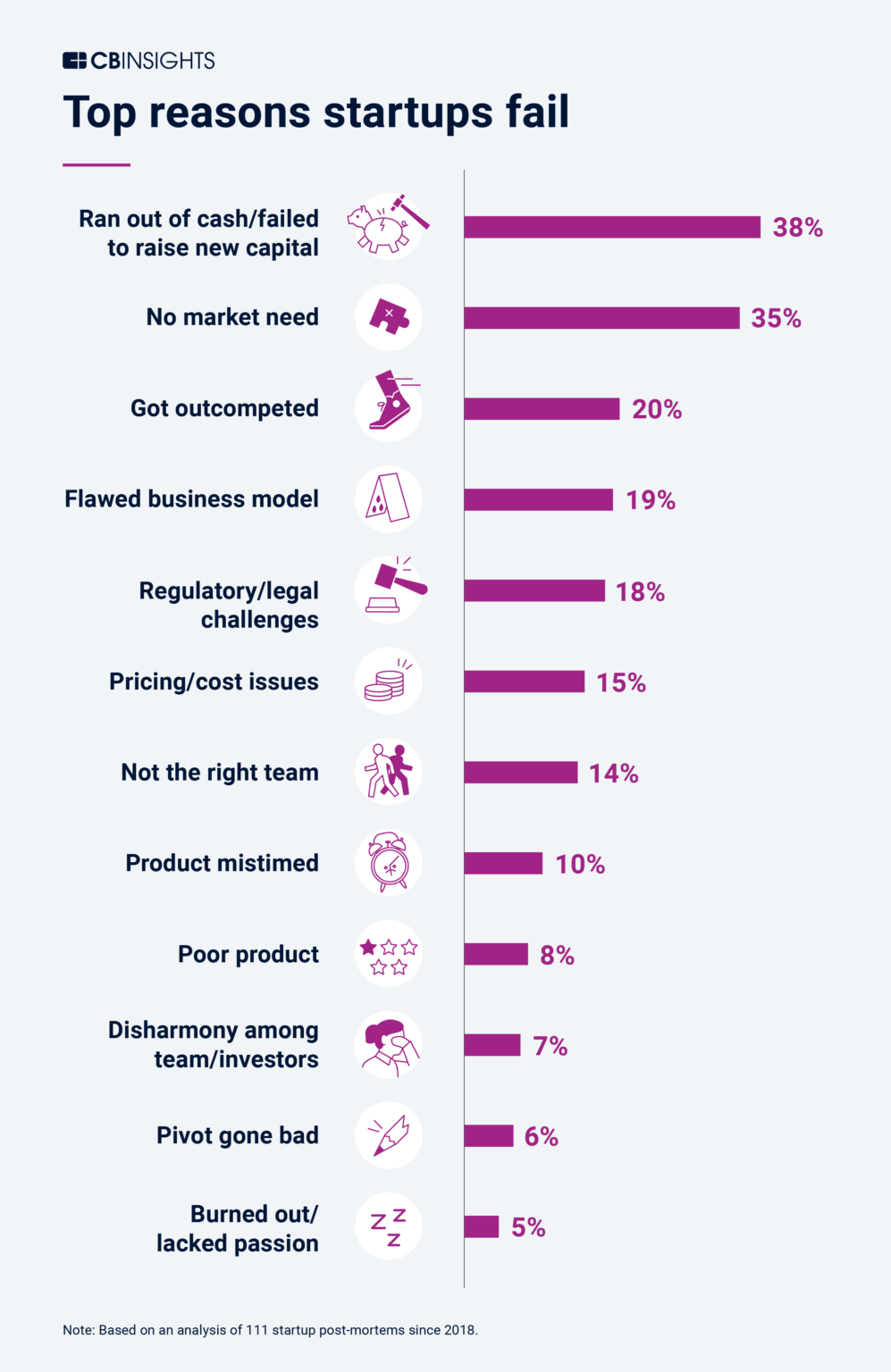
Source: CBS Insights
So, launch slow, validate fast, and when it sticks, you’ll grow revenue without chasing a single new lead.
Step 3: Define the Service Offering
Before you sell it, you need to know what you’re offering.
Too many agency owners skip this and end up stuck in delivery hell. You need to be specific with what your new service includes, who it’s for, and how it works.
Start by narrowing in on five critical areas:
- Know your target persona inside-out
If you’re building a service “for anyone,” you’re building it for no one.
Your offer should be made for a very specific type of buyer with recurring business pain and a budget. Ask yourself:
- Who stands to gain the most from this?
- What are they already paying for?
- What business metric do they obsess over: leads, rankings, conversions, or reviews?
For example, let’s say you’re offering reputation management. A solo consultant with five Google reviews may not be your ideal buyer. A franchise with 60+ locations and 300+ listings is bleeding time and revenue trying to handle public reviews, GMB spam, and inconsistent NAP details across the web.
Speak to them directly.
- Set the boundaries of the service (in writing)
Loose service definitions kill profit.
If a client ever asks, “Wait, does this include XYZ?” and you insert that fatal pause... you’ve already lost clarity, and likely your margin.
Here’s what to do:
- List what’s included: e.g., “3 GMB optimisations, 5 local directory updates, weekly review response, monthly performance report.”
- Specify volume and frequency: Number of deliverables per month, how many meetings, and how many revisions are covered.
- State what’s not included: Add-ons like paid ads, custom dev work, or emergency calls? Price them separately.
Avoid the words “comprehensive,” “full-service”, or “done-for-you.” Be specific, like you’re drawing up an invoice.
- Define your time-to-value (TTV)
People don’t buy promises but progress. Time-to-Value (TTV) means: how fast can you prove this is working?
According to a research report by Career Builder, half of small businesses don’t have a structured onboarding process. Yet early onboarding success is directly tied to retention. Companies with structured onboarding get a 63% year-over-year increase in customer satisfaction.
So, break your value into time blocks:
- Week 1: Deliver a keyword boost, a GMB health check, or a review response audit.
- Day 30: Show the first set of positive trends, maybe traffic lift, review count, or GSC visibility.
- Day 60–90: Major KPIs like ranking movement, lead volume, or call tracking results.
Early wins can buy you trust. That trust buys you time. Don’t leave it to chance; plan it like a product launch.
- Choose a pricing model that matches the work
Clients dislike unexpected pricing changes, and honestly, so would you if undercharging meant spending extra hours wrestling with scope creep.
Pick a structure that supports the type of service you’re offering:
- Monthly retainer: Perfect for recurring work, SEO, content updates, and listing management. It’s stable and expected.
- Fixed project: Great for audits, one-off builds, or redesigns. But you need a clearly defined endpoint.
- Performance-based: High risk, high reward. Only use this if you control the funnel end-to-end (for instance: paid leads with landing pages and call tracking).
Tip: Use a hybrid to start. Charge an upfront setup fee, then shift to a monthly retainer once live.
- Build the minimum viable service (MVS)
You don’t have to stuff a new service with every bell and whistle. You have to be careful you’re not overcommitting and risking a stall. Instead, focus on your Minimum Viable Service, the leanest version that still delivers results.
Here’s how:
- Strip it down: Remove anything that’s nice-to-have, not must-have.
- Test it live: Use your first 2–3 clients as a sandbox. Get their feedback, track outcomes, and refine.
- Standardise fast: Turn wins into processes. Package it. Productise it. Repeat.
Avoid endless customisation. Custom work drains your team and confuses your offer. Productised services scale. They’re easier to sell, train, and deliver.
Step 4: Set Up Delivery & Operations
Once you’ve nailed down what you’re offering, it’s time to make sure you can deliver it on time, on scope, and without losing your weekends.
This is where a lot of new services start to fall apart. The offer is great, but the backend or deliverability is messy. Here’s how to build delivery systems that don’t collapse when you sign your third client.
- Build a proper service blueprint (Client Journey Map)
Your service delivery starts the second a client signs. This is where your Service Blueprint comes in. It is a visual map of:
- What the client sees and expects (onboarding, updates, deliverables)
- What happens internally (briefs, QA, review cycles)
- Who owns what if anything breaks (delays, errors, misalignment)
Use Miro, FigJam, or even a whiteboard. Map out each touchpoint:

Stage: Day 1
Client Touchpoint: Welcome Email Sent
Internal Task: Assign PM + Setup Project
Owner: Ops Manager
Stage: Day 3
Client Touchpoint: Onboarding Call
Internal Task: Kickoff Brief
Owner: Strategist
Stage: Week 1
Client Touchpoint: First Win Delivered (e.g. audit/report)
Internal Task: QA Check
Owner: Account Lead
Stage: Week 4
Client Touchpoint: Monthly Reporting
Internal Task: Data Review + Commentary
Owner: Analyst
If something’s not mapped, it’s a wild card. And wild cards burn trust.
- Create SOPs (important after client #3)
Standard Operating Procedures (SOPs) save time, avoid mistakes, and protect your margins.
Don’t wait until things go sideways. Start with these four essential SOPs:
- Client Onboarding SOP: Include welcome email templates, intake form checklist, and kickoff meeting deck.
- Monthly Reporting SOP: Outline report format (e.g. Data Studio), delivery timeline, and who adds insights. Businesses with documented SOPs are more likely to hit growth targets compared to those without.
- QA Checklist: Create a 10-point checklist. Things like “Are all links working?” “Spelling/grammar reviewed?” “KPI benchmarks included?”
- Communication Guidelines: Set rules for frequency (weekly updates?), channels (Slack, email, Loom), and tone (casual vs formal).
Pro tip: Store everything in Notion or Google Drive, link to a shared operations hub, and review quarterly.
- Lock in repeatable tools & automations
Rebuilding your delivery stack for every service is a waste of time. Instead, pick tools your team already knows and build light automations.
Here’s an entry-level stack to try:
- Task Management: ClickUp, Asana, or Trello
- Workflow Automation: Zapier
- Reporting: Google Data Studio, Sheets, or DashThis
- Client Updates: Loom, Calendly
- File Sharing: Google Drive or Dropbox
- Training & SOPs: Notion or Trainual
Start simple. If you’re automating a weekly report, one Zap between Data Studio → Gmail can save you 30+ minutes per client, per month.
Also Read: Top SEO Workflows You Can Automate with AI
- Define who delivers what (in-house, outsourced, or hybrid)
This is where delivery bottlenecks or scales.
You’ve got three options, and each comes with trade-offs:
- In-house
- Pros: Full control, faster feedback loops
- Cons: Slower to scale, higher payroll
- Outsourced
- Pros: Cost-effective and flexible
- Cons: Risk of quality drops, poor brand control
- Hybrid
- Pros: Balance of both in-house and outsourced models
- Cons: Still requires strong SOPs + oversight
Example: An agency offering GMB optimisation might:
- Keep onboarding, messaging, and review response writing in-house (client-facing stuff).
- Outsource directory submissions and data entry to a vetted freelancer or a white-label provider.
Before outsourcing, run a paid trial project. Test these three metrics:
- Quality (does it meet your standards?)
- Turnaround time (can they meet deadlines?)
- Communication (are they proactive, responsive, and aligned?)
Finally, write up a RACI chart (Responsible, Accountable, Consulted, Informed) to prevent dropped balls.
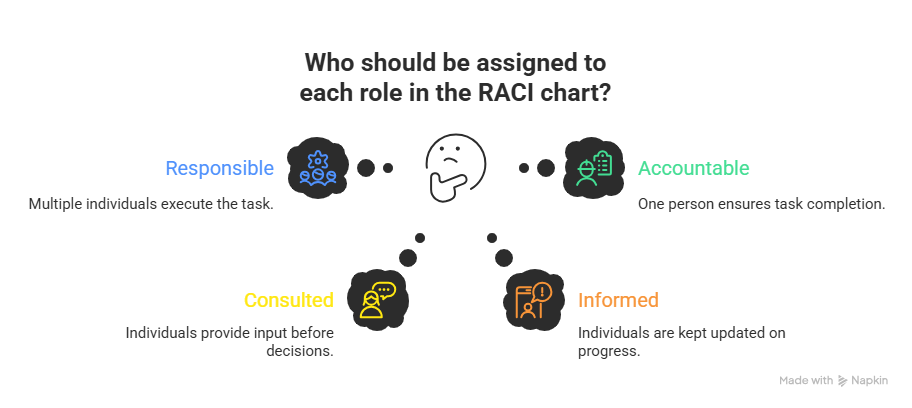
If an update is late or sloppy, the client doesn’t care who’s “responsible.” They only see poor delivery. So, assign clear roles.
Step 5: Price & Position the Service
Now comes the moment of truth. How do you price this thing, and how do you sell it without sounding like a pushy salesperson?
Here’s the playbook around that:
- Anchor your pricing to outcomes
Clients don’t want 10 blog posts, but higher search rankings. They don’t care about 200 citations. They want more foot traffic.
So price your offer around what it does, not just what it is.
Let’s say your new service is listing management for multi-location businesses.
Don’t say: “We submit 50 listings.”
Say: “We increase your local visibility in maps and mobile search, quick.”
That shift in framing boosts perceived value and lets you charge more.
- Offer tiered packages or bundles
Give clients a choice, but not too much.
Three tiers work well:
- Starter: Leanest offer, lowest price. Good for early-stage or budget-sensitive clients.
- Growth: Best value. Most clients choose this one.
- Pro: Premium service with faster turnaround or extra features.
Package these in a clean, side-by-side format. Highlight the “Growth” option as recommended.
Bundling also works. Example:
“Buy our listings package and get 50% off review monitoring for the first 2 months.”
- Position as an upsell to existing clients
Your warmest prospects already pay you. Use that.
Run an internal list pull:
- Who’s been with you 6+ months?
- Who’s using only one core service?
Send a short, personal email:
“Hello [Name],
We’re rolling out a new service that could help you [insert benefit].
Thought of you right away. Do you want early access?”
Offer early bird pricing or a short-term discount for loyal clients. This builds momentum and lets you test delivery before going wide.
Step 6: Launch the Service
The best way to launch a new agency service is with a measured rollout and performance tracking from day one.
This means testing the waters with real clients, tracking operational and client success metrics, and keeping the feedback loop tight.
Start with delivery KPIs
You can’t improve what you don’t track.
Before you go wide, define key delivery metrics that signal client satisfaction and service health.
Here are three critical metrics to track:
- Turnaround time: How long does it take from intake to the first deliverable? Keep it within 3–5 days if possible.
- CSAT (Customer Satisfaction Score): Send a 1-question survey post-delivery. Aim for a satisfaction rate of 85% or higher.
- Profit margin: After labor, tools, and time, is your margin above 30%? If not, the delivery needs a rework.
These should be tracked weekly during the first 90 days after launch.
Use Google Sheets or a project management dashboard to keep things simple and visible.
Build a tight client feedback loop
New services often look better on paper than in the wild. That’s why feedback is essential.
Set up multiple points of feedback:
- NPS (Net Promoter Score): After the first month, ask: “How likely are you to recommend this service to a colleague?”
- Mini-surveys: Keep it under 3 questions. Ask about clarity, value, and suggestions for improvement.
- 1:1 interviews: Pick 3–5 clients and chat with them directly. Ask what felt clunky and what they’d happily pay more for.
Don’t wait until clients churn. Be proactive. When clients feel heard, they’re more forgiving and more loyal.
If more than 40% of clients report confusion or unmet expectations, it’s a sign to revisit your onboarding, SOPs, or positioning.
Step 7: Prepare Your Team
No service launch succeeds without team buy-in. It doesn’t matter how good your new offer is; if your team isn’t aligned, it’ll fall flat.
You need both internal belief and client-facing readiness.
Rally internal buy-in early
Start with your sales and delivery leads. If they don’t believe in the new service, no one else will.
Share:
- The “why”: How this new offer ties to your agency’s growth and existing client needs
- The goals: Revenue targets, retention benchmarks, or bundled upsell projections
- The ask: What you expect from sales, ops, and leadership
Keep it conversational. Use one slide or a Loom walkthrough. Let people ask hard questions. The more they challenge you now, the smoother the rollout will be later.
Train with enablement tools
One internal Zoom meeting won’t cut it. Your team needs structured assets to sell and deliver with confidence.
Build a basic enablement kit that includes:
- Sales battlecards:
- Pain points this service solves
- Ideal client profile
- Key benefits in plain English
- Sample pricing with anchor value
- Common objections and how to handle them
- Case studies or mock examples:
- Even if it’s from a test client, show what “done well” looks like
- Highlight quick wins, especially if they happened within 14–30 days
- Internal FAQ doc:
- Can be in Notion or Google Docs
- Answer delivery questions, support escalation paths, and who owns what.
Step 8: Monitor & Optimize
Your launch doesn’t end at go-live. In fact, the real work starts after. Now it’s time to measure traction, make changes to the offer, and scale what’s working.
Let’s break down how to do this without overcomplicating things.
Watch the engagement
Pageviews and email opens are a nice start, but not enough. Instead, monitor real engagement signals that reflect genuine interest.
Here’s what to track:
- Comments or replies: Especially if you’ve shared the new offer via email, socials, or webinars
- Return visits: Use UTM links to track your offers and see who’s coming back to your service page
- Active lurkers: Are they viewing multiple pages, downloading assets, but not converting?
Tools like Google Analytics 4, Hotjar, or HubSpot can help you track these.
If your service page bounce rate is above 70% or the average session duration is under 30 seconds, it’s time to revise your messaging or flow.
Measure conversions smartly
There are three key conversions to track for your new offer:
- Free to paid: If you offered a test or audit first, what % converted to a retainer? Aim for at least 25%.
- Referrals: Did existing clients recommend the service or forward your email? Add a referral question to your form.
- Inbound leads: Is this new offer driving interest from new prospects who weren’t engaging before?
Log all of these in your CRM. Use tags like “Local SEO Lead” or “Review Management Pilot” to track ROI by service type.
Pro tip: Create a custom pipeline for new services so you can track velocity, or the speed at which leads move from awareness to close.
Run mini-optimizations every 30 days
Set a recurring task to review performance data and client feedback monthly. Ask three questions:
- What’s working that we should double down on?
- Where are clients getting stuck or confused?
- What can we remove to simplify delivery or improve margin?
You can also run quick in-group polls if you’re building a community or newsletter audience.
Tools like Orbit, Google Forms, or even LinkedIn polls can surface insights fast.
If 30% of your prospects are asking for something that’s not part of your bundle, you should start rethinking how you’re packaging it.
Case Studies: Agencies That Launched New Services Successfully
Any agency can announce a new service. But launching an agency successfully, let alone scaling it, takes more than a landing page. The two case studies below show what it really looks like to build and grow new offers from day one to delivery.
Case Study 1: Optimist – A Content Agency That Refused to Join the AI Rat Race
Source: Optimist
Tyler Hakes is the strategy director and principal at Optimist, a fully remote content marketing agency. Over 8 years, he grew it from zero to $7.8 million in total revenue, peaking at over $6.8M a year. The company worked with fast-growing SaaS startups, selling $10K–$20K/month content retainers that covered everything from strategy to writing to reporting.
But 2023 and 2024 threw a wrench in everything.
AI tools flooded the market. Clients began questioning if agency-created SEO content was even worth the price anymore. Add Google’s constant algorithm updates and AI snippets, and suddenly, the old playbook stopped working.
Leads dried up. Deals got harder to close. Even long-time clients started hesitating.
So Tyler did what good founders do. He asked questions through a survey. He got on the phone with dozens of content and marketing leaders from different industries and company sizes.
Here’s what he uncovered:
- Startups weren’t spending like before. Most wanted cheap content at scale using AI.
- Bigger companies (500+ employees) were producing more content than ever, but couldn’t keep up.
- These larger teams were drowning in blog requests, sales sheets, reports, and internal asks. Strategy wasn’t their issue. Execution was.
That was the lightbulb moment.
Instead of chasing the shrinking SEO market, Optimist repositioned to help enterprise content teams with production and execution. These include ghostwriting for thought leadership, long-form content, sales decks, and everything in between. Basically, they became the muscle behind the content machine.
They didn’t drop their standards or slash their pricing. They just found a new lane and stuck to it.
By Q4, they were seeing better leads, bigger budgets, and a shift in the type of client they’d always wanted.
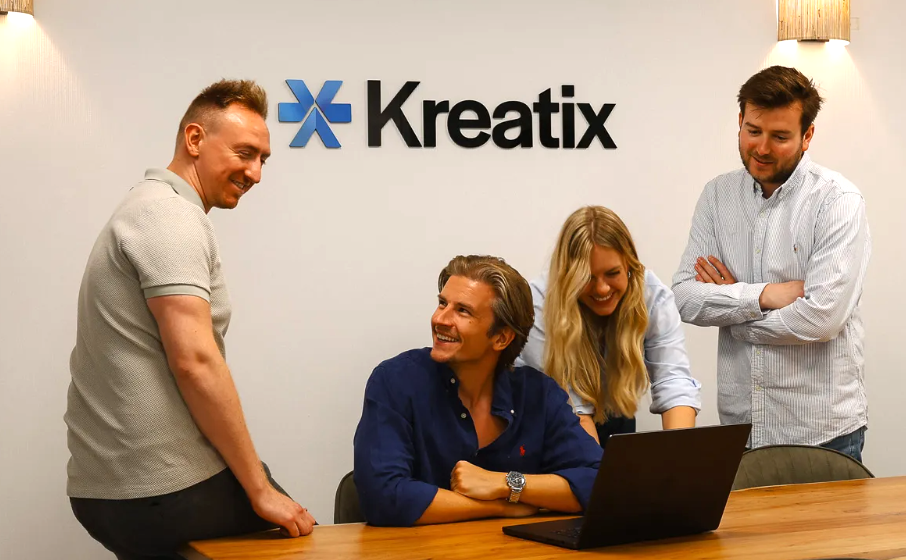
Case Study 2: Kreatix – Nailing a Niche and Learning on the Fly
Source: Kreatix
Back in 2014, two college students in Belgium decided to start an agency called Kreatix with no startup cash or big clients. They only had a simple offer: affordable websites for small businesses that didn’t have one.
Their angle was crystal clear: clean, mobile-friendly WordPress sites using premium templates for $1,000 flat. Most local agencies were quoting $4,000–$15,000, and the clients they targeted didn’t have that kind of budget anyway.
Their first client was a friend’s parent who wanted a full eCommerce store. They had never built one before. But instead of saying no, they said yes, and figured it out.
They learned WooCommerce on the job. They worked nights to test every feature and delivered a working online store. It was a bit buggy. But the client appreciated the effort and stuck around.
From there, things moved fast. They posted the project on social media, and referrals started coming in. Within a few months, they were building websites, handling branding, and offering basic digital marketing. They kept costs low by using:
- Wunderlist for task tracking
- Hootsuite for scheduling social posts
- Google Sheets to track clients and projects
- Adobe Creative Cloud for all design work
They didn’t hire fast (they’re still a proud team of four!) or overpromise. They only offered new services after they had systems to support it and someone on the team who could own it.
By staying lean, honest, and niche-focused, they built an agency with 20+ active clients (and 550+ successful projects), without getting swallowed up by overhead or burnout.
Conclusion & Next Steps
Adding a new agency service doesn’t start by chasing trends or doing more for the sake of it. You need to spot a demand gap, build lean systems to deliver, and position it well.
Test your idea, talk to your clients and package it properly. That’s the way to build and scale.
Since 2014, Synup has backed hundreds of agency teams with platform tools built for visibility, reputation, and smart service expansion. Start by booking a demo.
Add and Launch New Agency Services Smoothly: FAQs
- How do I increase agency sales?
Start with upsells. A current client is 60–70% more likely to buy from you again, compared to 5–20% for new leads (that’s according to Forbes). So, add services that naturally extend what you are already doing, like adding review management to local SEO or content repurposing for blog clients.
- How do I get clients for a new marketing agency?
Use what you’ve already got. Reach out to warm contacts, former employers, or LinkedIn connections. Offer a limited-time pilot or early access bundle. Share wins, don’t hard sell. One good case study posted in the right place can bring in more leads than weeks of cold outreach.
- What’s the best-selling strategy for agencies?
Stop selling and start helping. Talk less about features and more about what problems your service solves. Use real numbers, show past results, and lead with insights. A clear offer + tight packaging + follow-up can bring you closed deals every time, or at least, a lot of time.