Business Listing Optimization for AI Search Engines (ChatGPT, Perplexity, Gemini)
Learn how to optimize business listings for AI search engines like ChatGPT, Gemini, and Perplexity. A complete SEO guide for agencies and marketers.
Here’s a scenario that should start keeping agencies up at night. A potential customer opens ChatGPT and types: “What’s the best HVAC company near me?”...and your client doesn’t appear in that answer. Not because they have low ratings or bad reviews. Nor is it because their service is poor. They’re invisible because their business data isn’t structured for AI search.
Search is changing rapidly, and AI-powered search engines (like ChatGPT, Claude, Perplexity, and Google Gemini) now recommend businesses based on confidence. If your clients’ data is inconsistent, incomplete, or simply hard for machines to understand, AI engines skip them.
Welcome to the next evolution of SEO: Generative Engine Optimization (GEO). It is
both a threat and a massive opportunity, and the agencies that master it early will own a new premium service category. This guide walks you through exactly how to do it.
TL;DR
- AI engines build “confidence scores” using data across the web
- Inconsistent listings reduce the chance of being recommended
- Each AI platform trusts different data sources.
- Reviews are interpreted as structured signals.
- Schema markup helps machines understand businesses instantly.
- Synup’s listing management, sentiment analysis, and AI response tools are built for exactly this. Treat profile completeness as your proxy for AI readiness.
The Invisible Business Problem: What’s Actually at Stake?
In 2025, a BrightEdge study found that generative AI was driving a measurable shift in how users discover solutions and interact with search results.
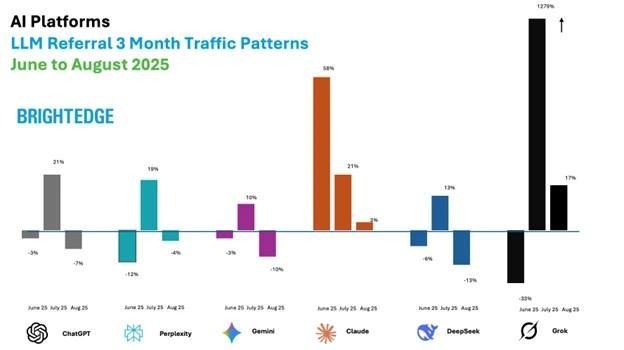
Source: BrightEdge
AI-generated answers are seen capturing significant attention before users ever scroll to traditional results. Perplexity alone reportedly started hitting over 780 million searches per month in 2025.
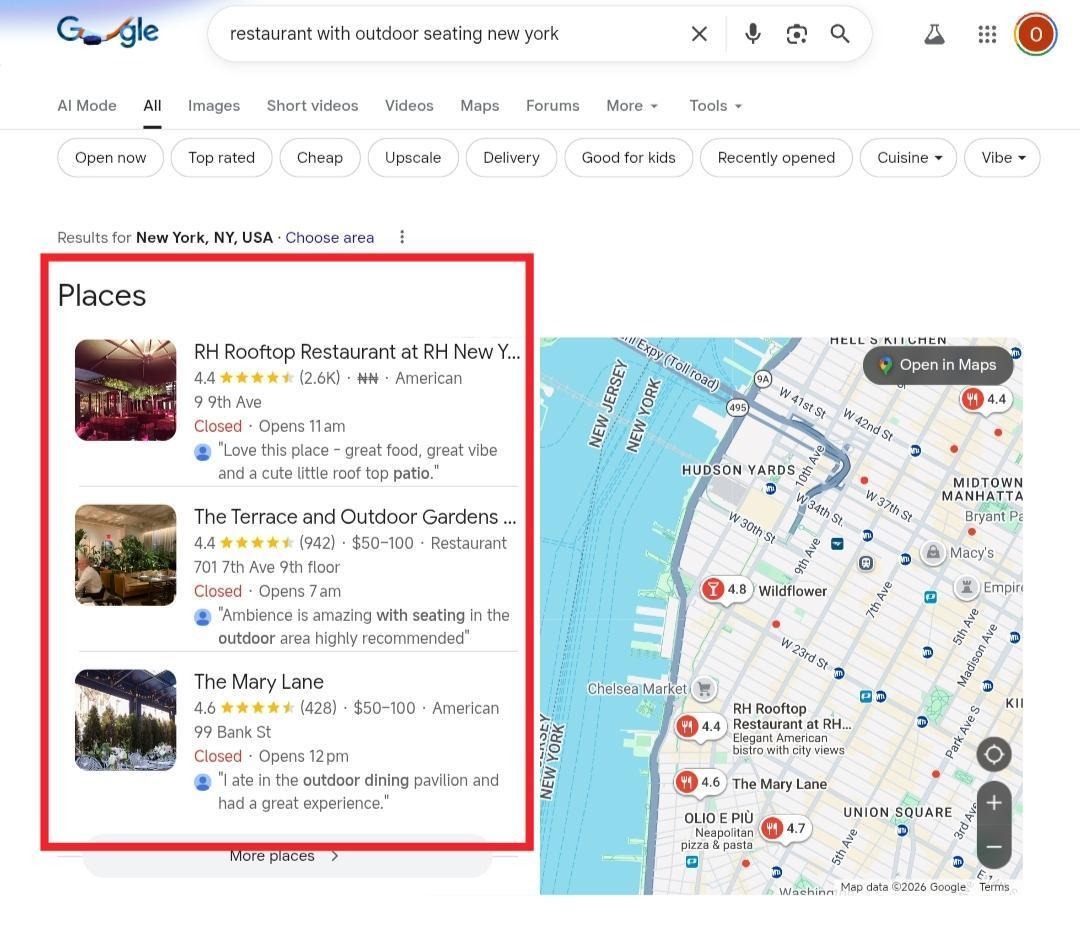
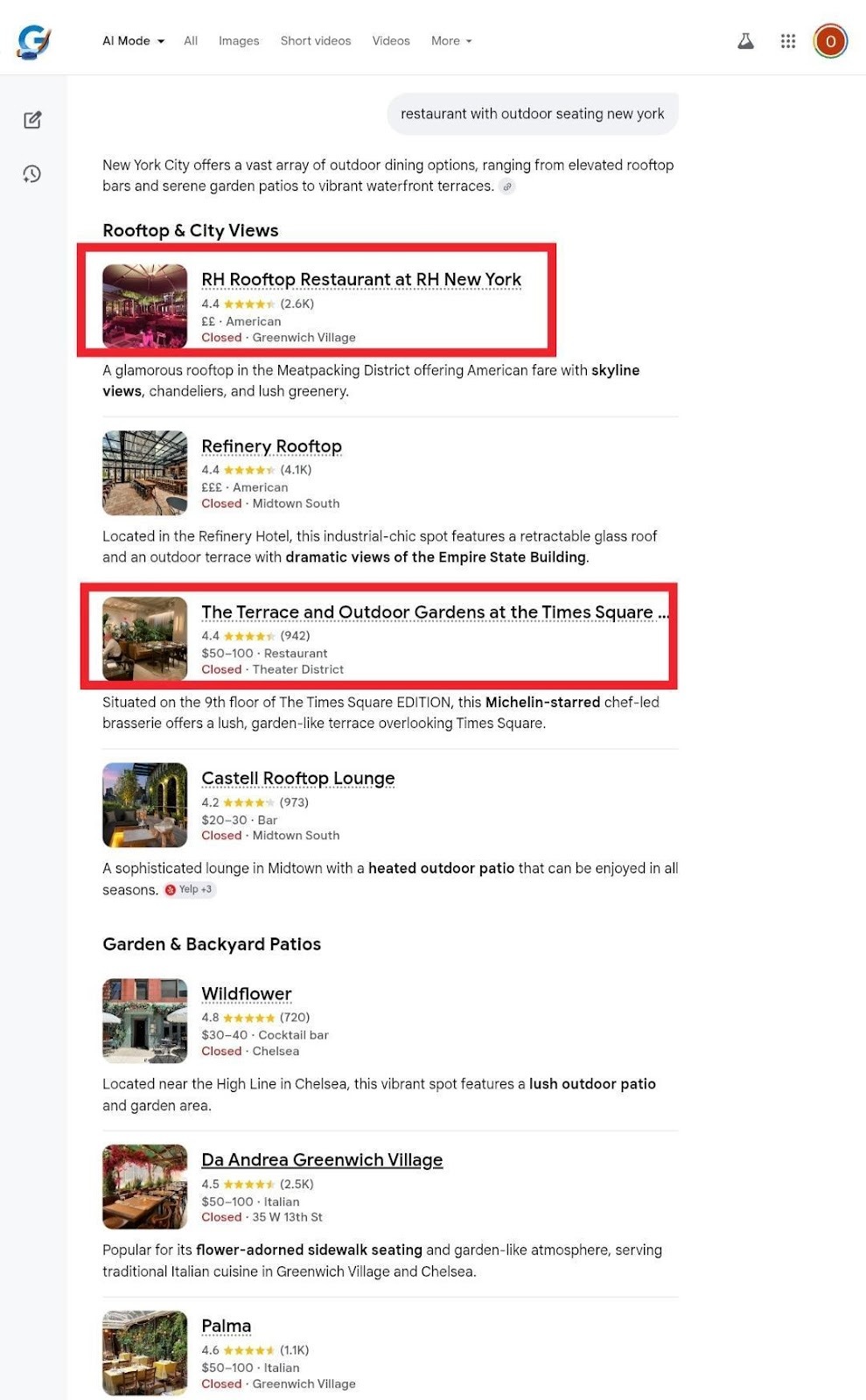
For local and multi-location businesses, this shift is seismic. A restaurant that dominates Google’s local pack might be completely absent from a Google AI Mode recommendation because its review text doesn’t mention specifics like “outdoor seating” or “gluten-free options” explicitly.
Source: Google
Here are three top businesses that rank in the local pack for the query: “restaurants with outdoor seating in New York.”
But when we switch to generative engines like the Google AI mode, The Mary Lane goes missing; nowhere near the top 10 list because the reviews are apparently not optimized for GEO.
Source: Google
Likewise, a law firm with 200 five-star reviews on Google might still get skipped by ChatGPT if it’s not listed on the directories that OpenAI trusts for business data.
Many agencies are still optimizing for Google’s old results page. Few are preparing clients for AI search visibility. That gap is your opportunity to adopt GEO early and dominate it.
Also Read: How to Identify the Right Upsell Opportunities in Client Journeys
How AI Search Engines Actually Work (The Technical “Why”)
To optimize for AI, we must understand how it’s fundamentally different from traditional search.
Old Way vs. New Way: LLMs vs. Spiders
Traditional search engines like Google (between 2010 and 2020) relied on spiders to crawl web pages. They indexed keywords, counted backlinks, and ranked pages based on authority signals.
For years, the model was quite simple: “This page has the keyword 18 times and 400 backlinks, so it ranks top.”
AI search engines work fundamentally differently. Large Language Models (LLMs) don’t stop at indexing; they also analyze meaning, relationships, and even context. So, instead of ranking pages, they generate answers.
Many modern AI engines now use RAG (retrieval-augmented generation), which means they pull live data from trusted sources at query time and synthesize it into a response.
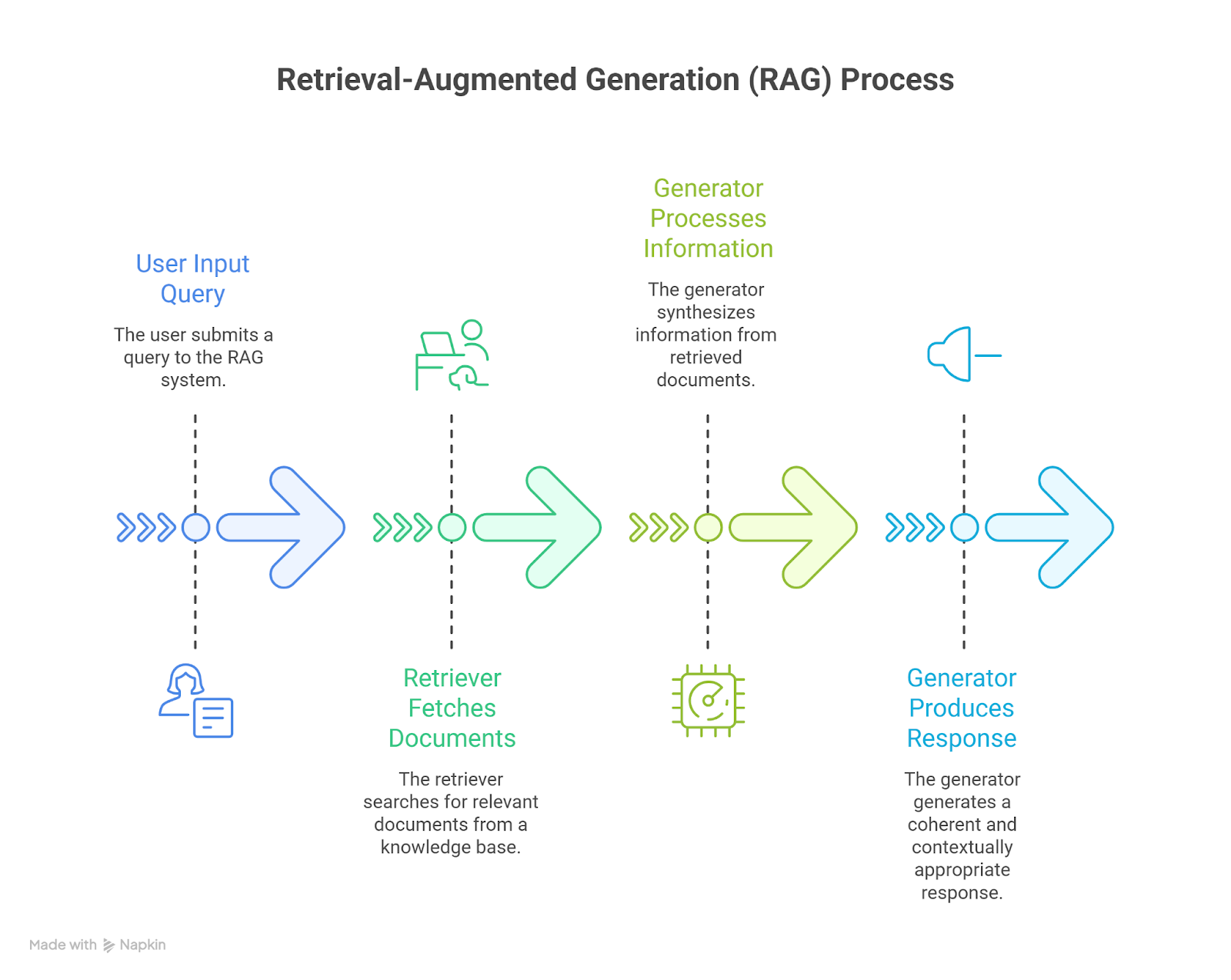
The mental model is now shifting from “rank this page” to “can I confidently recommend this business?” That distinction changes everything about how you optimize.
The Concept of “Consensus”
AI engines don’t trust a single source, but they compare multiple data points to make a recommendation. They look at your Google Business Profile, Yelp, Bing Places, Apple Maps, Facebook pages, and then niche directories.
When they find conflicting information like different hours on Facebook vs. Google, old addresses still live on Yelp, inconsistent phone numbers on a directory from 2019… confidence score drops. And when confidence drops, recommendation stops too.
Also Read: How AI Search Will Affect Your Local SEO Clients
AI search engines rely on brand-controlled sources, and listings contribute a huge share of citations (around 42%), according to Search Engine Land’s analysis of 6.8 million AI citations.
The “Entity” Approach: How AI Actually Sees a Business
AI search engines don’t see websites the same way humans do. They see an Entity, a business with a set of structured attributes.
Look at it this way: to generative engines, Synup is not a keyword. In an AI engine’s understanding, Synup can be interpreted as Saas platform, a Local SEO tool, New York-based, Used by agencies, Listing management software, White-label, etc.
Each attribute strengthens the entity profile. The richer and more consistent those attributes are across the web, the higher the confidence score.
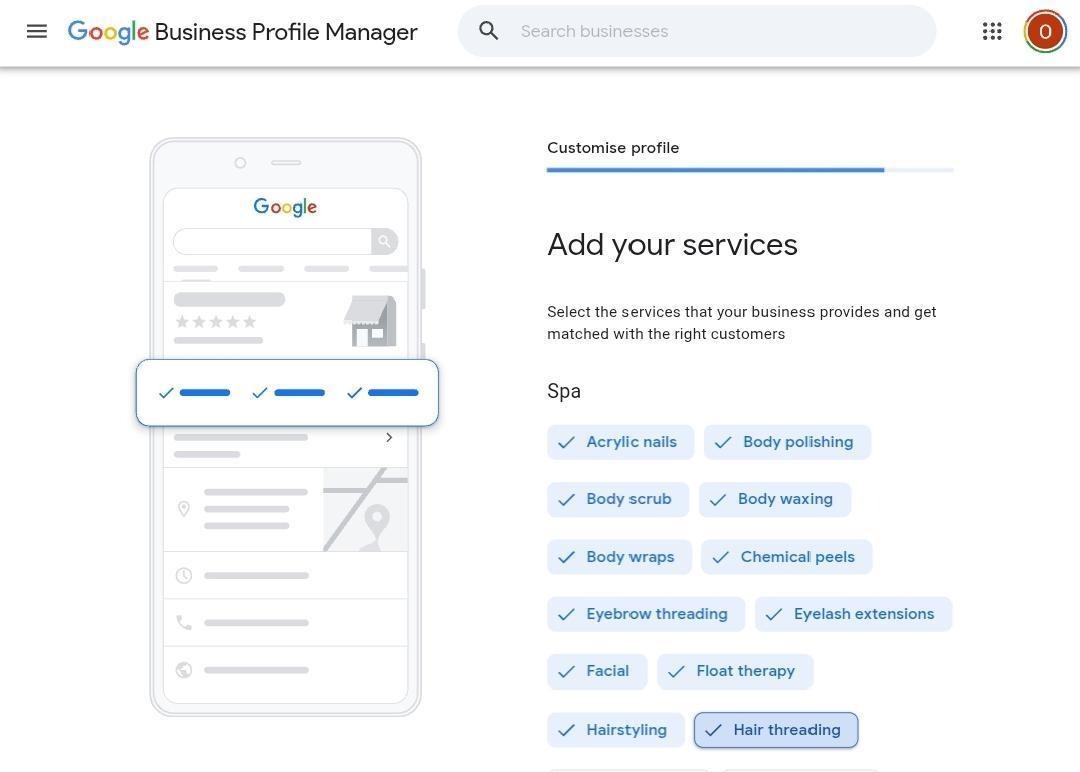
This means that businesses must now treat listings as knowledge graph nodes, not directory entries. Each completed field improves the chance of being recommended.
Source: Google Business Profile
This is precisely why listing management tools are now a technical requirement for local businesses’ AI visibility.
Optimizing for the Big Three: A Platform Breakdown
Different AI search engines have different architectures and rely on different data sources. Understanding these sources is critical.
- ChatGPT (The Partner Ecosystem):
How It Works
When users search inside ChatGPT, results often rely on external sources and search indexes such as Microsoft Bing. Unlike a traditional search engine, it doesn’t crawl every corner of the web on a rolling basis. Instead, it trusts specific, high-authority sources that have established data partnerships with OpenAI.
This has a crucial implication: being “on the internet” isn’t enough. Your client must exist in the data sources that power those results, i.e, be on the right internet.
The Fix for Your Clients
- Bing Places: Critical. Bing’s local data feeds directly into ChatGPT’s responses. If your client isn’t claimed on Bing Places, they’re nearly invisible to ChatGPT.
- TripAdvisor: OpenAI has an established partnership and data relationships with TripAdvisor. For restaurants, hospitality, and service businesses, TripAdvisor and Yelp listings are non-negotiable.
- OpenTable: For restaurants specifically, an OpenTable presence carries disproportionate weight in ChatGPT recommendations.
- Industry-Specific Directories: Healthcare clients need Healthgrades and Zocdoc. Legal clients need Avvo and FindLaw. Research which niche directories OpenAI trusts in each vertical.
- Perplexity (The Citation Engine)
How It Works
Perplexity is explicitly an answer engine. It generates responses with cited sources, showing users exactly where the information came from. This creates a fundamentally different optimization challenge: your client’s business needs to create citable information.
Perplexity loves content that directly answers questions. Concise, factual, well-structured text wins. It actively indexes high-authority directories, business websites, and, critically, FAQ sections.
The Fix for Your Clients
- Make content “snackable”: Structure website content and directory descriptions to directly answer questions. “Do you offer same-day service? Yes, we offer same-day HVAC repair in [city].” That’s citable.
- Build FAQ content: FAQ pages on the client’s website with FAQ Schema markup are Perplexity gold. Every Q&A is a potential citation.
- Authority directory presence: Perplexity heavily weighs high-authority sources. Better Business Bureau, Chamber of Commerce listings, and local government business directories all signal credibility.
- Google Gemini: The Ecosystem Play
How It Works
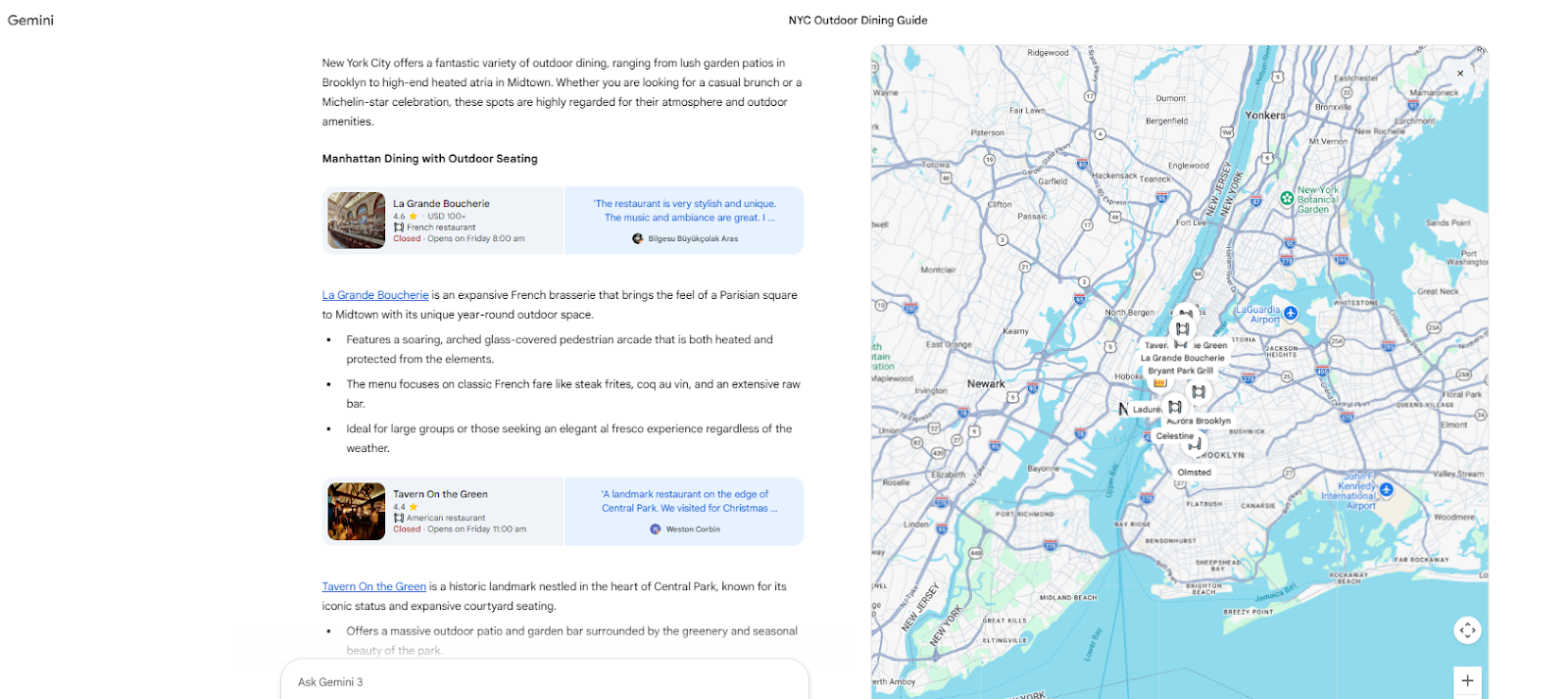
Gemini has access to a massive amount of local business data. It’s deeply integrated within Google’s existing ecosystem: Google Maps, Google Business Profiles, Google Search, and Google Workspace.
Source: Gemini
But there’s an important shift: Gemini reads Google Reviews semantically. It looks beyond the star rating and extracts attributes from review text.
The Fix:
- Perfect your Google Business Profile: Every attribute field matters. Accessibility features, parking, payment methods, service offerings, service areas, price range… all of it becomes data that Gemini can use.
- Review text is training data: If a user queries Gemini for “wheelchair-accessible restaurant with outdoor seating,” Gemini pulls those attributes from review text. It’s not just about 5 stars anymore. You can't influence what customers write in reviews, but one way to optimize for answer engines is by using certain brand and service keywords in your responses.
- Post regular updates: Google Posts shows a business is active. Gemini weighs active, regularly updated profiles more heavily than stale ones.
Pillar 1: Data Integrity and the “Confidence Score”
If data integrity were a building, NAP (Name, Address, Phone) would be the foundation. But the foundation alone doesn’t make a building. In this AI era, you need to go much further.
The Hallucination Risk: Why AI Won’t Guess
AI engines are designed to avoid incorrect information. If an AI engine finds conflicting data across three sources, it avoids recommending the business entirely. From its perspective, recommending such damages trust, and the winner here is the only consistent one.
NAPW on Steroids: It’s About Attributes Now
NAPW (name, address, phone, website) is the minimum. AI search demands a far richer attribute profile. Walk through every listing field and fill it completely:
- Business attributes: Payment methods accepted, parking availability, accessibility features (wheelchair ramp, accessible restroom), outdoor seating, delivery, dine-in, takeout.
- Business identity: Year established, founder demographics (women-owned, veteran-owned, LGBTQ+-owned, etc.). These are filters users apply in AI searches, and which AI engines can cite.
- Operational details: Holiday hours, special hours, service radius for mobile businesses, and booking links.
- Products and services: Named, described, and priced where possible. Vague service descriptions don’t feed the entity graph.
You can think of each completed attribute as a node in your client’s knowledge graph. The more nodes, the more queries they can match. A dental practice that lists “Invisalign,” “emergency dental,” “dentures,” and “pediatric dentistry” as specific services will appear in far more AI recommendations than one that simply says “dental services.”
Using Synup to Build AI-Ready Listings
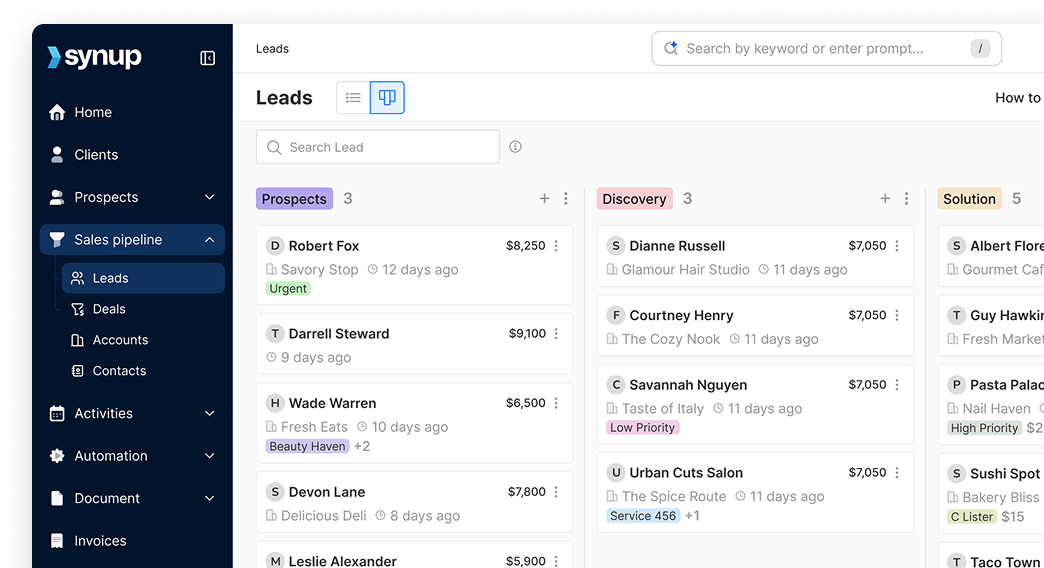
The Synup listing management platform connects directly via API to the high-authority publishers that AI engines use as trusted data sources: Google, Facebook, Uber, Apple Maps, Bing Places, Yelp, and dozens more.
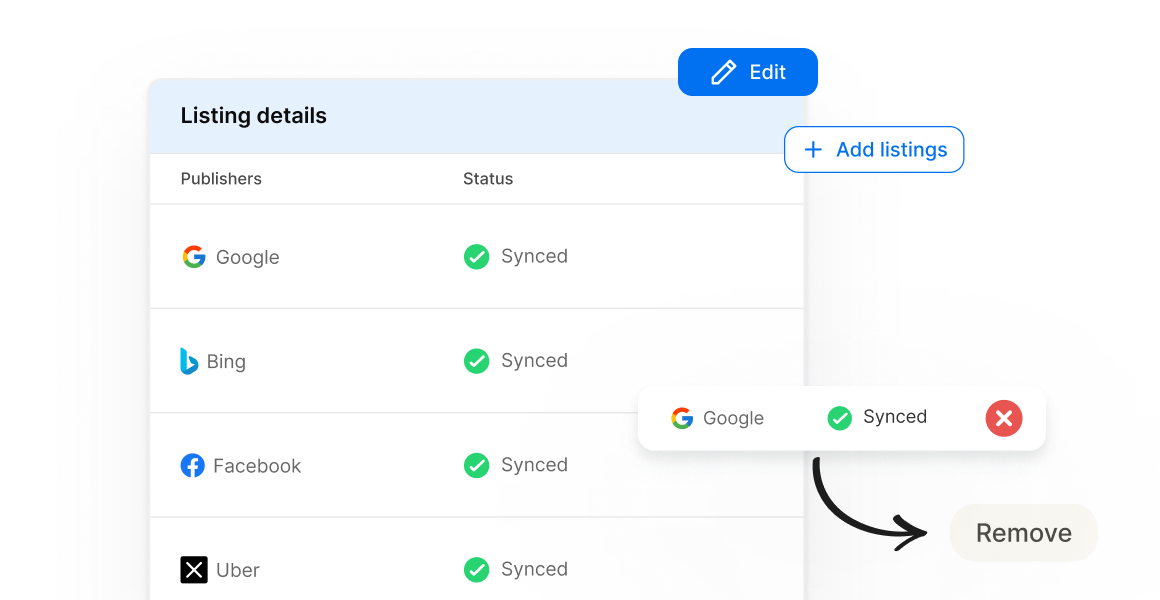
Source: Synup
When you update data in Synup, it pushes across all of them simultaneously.
The Profile Completeness score in Synup OS is particularly useful here. You can treat it as a proxy for AI readiness. A 95% complete profile means 95% of the attribute signals AI engines look for are present and consistent. Every percentage point below that is a missed opportunity to recommend.
For agencies managing multi-location clients, this is where the time savings become staggering. Manually updating 50 locations across 15 directories equals 750 update operations. Synup turns that into a single action.
Pillar 2: Semantic Reputation Management
AI engines read review text to understand what a business actually is.
Reviews as Training Data
Consider this scenario:
A restaurant has a 4.5-star rating across 200 reviews. That looks great, right? But go deep into the text. If 60 of those reviews mention “slow service” or “long wait times,” Gemini associates the business entity with “slow service.”
This is the semantic layer of reputation management that most agencies are not looking at. It’s not only about getting 5-star reviews, but it’s also about ensuring the language in reviews reflects the attributes you want AI engines to associate with the business.
The “Review Seeding” Strategy
You can ethically and effectively influence the language in reviews by teaching your clients how to ask. You're not coaching fake reviews but prompting customers to be specific.
- Bad ask: “Could you leave us a review?”
- Good ask: “Would you mind mentioning the specific service you had today in your review? It really helps other customers know exactly what we offer.”
For a contractor: “Mention whether you used us for roofing, siding, or windows.” For a restaurant: “Mention what dish you tried.” For a spa: “Mention which therapist you worked with.” These prompts naturally generate attribute-rich review text.
Responding for the Machine
Your review replies are also indexed by AI engines. This creates an under-exploited optimization channel. When you reply to a review, you’re adding more text to your client’s entity profile. Consider this example:
- Customer review: “Expensive but good.”
- Generic reply: “Thank you so much for your review!” (Adds zero attribute signals)
- Optimized reply: “Thank you! We source all our ingredients from local organic farms: it costs more, but our customers tell us the quality difference is worth it. We’re proud to be one of the few farm-to-table restaurants in [city] committed to sustainable sourcing.”
That reply tells Gemini the business is: farm-to-table, locally sourced, organic, sustainable, and based in a specific city. Here's a good example
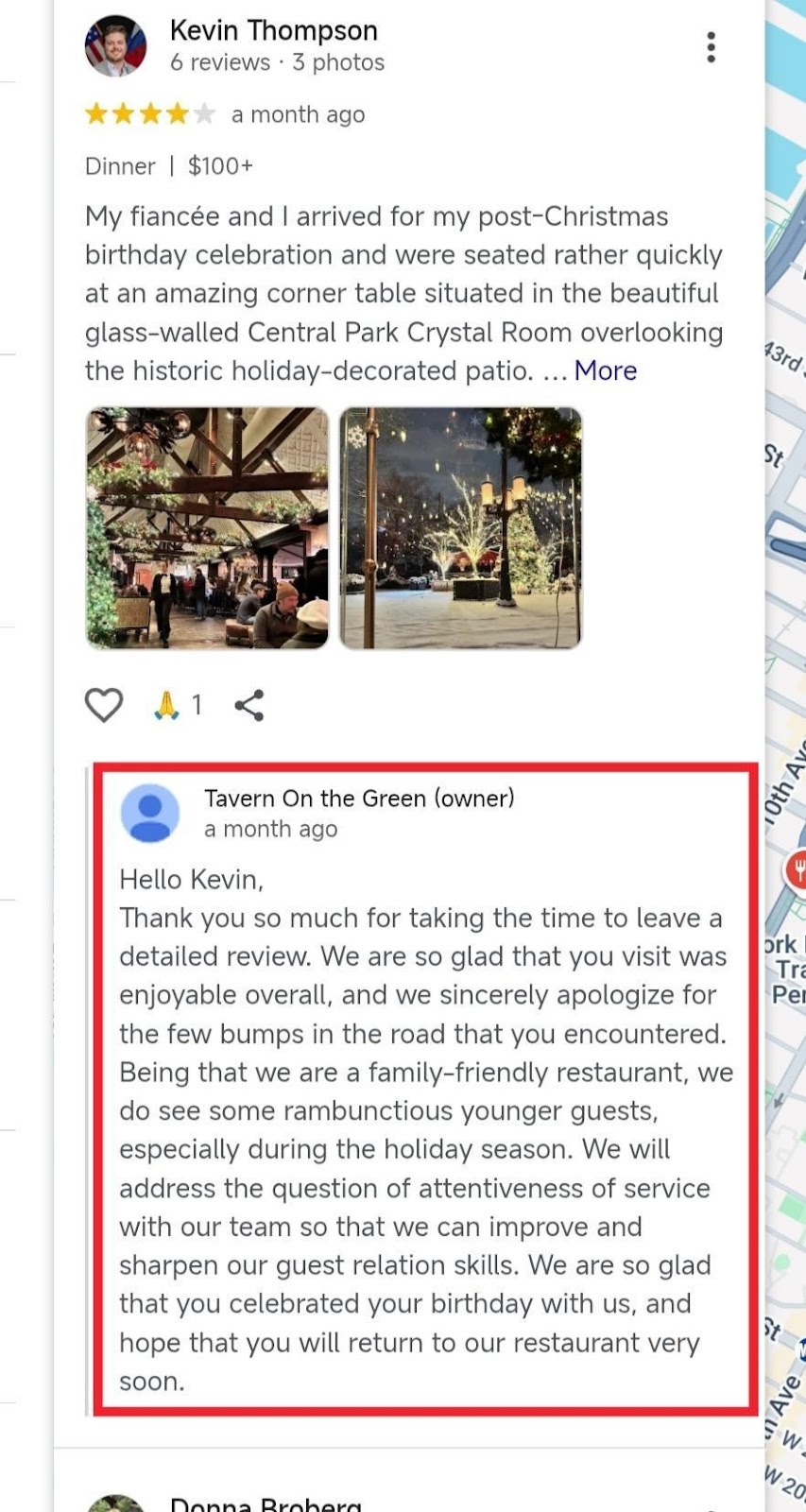
Source: Google
Every response is a potential attribute match for future queries.
Using Synup’s AI Tools for Semantic Reputation Management
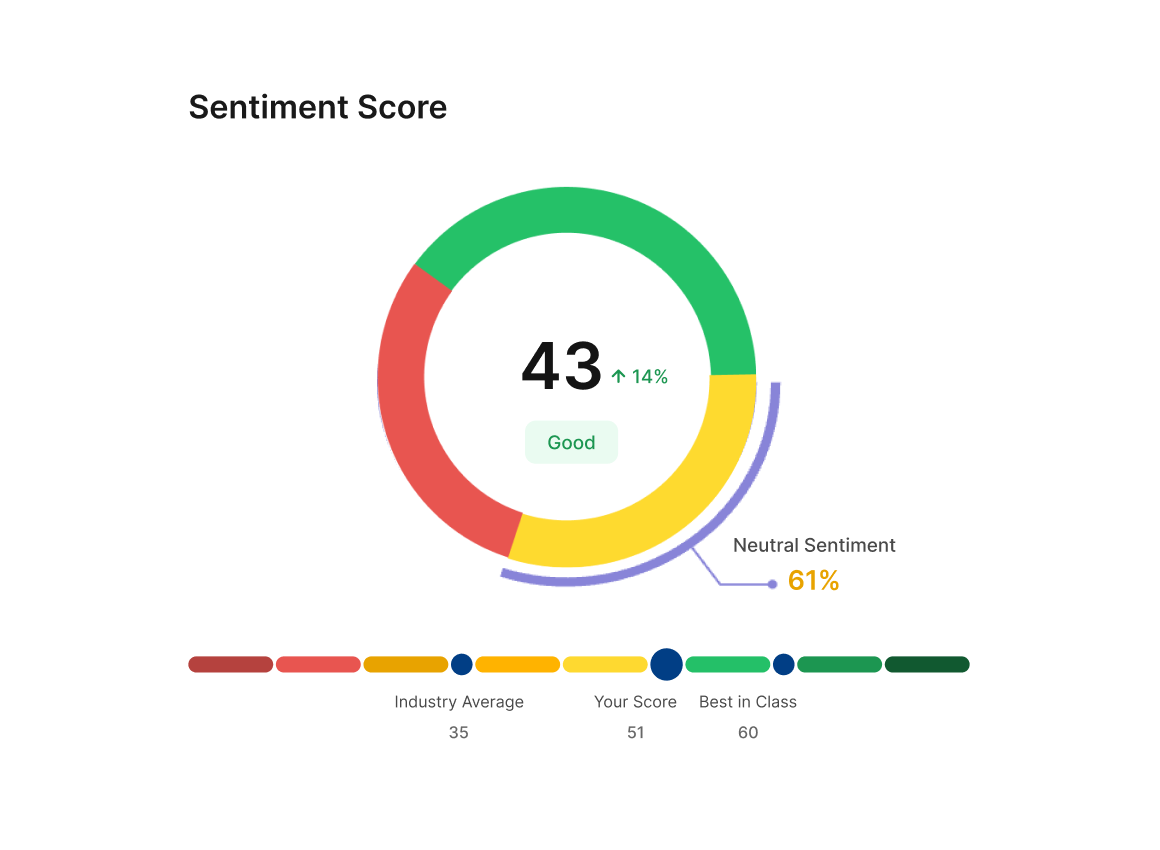
Synup’s Sentiment Analysis tool identifies the keywords customers use most frequently in reviews and whether they're neutral, positive, or negative.
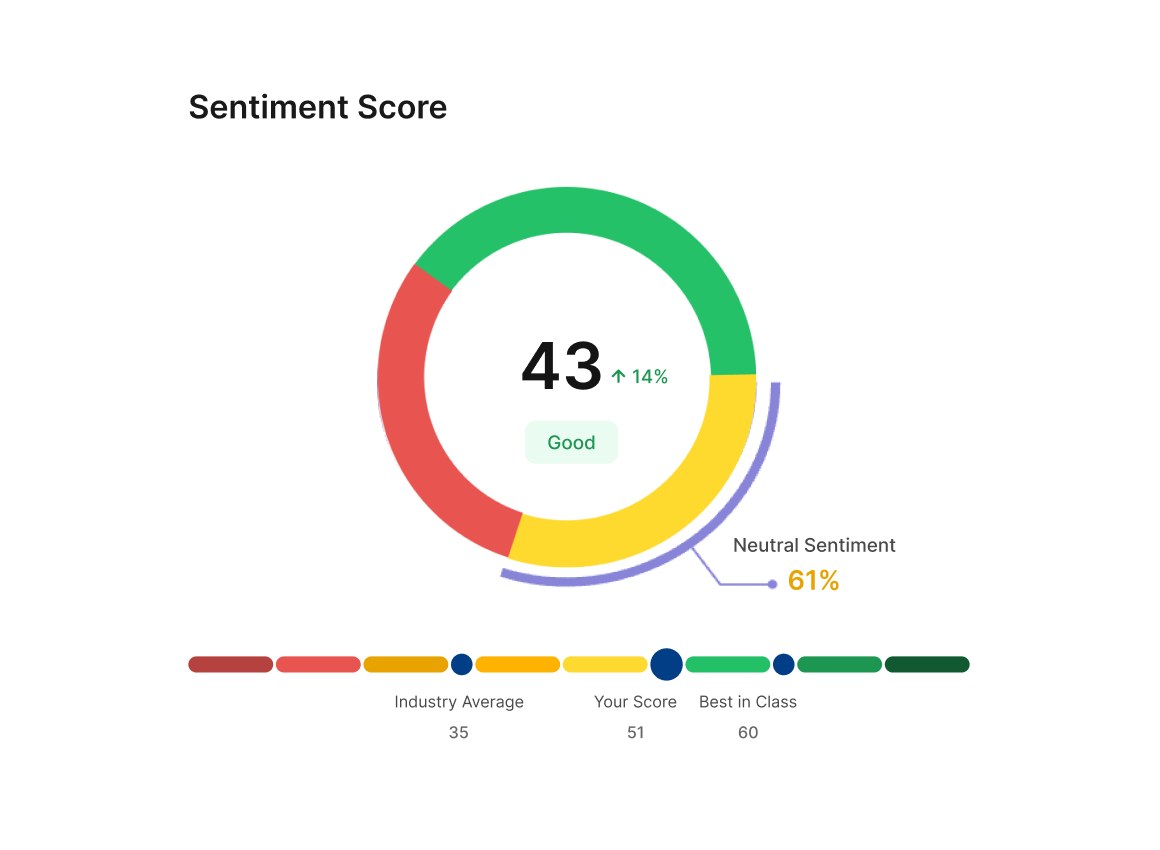
Source: Synup
It lets you see at a glance what attributes AI is currently associating with your client’s business. If “slow” keeps appearing, that’s a problem to address. If “friendly staff” and “quick service” dominate, that’s a competitive advantage to amplify.
You can pair the analytics tool with Synup’s SEO tools to align your content strategy with the same keywords that are resonating with real customers.
The AI Response Generator ensures every reply is professionally structured and keyword-rich, without your team having to craft each one from scratch. At scale, across 50-200 client locations, this is a genuine operational superpower.
Pillar 3: Structured Data and Machine-Readable Content
Even with perfect listings and excellent reviews, there’s still a gap between what’s on your client’s website and what AI can confidently understand. This is where schema markup becomes essential. Structured data tells machines exactly what a business represents.
Speak the Robot’s Language: Why Schema Markup Matters for AI
HTML is written for humans. AI engines can read it, but they’re essentially inferring meaning from formatting and context. JSON-LD Schema markup is written specifically for machines. It tells crawlers and AI engines exactly what something is, without requiring interpretation.
When an AI engine crawls a page with proper Schema, it can instantly understand:
- this is a LocalBusiness,
- located at this address,
- in this category,
- with these services,
- open these hours,
- with this rating.
There is no guesswork here.
Schema Markup Essentials for AI Optimization
- LocalBusiness Schema (mandatory): This is the baseline. Name, address, phone, hours, categories, price range, geo-coordinates. Every local business website should have this implemented.
- FAQ Schema (critical for perplexity): Perplexity specifically looks for structured Q&A content to cite. The FAQ Schema tells Perplexity this is a direct answer to a question. It dramatically increases citability.
- Product/Service Schema (critical for shopping intent): If your client offers specific products or services with prices, Service Schema and Product Schema help AI engines match them to transactional queries (“best price for...,” “nearest place to get...”).
- Review/AggregateRating Schema: Explicitly tells AI engines about your client’s rating and review count. This is separate from the reviews on third-party platforms. It’s your client’s own website claiming those attributes.
- BreadcrumbList Schema: Helps AI engines understand the structure of your client’s website and which pages answer which questions.
Voice Search Connection
Well-structured, Schema-marked content serves AI search engines and automatically optimizes for voice search through Siri, Alexa, and Google Assistant.
“Hey Siri, find me a gluten-free Italian restaurant near me” pulls from the same structured data that feeds Gemini recommendations. One implementation, multiple channels.
Synup Pages: Schema Built In
Synup-hosted local landing pages (Synup Pages) come pre-coded with LocalBusiness Schema markup. When an AI engine crawls a Synup-powered store locator page, it immediately understands exactly what that business offers, where it’s located, and what its attributes are.
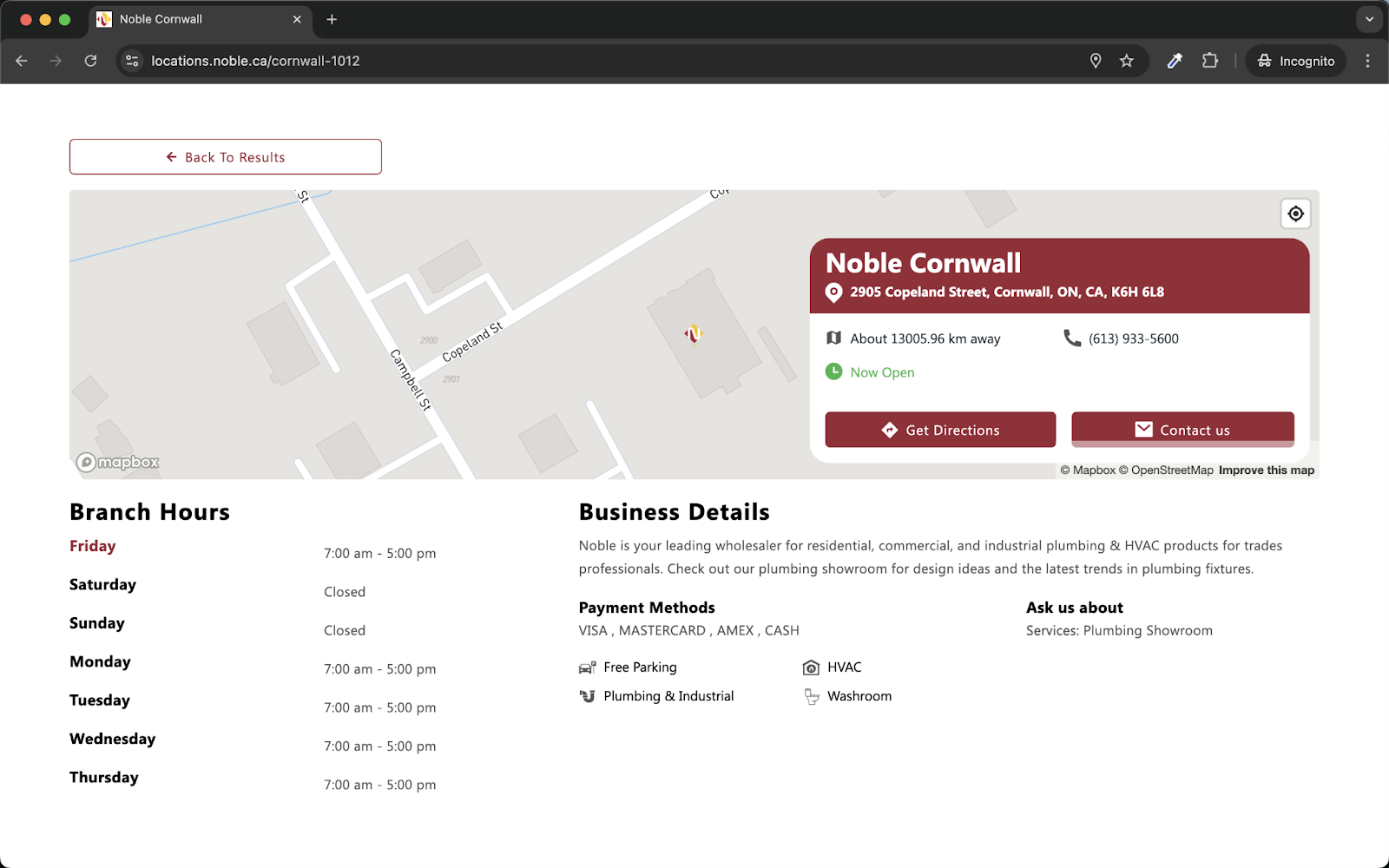
Source: Synup Support
For agencies managing white-label listing management for multi-location clients, this is a significant advantage over manually built pages that may have inconsistent or missing Schema.
Turning GEO Into a Billable Agency Service
Most businesses are unaware that AI visibility requires new optimization strategies. That knowledge gap is a service opportunity, and agencies can package GEO as a recurring offering.
What a GEO Audit Looks Like
- Listing Consistency Audit: Run the client’s business data through all major directories. Flag every inconsistency. Show them visually how AI sees their business vs. how they want to be seen.
- Attribute Gap Analysis: Compare their profile completeness to competitor profiles. What attributes are competitors claiming that they’re not?
- Review Semantic Analysis: What words dominate their reviews? Are those words aligned with how they want AI to categorize them?
- Schema Audit: Is LocalBusiness Schema implemented? Is it accurate? Is the FAQ Schema present on key pages?
- AI Visibility Test: Run real queries on AI platforms to evaluate presence. Document where they appear and where they don’t. This is a powerful deliverable.
The audit becomes the foundation of a recurring retainer. Use Synup’s platform as the delivery infrastructure, from listing management to review response to local white-label SEO tools, and you have a fully-packaged GEO service that’s genuinely differentiated in the market.
Conclusion
The agencies that will own the next five years aren’t the ones that are best at just Google rank tracking. They’re the ones who understand that AI search engines are a new distribution channel with entirely different rules. Your clients are already being evaluated by ChatGPT, Perplexity, and Gemini every day.
The question is whether these engines are recommending or skipping them because they find nothing. The answer comes down to three things: data integrity (consistent, complete attributes across all platforms), semantic reputation (review text that builds the right entity associations), and structured data (Schema markup that makes AI confidence instant).
Agencies that position this as a new premium service (GEO) and deliver it through an efficient platform like Synup will have a significant head start over competitors still talking about page-one rankings as the only metric that matters.
The wild west of AI search won’t be wild for long. You should get in early!
FAQs
- What is Generative Engine Optimization, and how is it different from SEO?
GEO is the practice of optimizing your business’s online presence to be recommended by AI-powered search engines like ChatGPT, Perplexity, and Google Gemini. Unlike traditional SEO, which focuses on ranking in keyword-based search results, GEO focuses on building confidence signals that AI engines use to decide whether to recommend a business.
- How do AI search engines like ChatGPT find and recommend local businesses?
They cross-reference multiple trusted sources and generate answers based on the most reliable data. Businesses with consistent attributes and strong signals are more likely to appear.
ChatGPT primarily relies on Bing’s search index and data from trusted partners such as Yelp, TripAdvisor, and OpenTable. Perplexity crawls the web and specifically cites high-authority sources, making directory listings and FAQ content on business websites highly citable. Gemini integrates deeply with Google’s ecosystem, including Google Business Profiles and Google Reviews.
- Why does inconsistent NAP data hurt AI visibility?
As part of the E.E.A.T signals used by AEO for recommendations, Trust is a key criterion. AI engines cross-reference multiple sources to build confidence about a business before recommending it. When they find conflicting information (different addresses, old phone numbers, mismatched hours), their confidence score drops. Rather than risk recommending incorrect information (and hallucinating), AI engines default to recommending competitors with cleaner, more consistent data. Consistent NAP across all directories is foundational to AI visibility.