How Can Digital Marketing Agencies Stay on Top of Social Trends
Worried about falling behind? Here’s a quick read on how you can stay on top of social trends and create great content.
Worried about falling behind? Here’s a quick read on how you can stay on top of social trends and create great content.
Social media is fast. You scroll through a video today and by next Tuesday, it’s already outdated. For agencies running multiple client accounts, spotting and acting on a trend at the right time is not just a creative challenge, but an operational one. You are juggling strategy, scheduling, content approvals, and performance reporting.
Adding trend-driven content on top of that can either be a powerful advantage or a complete mess.
This guide is designed to help digital marketing agencies build a system to stay ahead of trends. The goal is not to jump on every trending reel or audio but to identify which trends matter, move quickly when they do, and plug them into your client content workflow without disruption.
TL;DR
- Assign one person on your team to track trends daily across Reels, TikTok, and YouTube Shorts.
- Share a simple weekly trend briefing every Friday to fuel next week’s content ideas.
- Build a trend library to track what’s working, what’s not, and what can be reused.
- Use filters to decide which trends are actually worth doing based on speed, relevance, and brand fit.
- Create a separate, fast-track workflow to test trends without delaying regular content.
- Add trend reviews to your weekly planning meetings so your team stays consistent.
- Use your own agency's account to test risky or experimental trends before pitching them to clients.
- Automate discovery and simplify execution with tools like Trendpop, CapCut, and Synup Social.
What Are Social Media Trends?
Social media trends are not just viral moments that explode overnight and disappear by Monday. They’re patterns in how people create, consume, and interact with content over time. Trends signal shifts in behavior, expectations, and platform priorities. Understanding the difference matters because not every spike deserves your team’s attention.
There are three types of trends you must understand:
- Viral Moments (Lifespan - Hours to a few days): Some trends are pure viral moments. They burn fast and die faster. A meme, a celebrity incident, or breaking news can dominate feeds for hours or days, then vanish. Agencies should only react to these when there’s an immediate and obvious connection to a client.
- Micro-Trends (Lifespan - 2 to 6 weeks): Micro-trends live longer but stay narrower. These often revolve around specific formats, sounds, or visual styles that gain traction for a few weeks. They’re ideal for testing with flexible clients who are comfortable experimenting and learning in public.
- Lasting Trends (Lifespan - Months to years): Lasting trends are the ones that actually matter strategically. These evolve over months or years and reflect deeper changes in how platforms and audiences behave. Short-form video dominance, social platforms acting as search engines, authenticity outperforming polish, and retention metrics outweighing likes all fall into this category. These trends should shape long-term content planning, not just reactive posts.
For agencies, the distinction is critical. Chasing every viral moment drains resources and burns teams out. Ignoring lasting trends, however, quietly kills reach and relevance. The job isn’t to do everything. It’s to know what deserves immediate action and what needs to be baked into strategy.
Right now, the most important lasting trends revolve around social search behavior, AI-assisted content creation balanced by human authenticity, the rise of private communities, and a shift toward deeper engagement metrics like watch time and saves over surface-level vanity numbers.
What Are Some Early Trend Indicators?
The difference between riding a trend and missing it usually comes down to timing. By the time something shows up repeatedly on your feed, it’s often already peaking. Or worse, on its way out. Agencies that win don’t wait for trends to be obvious. They watch for early signals before saturation kicks in.
Signal 1: Sudden Spikes in Specific Hashtags or Sounds
One of the earliest signals is sudden, unnatural growth around specific hashtags, sounds, or formats. When something jumps from a few thousand uses to hundreds of thousands in a day or two, that’s not random. That’s momentum. The same applies when a specific sound starts getting saved aggressively or when a format appears across creators who don’t normally overlap. Tools like TikTok Creative Center and Instagram’s Professional Dashboard show this kind of spike before it hits the mainstream feed.
Signal 2: Cross-Platform Migration
Another strong signal is cross-platform migration. When a trend starts on TikTok and quickly appears on Instagram Reels, YouTube Shorts, or even LinkedIn, it’s a sign the idea has legs beyond a single algorithm. Cross-platform movement usually means the trend taps into a broader behavior shift, not just a platform quirk.
Signal 3: Influencer and Creator Adoption Patterns
Creator adoption patterns matter more than follower counts. Mid-tier creators tend to experiment first. They test formats before brands get involved and before mega-creators flood the space. Watching what creators in the 10K–100K follower range are trying and how audiences respond often gives you a clearer signal than chasing celebrity posts.
Signal 4: Engagement Pattern Shifts
Engagement quality is another tell. Views are cheap. Saves, comments, and watch-through rates are not. When people ask “how did you do this?” or save a post at a higher rate than usual, that’s a sign the content resonates beyond passive scrolling. High retention and repeat interaction usually indicate a trend that can scale.
Signal 5: Industry-Specific Conversation Volume
Industry-specific conversation volume is the final layer. When certain questions, frustrations, or themes start showing up repeatedly within a niche, that’s often the start of a trend for that industry. Social listening tools, Google Trends, and emerging-topic platforms help surface these patterns early, before they’re obvious in feeds.
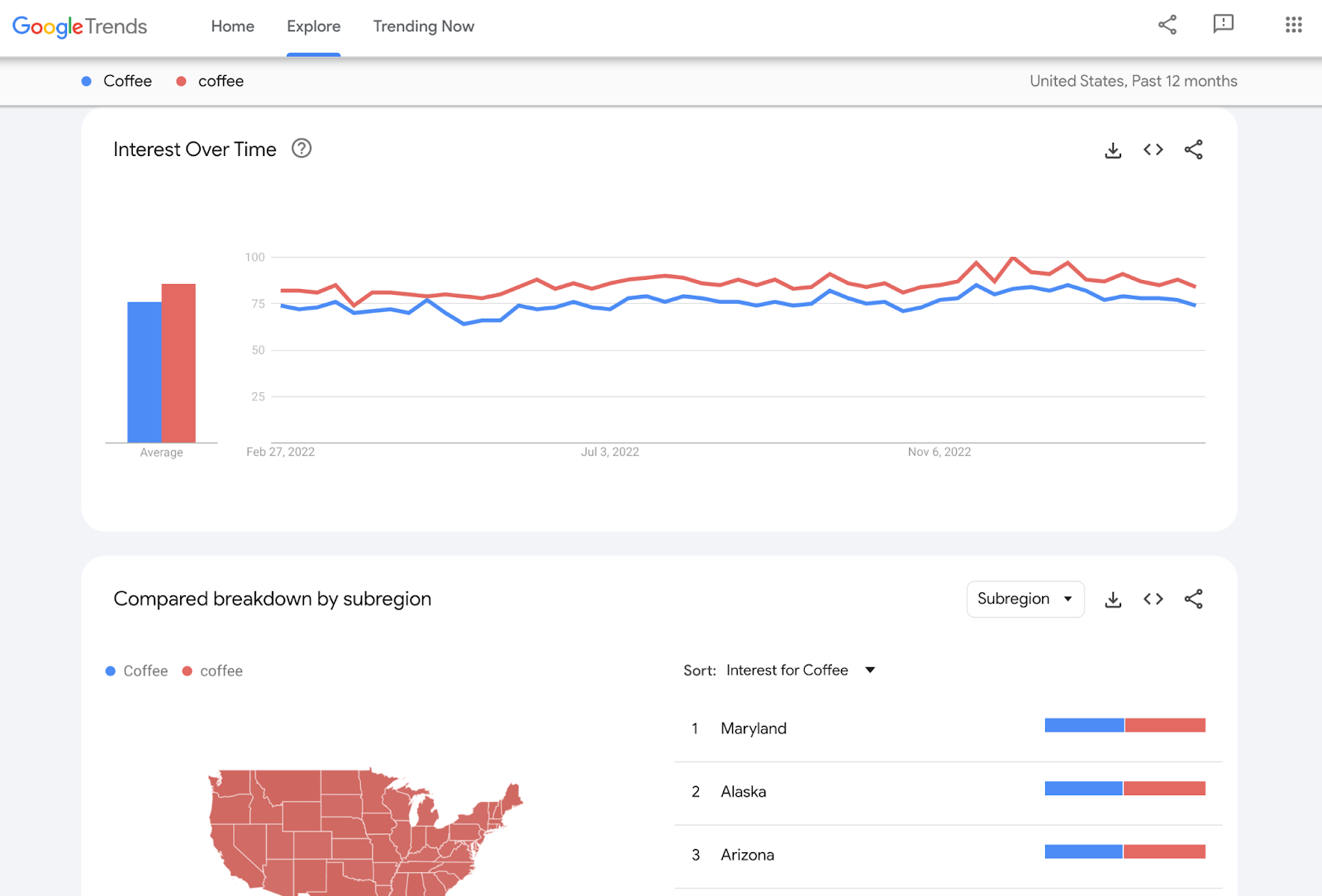
Smart agencies don’t rely solely on gut. They create simple internal scorecards to evaluate trends based on growth speed, cross-platform presence, creator diversity, and engagement depth. Trends that score well across all four are worth taking action on. Everything else goes into the watchlist.
Where Should Teams Look to Spot New Trends First?
First thing is to know the platforms where you can spot new trends. Not all platforms surface trends at the same speed, and not all sections within those platforms are equally useful. Knowing where to look saves time and prevents false signals.
- TikTok (Primary Trend Origination Platform):
TikTok remains the primary trend engine. The For You Page is very helpful. But remember, it’s biased by your own behavior.
The Following tab often gives cleaner signals by showing what creators you trust are experimenting with.
TikTok Creative Center is the real goldmine, especially for tracking trending sounds, formats, and ads that are already converting in paid environments.
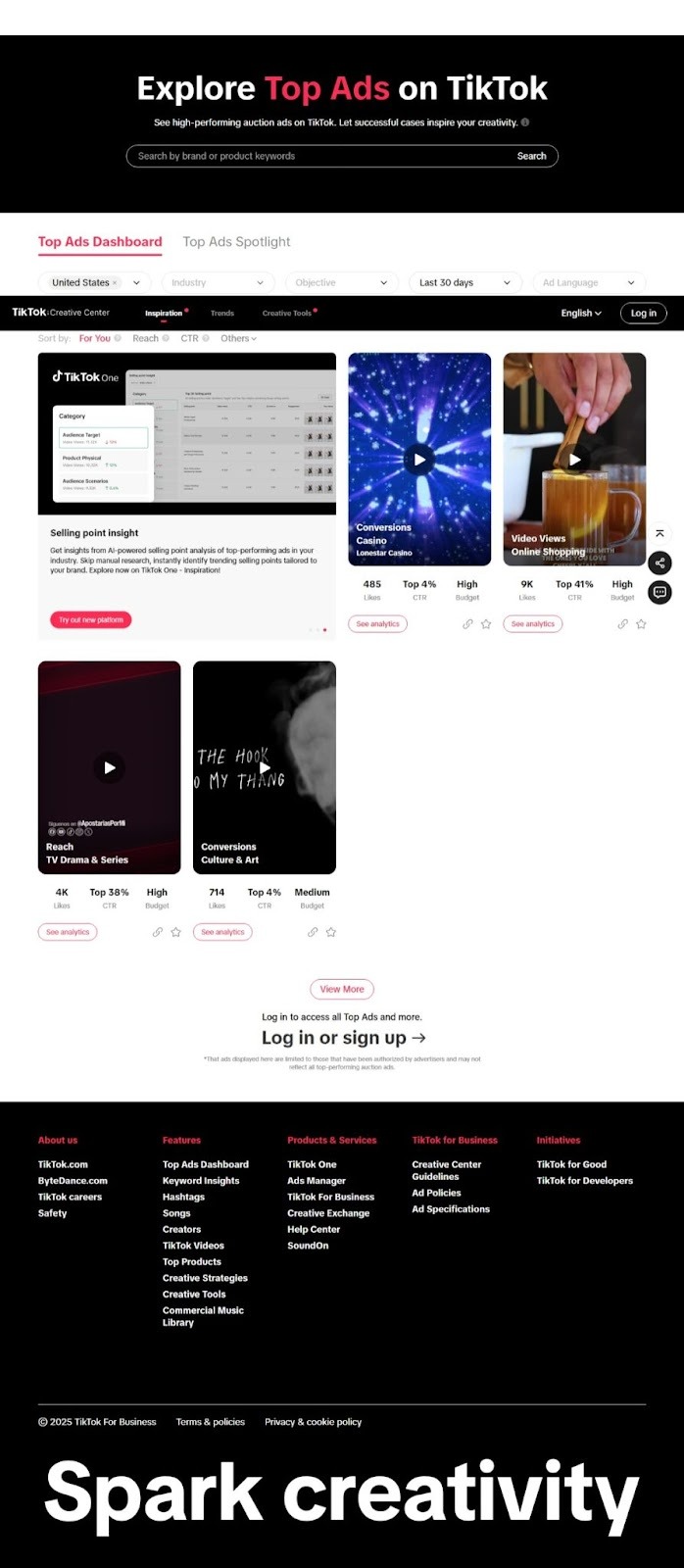
Also, don’t rely solely on personal accounts. Maintain separate monitoring accounts tailored to each client’s industry.
- Instagram (Where TikTok Trends Mature)
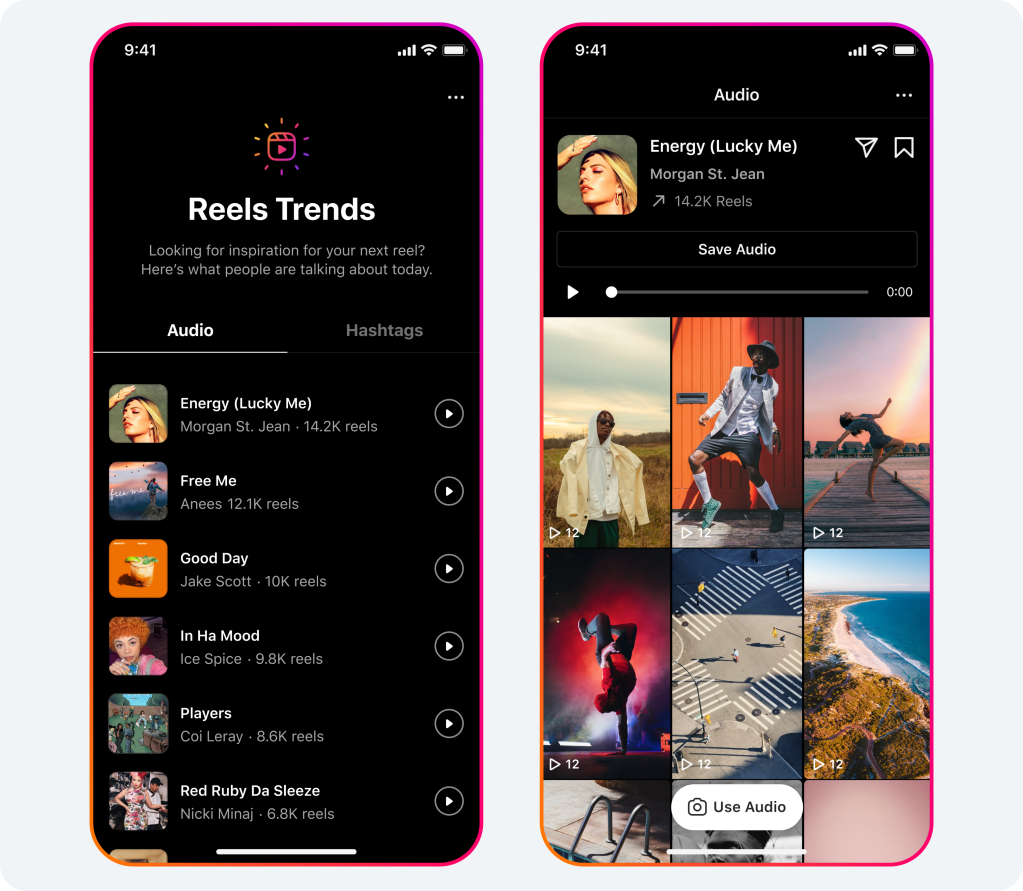
Instagram is where TikTok trends mature. Reels, Explore, audio pages, and the Professional Dashboard reveal which formats are gaining traction for business accounts.
Most trends show up here a few days after TikTok, which makes Instagram ideal for more polished adaptations.
- YouTube Shorts (The Overlooked Trend Source)
YouTube Shorts is underrated but powerful. Trends here tend to be less saturated and more evergreen.
The Shorts feed, Trending tab, and creator community posts often reveal patterns before they’re obvious elsewhere. For clients who prefer longevity over hype, Shorts present a distinct advantage.
- LinkedIn (For B2B Clients)
LinkedIn has evolved rapidly, especially for B2B. Short-form video and educational clips now outperform long text posts in many niches.
Watching what formats generate unusual engagement in the feed, especially from non-connections, offers early signals worth paying attention to.
- X/Twitter (Real-Time Signals)
X (formerly Twitter) remains a real-time trend radar. It’s especially useful for news-driven opportunities and industry conversations that haven’t yet migrated to visual platforms.
- Facebook (For Specific Demographics)
Facebook still matters for specific demographics. Reels, Groups, and niche communities often surface trends long before they hit mainstream feeds for older audiences.
- Beyond Social Platforms:
Beyond social platforms, Reddit, industry newsletters, and competitor monitoring provide early warnings.
Strong agencies build systems, not habits. Daily scans catch movement. Weekly deep dives reveal patterns. Monthly analysis turns clamor into insight.
9 Tactics to Spot Social Trends
Here’s how to create a system that keeps you ahead of the next Big Thing:
- Assign a Weekly Trend Watcher
Assign one person on your team to be the trend watcher for the week. Their role is to scan platforms daily and surface emerging trends that align with your clients’ industries and content goals.
They should spend 30 to 45 minutes each day checking:
- TikTok’s For You Page and Creative Center
- Instagram Reels and Explore Tab
- YouTube Shorts
- LinkedIn’s “Trending” section (for B2B clients)
This person is not responsible for deciding which trends to execute. Their job is to collect raw trend data and observations to feed into a structured creative process.
Tools to help:
- TikTok Creative Center
- Instagram’s Saved Audio and Explore Tab
- Create a Weekly “Trend Brief” For Your Creative Team
Every Friday, the trend watcher should deliver a short trend briefing to the content team. This can be a simple Google Doc that outlines:
- The three to five most relevant trends spotted during the week
- Platform links or screenshots for each
- Notes on where the trend originated and what stage it is at (emerging, peaking, or saturated)
- Suggestions for which client or niche it could be applied to
This gives the team a head start on ideation for next week and ensures no one starts from scratch.
- Build a Trend Library
As you test more trends, build a trend library to track what works, what doesn’t, and what could be adapted again in the future. This library becomes a valuable resource across the agency and helps onboard new team members faster.
Your trend library should include:
- The date trend was tested
- Original trend link or reference
- What kind of post you created (Reel, Story, TikTok, YouTube Short)
- Platform used and audience niche
- Engagement metrics: reach, saves, shares, comments
- A short evaluation of what worked and what could be improved
- Use Trend Filters to Evaluate Relevance
Not every trend deserves to be used. In fact, trying to follow every single one is exactly what burns out most social teams. Instead, run each trend through a simple filter to decide whether it fits.
Ask your team:
- Is this trend relevant to the client’s audience or brand voice?
- Can we put a fresh angle on it or make it our own?
- Can we realistically execute and post it within the next three days?
- Will this trend still feel timely by the time we publish?
Speed is essential when it comes to trends. If a good trend sits in the backlog for a week, it will likely be irrelevant by the time it’s live.
- Set Up a Rapid Trend Execution Workflow
You need a separate, low-friction workflow that allows you to quickly test a trend-based content piece without involving full campaign planning.
Here’s what that can look like:
- Choose one or two client accounts where content is more flexible
- Assign a junior content creator or intern to own quick-turn content based on trends
- Create and post the piece within 24 to 48 hours
- Track short-term metrics (reach, saves, shares, comments) over three days
- Log performance in the trend library
- Make Trendspotting Part of Weekly Planning
Don’t treat trend-based content as “extra.” Schedule it in your content planning process. Build a section into your Monday editorial meeting to review:
- Last week’s trend content performance
- Which trends were added to the library
- What new trend content is being created this week
This keeps trend-driven content consistent and removes the feeling of last-minute chaos.
- Use Your Own Agency Profile to Experiment
One of the biggest mistakes agencies make is waiting for client approval to test trends. Use your own agency’s Instagram, TikTok, or YouTube Shorts feed as a playground.
This gives your team creative freedom and gives you a proof-of-concept that you can show to clients later. If a post performs well on your profile, you already have the data to back it up, along with the benefit of increased engagement for yourself.
- Use the Right Tools to Speed Things Up
You don’t need to scroll manually for hours or edit everything in-house. Use smart tools that simplify trend research and content production.
Trend Discovery Tools:
- Exploding Topics
- Reels Trends Blog by Later
Content Creation Tools:
- CapCut (A mobile app)
- Descript (for script-based editing and transcription)
- Podcastle (for converting audio episodes into short video clips)
- Canva Video or InVideo (for simple branded visuals)
- Synup Social (for post scheduling and performance tracking)
Also Read: 13 White Label Social Media Management Software for Agencies
- Evaluate What Worked and What Didn’t
A trend is only worth repeating if it actually performs. Here's how we evaluate every trend we use, whether for clients or for our own content:
What Worked?
- High engagement
Look at saves, shares, comments, and watch-through rate. If a trend led to higher-than-usual numbers, it’s a green flag.
- Client relevance
Did the trend align well with the brand’s voice and audience? If it didn’t feel like a stretch, that’s a win.
- Speed of execution
If your team was able to go from idea to live in under 48 hours, that’s a process win worth repeating.
- Content repurposing
Did the trend open up other angles for content spin-offs or collaborations? If yes, document them.
- Positive client feedback
If the client noticed the trend piece and loved it, note it down and consider baking similar formats into the calendar.
What Didn’t Work?
- Low engagement despite trend hype
Sometimes a trend looks big but flops in execution. Note which ones underperformed and why.
- Off-brand tone
If the content felt off or too forced, add it to a "Not for us" list. This helps your team avoid similar mismatches.
- Too time-consuming
If a trend took more than 2 hours to execute and didn’t deliver returns, it’s probably not worth the effort.
- Missed timing
Trends move fast. If you posted too late and missed the wave, document it and refine your approval or production workflow.
- Negative feedback or confusion
If the audience didn’t get it or responded poorly, that’s a sign the trend wasn’t clear or contextualized enough.
How to Apply Trends to Your Social Media Strategy
Finding trends is easy. Applying them without wrecking your strategy is where most teams fail. Here’s how you can integrate trends into your existing client workflows:
Step 1: Map Trends to Client Objectives
Every trend needs to be mapped to a goal before execution. Some trends are built for awareness, others for engagement, and very few are suited for conversions. A trend that attracts the wrong audience might look successful on paper while doing nothing for business outcomes. Remember, strategy comes before speed.
Step 2: Adapt Trends, Don’t Copy Them
Copy-paste execution is the easiest way to look late and lazy. The brands that get attention take the core idea and reshape it around their audience, expertise, and value proposition. The trend is just the wrapper. The message still has to be yours.
Step 3: Content Pillar Alignment
Trend content works best when it fits into existing content pillars rather than living as random experiments. Educational trends should strengthen authority. Behind-the-scenes trends should build trust. Promotional adaptations should still feel native, not salesy. This keeps the feed cohesive instead of chaotic.
Step 4: Platform-Specific Optimization
Platform optimization matters. The same trend behaves differently across TikTok, Instagram, LinkedIn, and YouTube. Tone, pacing, captions, audio, and CTAs all need adjustment. Treating platforms as identical is how reach quietly dies.
Step 5: Performance Tracking That Matters
Measurement should focus on impact, not effort or ego. Early performance shows whether a trend beats account averages. Short-term metrics reveal discovery and engagement. Longer-term analysis shows whether the trend improved audience quality, growth, or conversion behavior. Even if it didn’t improve performance, that’s still valuable data.
Step 6: Document What Works
What works should always be documented. Agencies that scale don’t rely on memory. They build internal playbooks that track tested trends, adaptations, results, and reuse potential. Over time, this becomes a strategic advantage that competitors can’t replicate.
Step 7: Build a Content Mix Formula
The healthiest content mix balances stability and experimentation. Most content should be planned and pillar-driven. Some should be evergreen and repeatable. A smaller portion should be trend-based and experimental. That balance keeps brands relevant without becoming reactive.
Step 8: Client Communication
Client communication closes the loop. Always frame trends as experiments, not guarantees. And position underperforming trends as insights, not failures. Also, monthly reporting should show what was tested, what worked, what didn’t, and what it taught you about the audience.
At a strategic level, trends aren’t tactics. They’re signals. They reveal how audiences think, what formats resonate, where algorithms are heading, and how competitors are adapting. When treated as market research and format innovation rather than desperate grabs for attention, trends become one of the most powerful tools in a modern social strategy.
Summing It Up…
For digital marketing agencies, the ability to jump on the right trend at the right time can completely shift performance for a post or campaign. But trends only work if your team can act on them quickly and intentionally.
Instead of reacting last-minute, install a system that includes:
- A dedicated trendwatcher
- A weekly trend brief
- A trend performance library
- Quick-turn content workflows
- Internal testing on your agency’s own profiles
This system keeps you ahead of the game and allows you to bring high-performing, relevant ideas to your clients before your competitors do.
We hope this guide was able to help you.
Happy creating! ⭐️
FAQs
- How to stay current on social media trends?
Assign someone on your team to monitor Reels, TikToks, and Shorts daily. Back it up with tools like TikTok Creative Center, Exploding Topics, and just by seeing what’s trending.
- What is the 5-5-5 rule on social media?
Engage with 5 new accounts, comment on 5 posts, and share 5 pieces of content every day. It's a simple way to grow visibility and build relationships fast.
- What is the 70/20/10 rule for social media?
70% of content should be valuable and educational, 20% can be curated or shared, and 10% promotional. It keeps your feed balanced and not too salesy.
- What is the best way to find social media trends?
Watch what creators are posting, track hashtags, and check platform-specific tools. Set up a weekly trend review so your team stays ahead, not behind.