
Tirer parti des honoraires pour rendre les revenus de votre agence plus prévisibles
.jpeg)
Découvrez comment l'utilisation des honoraires peut aider les agences à générer des revenus prévisibles et à établir des clients à long terme. Prenez des mesures concrètes pour que cela fonctionne pour vous.
Parlons de l'éléphant qui figure dans le compte de profits et pertes de chaque agence : des revenus imprévisibles. Un mois, tu es complet. Les clients appellent, les factures s'envolent et l'équipe est au maximum.
Et le mois prochain ? C'est calme. C'est trop calme. Vous gaspillez de l'argent en publicités, vous recherchez des prospects, vous faites le suivi de factures impayées et vous vous demandez comment couvrir votre masse salariale. Ces montagnes russes perturbent les flux de trésorerie et détruisent le moral de votre équipe, votre capacité à planifier, à évoluer et votre croissance à long terme.
Une bonne solution pour de nombreuses agences est un changement d'un plan financier basé sur des projets à une stabilité axée sur les honoraires.
Dans ce guide, nous expliquerons pourquoi les revenus récurrents vous donnent une marge de manœuvre et comment concevoir des honoraires qui clients voulez vraiment, et quelles erreurs éviter si vous débutez dans le domaine des mandats.
TL ; DR — Tirer parti des honoraires pour rendre les revenus de votre agence plus prévisibles
- Les honoraires sont des contrats de service mensuels qui génèrent des revenus prévisibles et une valeur à long terme pour les clients. Ils permettent de lisser les revenus, de simplifier la planification et de renforcer les relations avec les clients.
- Avantages : cohérence, délais d'exécution plus rapides, relations plus étroites avec les clients et meilleure planification des ressources.
- Principaux conseils :
- Définissez des livrables clairs (par exemple, le référencement, les listes, les avis)
- Choisissez le bon modèle de tarification (fixe, échelonné ou basé sur l'utilisation)
- Mentionnez les conditions de renouvellement
- Concentrez-vous sur les avantages pour les clients (rapidité, clarté, cohérence)
- Gérez les objections à l'aide d'essais et de plans visuels
- Évitez les expressions vagues telles que « soutien » ou « croissance visible »
- Adoptez les rapports de performance. Affichez des résultats concrets à l'aide d'outils tels que Synup, des tableaux de bord ou des vidéos
- Incluez toujours des rapports et des termes de portée et de sortie clairs
- Utilisez des outils tels que Synup pour afficher les résultats et ajuster les mesures de retenue en toute confiance.
Comprendre le modèle de retenue
À la base, un mandat est un accord contractuel par lequel votre agence fournit des services sur une base récurrente, généralement mensuelle, pour un montant fixe.
Contrairement aux projets ponctuels, les mandats créent flux de trésorerie prévisible. Cela vous donne de l'espace pour embaucher, planifier à l'avance et arrêter de gérer votre agence comme s'il s'agissait d'un pitch deck de dernière minute.
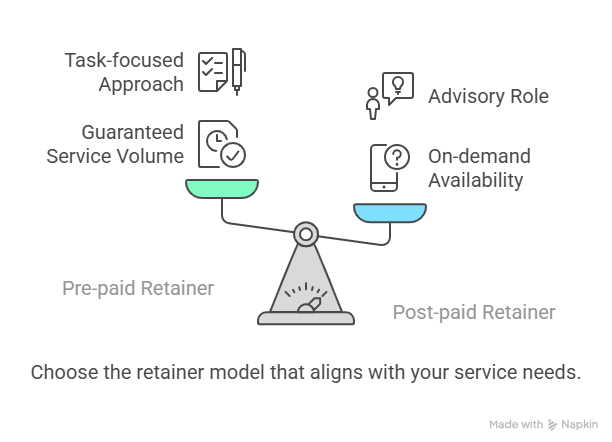
Voici pourquoi les agences qui s'appuient sur des modèles de fidélisation obtiennent de meilleurs résultats :
- Stabilité: Vous n'êtes pas en train de rechercher des dépôts ou d'attendre des approbations chaque semaine.
- Des relations plus solides avec les clients: Vous êtes impliqué de manière constante, et pas seulement lorsque les choses se brisent ou que les budgets sont revus à zéro.
- Croissance stratégique: Les mandats ouvrent la voie à une planification à long terme, qu'il s'agisse de feuilles de route trimestrielles, de cycles de tests A/B ou de pipelines de contenu.
- Meilleure planification des ressources: Lorsque vous savez ce qui vous attend, vous pouvez allouer la bande passante, les outils et les talents en conséquence.
Donc, si vous ne parvenez toujours pas à « Facturer une fois le logo créé », il est peut-être temps de repenser votre modèle.
Idées fausses courantes sur les dispositifs de retenue
- « Les clients ne veulent pas d'honoraires » : Non, ils faire quand ils en comprennent la valeur. Les clients veulent des résultats constants, des délais d'exécution rapides et une équipe qui connaît leur activité. Un mandat définit les attentes et facilite la collaboration.
- « Les dispositifs de retenue sont synonymes de moins de flexibilité » : Faux. Un dispositif de retenue intelligent comprend une lunette fixe plus une lunette flexible. Cela pourrait signifier 20 heures de travail de base et 5 heures pour des besoins ponctuels. La flexibilité est intégrée, mais clairement définie.
- « Seules les grandes agences peuvent y parvenir » : Les dispositifs de retenue ne sont pas une question de taille. Ils concernent maturité du processus. Si votre agence peut définir les livrables, suivre les heures et rendre compte des résultats, vous pouvez établir un mandat. Que vous soyez 3 ou 30 personnes.
- « Les mandats nous enferment dans un travail ennuyeux » : Pas si vous les positionnez correctement. Les mandats donnent de meilleurs résultats lorsqu'ils sont liés à des résultats, et non à des extrants. Il peut s'agir de la performance en matière de génération de prospects, de l'engagement social, de la visibilité SEO, et non de « X blogs et Y designs ».
Les dispositifs de retenue sont-ils toujours la bonne solution ?
Réponse courte : non. Mais ils conviennent probablement à plus de clients que vous ne le pensez.
Les dispositifs de retenue fonctionnent mieux lorsque :
- Vos services sont continus ou cycliques (par exemple, le référencement, la gestion de la réputation, le marketing de contenu, les publicités payantes).
- Les clients ont des objectifs à long terme qui nécessitent une exécution cohérente.
- Vous avez déjà établi une certaine confiance et ils sont prêts à investir dans une valeur continue.
Ils ne travailler quand :
- Le champ d'application n'est pas clair ou change constamment.
- Vous n'avez pas validé vos processus ou vos délais de livraison.
- Vous ou le client considérez la relation comme transactionnelle.
En cas de doute, commencez par une période d'essai de 3 mois. Cela abaisse la barrière, donne aux deux parties le temps de s'adapter et ouvre la porte à des ventes incitatives ultérieures.
Comment structurer un contrat de mandat solide
Des revenus prévisibles sont le rêve de toutes les agences, mais ce rêve s'éteint rapidement sans une structure de rémunération appropriée.

Alors, comment mettre en place un mandat qui fonctionne pour vous et vos clients ?
Étendue du travail : soyez précis ou excusez
Commencez par définir clairement ce que vous faites et ce que tu n'es pas.
Supposons qu'un client vous engage pour une « assistance sur les réseaux sociaux ». Une semaine plus tard, ils demandent des Reels quotidiens, des réponses au service client et des publicités payantes complètes. Vous pensiez publier cinq articles par semaine. Ils pensent que vous êtes leur service marketing 24 heures sur 24, 7 jours sur 7.
C'est pourquoi la portée est primordiale.
Utilisez des livrables clairs tels que :
- « 12 publications Instagram par mois (y compris les graphiques et les légendes) »
- « Deux séries de commentaires par livrable »
- « Appel d'enregistrement hebdomadaire de 30 minutes via Zoom »
Dressez la liste de ce qui est inclus et de ce qui ne l'est pas. Cela évitera des conversations embarrassantes plus tard, comme « Je pensais que les pages de destination faisaient partie de l'offre ? »
Conseil de pro : Ajoutez une clause « ce qui est hors du champ d'application ». Exemple : « La rédaction pour les publicités payantes n'est pas incluse et sera citée séparément. »
Structure tarifaire : fixe, hiérarchisée ou basée sur l'utilisation ?
Votre tarification doit refléter la valeur que vous apportez et les efforts que cela demande. Il existe trois modèles courants :
- Frais mensuels fixes
C'est bien si la charge de travail reste constante. Par exemple : « Vous recevrez 4 articles de blog, 2 newsletters et une assistance SEO de base pour 2 500$ par mois. »
C'est simple, propre et idéal pour la conservation de contenu à long terme ou la maintenance continue du Web.
- Packages à plusieurs niveaux
Offrez de la flexibilité à vos clients tout en gardant le contrôle. Comme :
- Démarreur: 2 posts + 1 rapport
- Croissance: 4 publications + 2 rapports + appel stratégique
- Échelle: calendrier de contenu complet, implémentation et tableau de bord analytique
Cela ressemble à un menu et les clients aiment avoir le choix.
- En fonction de l'utilisation ou de la banque d'heures
Mieux vaut que la charge de travail change chaque mois. Supposons que vous vendiez des heures en bloc (par exemple 20 heures par mois à 150$ de l'heure). Les clients utilisent ce dont ils ont besoin, mais le temps non utilisé n'est pas reconduit.
Quel que soit le modèle tarifaire que vous choisissez, ne facturez pas uniquement pour le temps. Facturer pour résultats. Si vous générez des prospects, rédigez des e-mails à taux de conversion élevé ou corrigez le référencement local, fixez le prix comme un partenaire et non comme un preneur de tâches.
Conseil : Quel que soit votre modèle de tarification, assurez-vous que le processus de facturation est simple. Consacrez votre temps à la mise en place d'un système qui fonctionne pour vous et votre client.
Durée et renouvellement : définissez les limites dès le départ
C'est là que trop d'agences tâtonnent. Ne faites pas d'acomptes à durée indéterminée et par répartition. C'est juste un projet qui n'est pas clair.
Définissez un terme clair.
- 3 mois le minimum vous donne le temps de montrer la valeur
- 6 ou 12 mois pour des objectifs plus ambitieux tels que le renforcement de la marque ou la génération de prospects
Définissez également :
- Renouvellement automatique termes
- Délai de préavis (généralement 30 jours) pour que chaque partie mette fin aux choses
- Que se passe-t-il s'ils vous espionnent (oui, ça arrive)
Vous voulez éviter l'e-mail « nous allons suspendre les choses pendant un moment » droit avant l'échéance du loyer.
Mesures de performance et rapports : prouvez la valeur
Vous ne pouvez pas gérer ce que vous ne mesurez pas, pas plus que votre client. Faites preuve de transparence en ce qui concerne :
- Ce que vous allez rapporter
- À quelle fréquence vous allez partager les résultats
- À quoi ressemble le succès
Exemple: Si votre mandat inclut des services de référencement, définissez des objectifs tels que la croissance organique du trafic, l'amélioration du classement ou les taux de clics.
Utilisez des tableaux de bord tels que Google Looker Studio, AgencyAnalytics ou les outils de Synup pour mettre en valeur la valeur. Et ne vous contentez pas de déposer un PDF, parlez-leur. Les rapports doivent démarrer les conversations, et non y mettre fin.
Par exemple :
- Si vous utilisez le référencement, suivez le mouvement des mots clés, le trafic du site et les clics
- S'il s'agit de marketing local, montrez comment Synup a contribué à améliorer les classements locaux, les avis ou l'engagement sur les profils Google
- Vous diffusez des publicités payantes ? Partagez le ROAS, les conversions de prospects et le coût par résultat
Utilisez des captures d'écran, des tableaux de bord et même de courtes vidéos Loom pour parcourir les rapports. La plupart des clients ne liront pas un PDF de 7 pages, mais regarderont une vidéo de 2 minutes expliquant pourquoi le nombre de prospects a doublé le mois dernier.
Convenez également d'avance sur que On dirait que c'est un succès. Une « meilleure visibilité » ne signifie rien si vous ne définissez pas ce que c'est.
Clause de résiliation : protégez la relation (et vous-même)
Vous aurez des clients de rêve. Et vous aurez ceux qui feront tout leur possible, qui remangeront chaque mot ou qui demanderont un remboursement le 29e jour. Un plan de sortie clair protège les deux parties.
Voici ce qu'il faut inclure :
- Préavis écrit de 30 jours pour mettre fin à l'accord
- Aucun remboursement pour les travaux déjà effectués
- Clause de pause: Si le client retarde les approbations ou les actifs pendant plus de X jours, vous interrompez le délai
- Frais de retard: Oui, eux aussi. Le temps c'est de l'argent.
Cela protège les deux parties. Traitez votre mandat comme une relation entre adultes, comme un contrat prénuptial pour les relations professionnelles. Tu as besoin d'une bretelle de sortie au cas où ça ne marcherait pas.
Modèles et exemples concrets
Ne rédigez pas de contrats à partir de zéro à 2 heures du matin. Voici des modèles de contrats d'honoraires éprouvés, adaptés aux agences et aux indépendants :
- Modèle de contrat de mandat gratuit — Simple et modifiable. Idéal pour les consultants individuels ou les petites agences.
- Modèle de contrat de mandat (PandaDoc) — Comprend des sections relatives à la portée, aux paiements, aux renouvellements et à la propriété intellectuelle.
- Modèle de contrat d'acompte mensuel gratuit de Bonsai — Idéal si vous proposez des services différents chaque mois. Convient parfaitement aux équipes de contenu, de conception ou de développement.
Personnalisez-les. Ne vous contentez pas de saisir votre nom et de l'envoyer. Personnalisez le libellé, les livrables et les termes en fonction de chaque client. Si vous n'êtes pas sûr, demandez à un avocat spécialisé dans les contrats de l'examiner. La tranquillité d'esprit en vaut la peine.
Vendre des honoraires : stratégies pour convertir les clients
Avez-vous déjà présenté un mandat et entendu : « Faisons-en une seule fois pour l'instant » ? La plupart des clients ne sont pas immédiatement convaincus à l'idée de payer mensuellement pour quelque chose qu'ils ne comprennent pas parfaitement.
C'est donc à vous de changer cela en leur montrant qu'un acompte n'est pas une dépense. C'est un investissement dans la cohérence, la stratégie et la rapidité.
Voici comment procéder.
Commencez par le pourquoi, de leur point de vue
Les clients ne pensent pas à votre besoin de revenus prévisibles. Ils pensent à leur problèmes. Des choses comme :
- « Nous n'avons jamais le temps de corriger notre référencement. »
- « Nos annonces ne sont plus à jour, mais personne ne les gère. »
- « Nous voulons plus d'avis, mais nous n'avons pas de système. »
Commencez votre présentation par là. Commencez par aborder les problèmes dont ils vous ont déjà parlé. Ensuite, encadrez le mandat comme un moyen de résoudre ces problèmes avant ils deviennent coûteux.
Dites quelque chose comme :
« Un acompte signifie que vous ne repartez pas de zéro tous les mois. Je serai à vos côtés en permanence, pour mettre à jour vos fiches d'entreprises, suivre les résultats, optimiser le contenu, sans que vous ayez besoin de me rebriefer à chaque fois. »
Cette ligne fait plusieurs choses :
- Cela vous positionne en tant que partenaire et non en tant que fournisseur
- Il met en évidence les temps ils/elles économiseront
- Cela donne l'impression que le travail est proactif et non réactif
Montrez ce qu'ils obtiennent réellement
Si votre mandat n'est que du « support » ou du « conseil », c'est trop vague. Les clients n'achètent pas l'imprécision. Alors épelez-le.
Décomposez-le en activités mensuelles réelles. Par exemple :
- « Nous mettrons à jour votre profil d'entreprise Google et plus de 50 annonces en ligne à l'aide de Synup. »
- « Nous gérerons votre stratégie d'évaluation, répondrons aux avis, demanderons de nouveaux avis et suivrons les sentiments. »
- « Vous obtiendrez un rapport de référencement local sur le trafic et la visibilité, ainsi qu'une session de stratégie. »
Rendez-le visuel. Mettez-le dans un format de calendrier. Montrez ce qui se passe au cours des mois 1, 2 et 3. Quand ils voient l'élan, la valeur devient évidente.
Et incluez toujours un appel récurrent ou un enregistrement. C'est là que vous maintenez une relation solide et que vous harmonisez les résultats.
Parlez de prévisibilité, mais rendez-la tangible
Ne dites pas « résultats prévisibles ». C'est du jargon. Donnez-leur plutôt des scénarios.
Dis :
« À l'heure actuelle, chaque fois que quelque chose tombe en panne ou doit être mis à jour, c'est le chaos. Vous envoyez un e-mail à cinq personnes, et il faut une semaine pour le réparer. Un acompte corrige cela. Il vous suffit de me l'envoyer, et c'est fait. Pas de retards ni de va-et-vient. »
Ou :
« Au lieu de poursuivre Google pour corriger votre annonce lorsqu'elle se détraque, je détecterai les problèmes rapidement. C'est ce que la surveillance continue nous permet de faire. »
L'essentiel est de connecter le dispositif de retenue à la tranquillité d'esprit. Pas seulement des indicateurs de performance. Parce que la plupart des clients sentir la douleur des retards et des problèmes de communication plus qu'ils ne se soucient du classement des mots clés.
Positionnez-le comme étant rentable et non pas bon marché
Autre piège : essayer de justifier votre acompte en le qualifiant de « moins cher que la réalisation de projets ».
C'est vrai, parfois. Mais ne le faites pas passer pour un plan de réduction.
Au lieu de cela, recadrez-le comme suit :
« Vous bénéficierez d'un flux constant de mises à jour, de contenu et d'optimisation pour un tarif mensuel forfaitaire. Cela signifie qu'il n'y a pas de coûts imprévus, pas de factures ponctuelles et pas de temps perdu à demander de nouveaux devis. »
Vous ne vendez pas de l'épargne. Vous vendez de la certitude.
Comparez également le coût à quelque chose de familier. Dis :
« Vous dépensez probablement plus pour une publication sponsorisée que pour 30 jours de référencement local et de gestion des avis. Mais lequel instaure une confiance à long terme ? »
Cela vaut mieux que n'importe quel tableau de prix.
Surmonter le refoulement habituel
Voici comment gérer les objections les plus courantes sans avoir l'air robotique :
« Nous voulons d'abord tester les choses. »
Votre réponse :
« Tout à fait juste. C'est pourquoi nous commençons par une fenêtre de 3 mois. C'est suffisamment de temps pour suivre l'évolution de la visibilité locale, du volume d'avis ou même du trafic. Je vous enverrai un rapport d'avancement complet à la fin de chaque mois afin que vous puissiez voir ce qui fonctionne. »
« Et si nos besoins changeaient chaque mois ? »
Votre réponse :
« Ensuite, nous ajustons les livrables. Vous saurez toujours ce qui est inclus chaque mois, et nous nous mettrons d'accord sur les priorités. Vous n'êtes pas enfermé dans des tâches rigides. Vous êtes en train de bloquer la progression. »
« Et si on ne l'utilise pas tout le temps ? »
Votre réponse :
« Le temps non utilisé n'est pas synonyme de perte de valeur. J'utiliserai cet espace pour optimiser ce qui est déjà en place. Par exemple, améliorer les anciennes listes, tester les modifications apportées aux métadonnées ou renforcer votre stratégie de réponse aux avis. » Voici une autre solution :
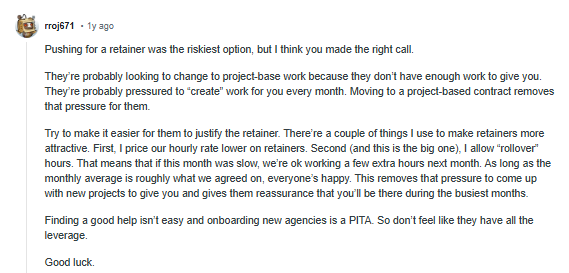
Vous faites preuve de flexibilité, sans ouvrir la porte à une quelconque dérive de la lunette.
Ce qu'il faut apporter sur le terrain
Vous clôturerez davantage de contrats si vous arrêtez de traiter le pitch comme un appel de vente et plutôt comme une session de travail.
Apportez donc des preuves, des histoires et des maquettes.
- Afficher les résultats précédents: « Ce client a constaté une augmentation de 28 % de son trafic local en 90 jours grâce à Synup et à un léger système de fidélisation du référencement. »
- Partagez un exemple de plan: « Voici à quoi ressembleraient vos 60 premiers jours. »
- Proposez une courte vidéo présentant les performances actuelles des annonces et la manière dont vous comptez les améliorer.
Laissez-les voir à quoi ressemble réellement la « valeur continue » dans la pratique.
En résumé...
Un modèle de rémunération solide n'est pas seulement bénéfique pour les revenus des agences, il est également meilleur pour les résultats de vos clients. De plus, un bon modèle ne se contente pas d'approvisionner votre compte bancaire. Cela vous donne l'espace nécessaire pour vous concentrer sur la stratégie. Cela donne à votre équipe de la cohérence et une marge de manœuvre. Et cela donne à vos clients un chemin clair et mesurable vers des résultats.
Si vous voulez commencer en force, procédez comme suit :
- Organisez vos services en fonction des résultats, et non des heures.
- Définissez des attentes claires en ce qui concerne la portée, les rapports et la communication.
- Commencez par les clients qui vous font déjà confiance, puis évoluez à partir de là.
Questions fréquemment posées
Qu'est-ce qu'un mandat d'agence ?
Il s'agit d'un contrat de facturation récurrente dans le cadre duquel votre agence s'engage à fournir des services spécifiques chaque mois pour un montant forfaitaire. C'est comme un abonnement à un service assorti d'une responsabilité stratégique.
Comment structurez-vous un mandat ?
Divisez-le en deux catégories : les principaux livrables (ce qui est inclus chaque mois) et la portée flexible (heures ou tâches réservées aux besoins spéciaux). Définissez toujours les jalons de l'examen et la structure de reporting.
The 10 Rules of Awesomeness
1. Find Your Niche
It's extremely important that you establish your expertise in a niche that you understand, have worked with for a long time and have a passion for.
The basic tenets of local SEO hold true in all sectors, regardless of the type of business/industry. However, if you know the niche well enough, it will be easier for you to learn and execute your plan for a particular business. Moreover, when the business owner or decision-maker sees that you really understand their industry, they are more likely to open up to you and trust you. Dentists will not be impressed if you start talking about how they can optimize their marketing plan for customers who are looking for orthodontists now, will they?
When you understand the industry, it will be easier for you to leverage your knowledge of the industry in your favour. It will also be easier for you to understand where the money is. If it's a niche where people can't afford to pay you more than couple of hundred dollars a month it wouldn't make sense to pitch your whole plethora of services. At the end of the day you are running a business and you need to be profitable.
The massive advantage that you will have by being niche-focused when you're selling to the local business audience cannot be overstated. After all, even large local business sales-focused companies like Yodle and ReachLocal use industry-specific reviews to sell to the market.
Read about how industry guru Mike Ramsey is trying to build a multi-million dollar local marketing business focused on lawyers.
How to go about finding your niche:
- Look at your existing customers. If a majority of them are coming from one industry, then it makes sense to go after that particular niche, provided there is enough demand.
- Figure out the markets that need Local SEO and online marketing the most in your local area. For instance, if you're in a state with fluctuating weather like Alabama, you should be targeting HVAC contractors who are probably going to be in high demand.
- If all else fails you can go after the golden targets: legal services, home services and medical services. These industries all are very good prospects for local SEO services; you should just pick one of them.
2. Brand Yourself
For a business owner to trust your words and for people to refer your work or seek your expertise, they need to know you. For that to happen, you'll need to do some amount of groundwork that helps establish your expertise on a given subject/industry. After all, as a marketing professional, you should practice what you preach and market yourself.
You will need to create a solid presence for yourself, both on and offline.
#1 - Establish your own website and social media following
Make sure you have an active presence on Facebook, Twitter and Google+; post regular updates on these sites and respond to interactions frequently. You can use software like Buffer and HootSuite to save time managing your social media accounts.
#2 - Frequent industry blogs and forums
Provide regular and easy to understand content updates in industry forums and blogs that business owners visit often. Take genuine interest and involve yourself in local chamber of commerce, business gatherings and social events. It will help develop trust and bonding before you go ahead and try to sell your services to the businesses.
For example, if you're focusing on contractors, you might want to visit forums like Contractor Talk regularly; there are plenty of online forums focused on specific industries that you can participate in and engage with potential customers. Just do a Google search for forums relevant to the industry you're attacking and you're bound to find a few.
#3 - Work towards becoming a "thought leader"
The holy grail of Local SEO marketing is becoming a "thought leader" or someone who creates content that is widely shared. This can result in a surge in customer inflow and can gradually get you to the point where you're regularly obtaining a few customers a week.
i. Create useful content on your blog on a weekly basis; and by useful, we mean something that will help a local business (your potential customer) get more from their online marketing or business
ii. Start a newsletter and curate this list to include businesses who want to hear from you.
iii. Write on other blogs to leverage on their existing readership. This can be a good start when you don't have a brand and would much rather have your content reach a larger audience.
3. Partner Up
It is extremely difficult for small firms to survive the local SEO game alone. You will need people to build, develop and execute your plans. You will need designers, web developers, content writers, assistance in responding to phone calls & emails to sustain your business and grow.
Find likeminded people that you can work with. People who have the specific skillsets that complement your own will help you support and sustain growth in the long run. It will also give you the opportunity to specialize and work on things that you do best rather than trying to be a generalist
While partnering, it is also important that you "spread the riches" - don't try to micro-manage or be involved in everything. Focus on your core expertise (i.e online marketing) and split other work (content, design etc.) with others. What you'll need to do is create a "mastermind group" - eventually, as group members succeed, they will also start sharing with you and you'll all grow together.
5. Lead Generation
Closing sales is one thing, but generating leads is something completely different. Lead generation is mostly a numbers game where you'll need to get as many (high quality) leads as you possibly can in the process of doing it.
The general mantra with this activity is experiment, track and expand the strategy that's working out well for you.
Typical sources for leads include:
#1 - Cold Calls
The most abused lead-gen strategy there is. Works for some, doesn't work for many. The secret to this strategy is volume, a proper script and quick hand-off to a real consultant. Stay away from this strategy if you're afraid of rejection.
#2 - Direct Mail Campaign
Contrary to popular belief and opinion, this still works. While sending out direct mail, it makes sense to personalize it a little bit. Go one step further and tell them something they don't already know.
#3 - Your Online Presence
Making the best use of the internet to make sure that your name is visible to people who could end up potential clients is an absolute necessity. Some of the things that you can do to achieve this are:
- Optimizing your website
- Posting on SMB forums
- Referrals
#4 - The Conventional Approach
The fact that people spend most of their time online has not rendered the conventional way of doing things obsolete. The good ol’ tried and tested methods to reach your customers and thereby keep the leads coming in are:
- Advertisements on Online Directories/Newspaper sites
- Flyers
- Radio ads
- TV Ads
- Newspaper Ads
Each of them have their pros and cons. You will need to try them you to find out what suits your need the best.
4. Solution Provider
Let's be honest - we are all skeptical of the dreaded sales pitch. The over the top promises, the hyperbole, the lure of the Promised Land that fails to be delivered.
Rather than selling them a cookie cutter rehearsed sales pitch, provide a solution to their problem.
#1 - Do your homework about the business before you go in for the meeting or get ready to send out a proposal
Do they have a website? If yes, is it responsive? Are their title tags optimized? How big is the company? How long have they been in business?
You should be able to find all of this information fairly easily just by looking at a business' website. To make things easier, analyze the important steps in the Local SEO Checklist to see if the business is doing everything right.
#2 - Take a look at how their business is doing online, and more importantly, what their competitors are doing
Nothing closes a sale as fast as telling a business owner what their competitors are doing and how that's helping them outrank. It drives the point across with evidence and helps you sell better. You can use a whole host of tools to check on competitor data including Synup, Ahrefs, Spyfu and SEMRush
#3 - Ask the business owner the most important questions you need to ask without wasting their time
Before you take the time and effort to prepare a proposal for a business, make sure you spend a few minutes with them on the phone asking the right questions. Ensure that your questions are short, concise, easy to understand and don't take a long time to answer. The last thing you want to do is waste the business owner’s time on something you could have already gotten the answer for looking at their website.
Some questions I like asking when I'm doing pre-sales are:
- Are they doing any online marketing right now? Have they used consultants in the past?
- What kind of results have they seen with online marketing so far?
- What kind of budget do they have for online marketing?
You should structure your questions based on what you think is important to ask.
#4 - Create an uncomplicated, easy-to-follow proposal
Break everything down to steps that the business can implement with your expertise that can help improve their performance. Show the business owner in steps what you'll be doing, how long it'll take and how it'll impact their performance.
This will help them understand how you're going to go about doing things and will also allay any unrealistic expectations they may have of you.
Be straightforward and promise what your can deliver. Believe me, it will take your business relationship to a new level when businesses know that you are not bullshitting them.
The business owner will actually appreciate the fact that someone is being honest with them unlike 1000 other cold callers who all promise them the first spot in Google overnight.
6. Customers First
Every business has their strengths and unique set of problems. Do not go to meet a prospect thinking you know exactly what their problems are. You'll end up alienating the client by trying to find problems to suit that services you can sell to them rather than finding a solution to the problems they are facing.
Listen to them closely, ask probing questions for more information and take a genuine interest in their affairs before you start talking money. They will appreciate it if you tell them that you may not be a good fit for the kind of services they are looking for. It’s good to say ‘NO’ upfront, rather than delaying the inevitable.
7. Don't talk Jargon
We all understand that SEO is a complex process that takes a while to understand. Do not expect your customers to be familiar with the technical terms that are prevalent in the industry.
Do not use jargons like robots.txt, xml, disavow, penguin, panda, pigeon, goat, unicorn etc and complicate things. Most business owners will not understand what these words mean.
All they understand is "leads" and "revenue". Educating the client on what we do is part of the job description. However, we do need to know where to draw the line, as we are not trying to train them to become local SEO specialists.
8. Diversify Revenue
Cashflow is the lifeblood of every small business. Keep tracking that at all times and make sure that one client alone doesn't make up more than 15-20% of your revenue source.
1. One big client = bad news
The biggest mistake you can make running your consulting business is to have more than 50% of your revenue coming from one client. A lot of us have been guilty of doing this and have learnt our lesson the hard way. Always keep looking for ways in which you can diversify your revenues to come from multiple clients.
You shouldn't be a single-client’s “hostage”, so to speak, and should have the freedom and liberty to drop a client if you need to.
2. Always collect money upfront
There is nothing wrong in collecting an advance from your customers. You are providing top quality services and need to be paid well in advance. If you feel guilty collecting money from a customer, or have a customer who doesn't trust you paying in advance, you should just fire them.
Never make the mistake of giving a customer a line of credit, whenever a client asks you this, ask them if they would work without getting payment from their own customers.
9. Engage
Even the experts need help at times in this ever changing world of Local SEO. With the number of animals & birds (a-la penguin, panda, pigeon etc.,) the search engines are throwing into the mix every few months one needs to take a step back and learn about the latest and greatest in the industry.
Here are our top 3 forums run and frequented by industry experts who can be of tremendous help -
- Linda Buquet's : Local Search Forum
- Max Minzer's : Local Search Google+ community
- Local U forum : Frequented by industry stalwarts
10. Sell
Now that you know all the things that you need to do to become an expert at local SEO sales, the only that is left to do is sell your product. Though I agree that this is much easier said than done, there are a few things that you can do or keep in mind before you successfully close deals week in, week out.
1 Set Targets
There is no absolute number when it comes to the sales targets that one should set, for it differs depending on the size of your firm. In any case, the intention behind founding any firm is to grow, and having a high yet achievable sales target for the growth of your firm will be instrumental in making you reach greater heights. A growth rate of 20% in sales will be a fantastic target to maintain, though it is completely up to you to come up with a practical figure on this front. Set a target that will help your firm scale rapidly with time.
2 Make Friends
Nobody wants to be the client of a firm that doesn't make them feel like that they're their biggest customer. May it be with your partners or your clients, make sure that you have a healthy relationship with them that makes them feel happy to be associated with you. Establish a dedicated client success/support team for this purpose. This doesn't mean that you shouldn't cut ties with a customer that demands more for less or treats you badly. Weed them out if you need to. But make sure that the customers that you have feel comforted by the fact that you are taking care of their online marketing and local SEO. This especially helps when the client likes you a lot, to the point where they start recommending what a good job your firm is doing to other businesses. And other businesses = more potential customers, and more potential customers = more sales
3 Practice
This might seem like something too basic to read so far down the post, but no expert became one without months (if not years) of practice and experience. Countless hours of trying and failing at something is the key to honing your skills, because failing helps you develop an instinct that will tell you what will work when you're selling and what won't. Don't expect the time spent reading and writing about the subject to get yourself to the top. As much as they will help you, the only way to truly becoming a rockstar in sales is to sell, sell and sell even more.