Create a High-Converting Marketing Plan for Your Agency
Learn how to build a high-converting agency marketing plan. Get proven steps, examples, and strategies to create a predictable marketing strategy that converts.

If you run a digital or creative agency, you already know how your own marketing always seems to take the back seat. Client deadlines always come first, and before you know it, another quarter’s gone with no solid agency marketing plan in place.
You might’ve tried fixing that before. Maybe you got a few templates, asked an AI tool for help, or copied what another agency posted on LinkedIn. But after a few hours of staring at the spreadsheets, it starts feeling like too much.
Most agencies don’t fail because they’re bad at marketing. They fail because they don’t market themselves with the same precision they give clients.
A solid marketing plan isn’t about big budgets or flashy funnels. It’s about having a roadmap that helps you attract the right clients, not random ones. When you get your digital agency marketing plan right, you can predict revenue, scale smartly, and stop living in that “referral-only” zone.
That’s something we’ve seen again and again in our decade-old experience working with agencies and small to medium-sized businesses at Synup. The agencies that grow fast all have one thing in common: they treat their own brand like their biggest client.
TL;DR: How to Build a High-Converting Marketing Plan for Your Agency
Why a Plan Matters
- Most agencies are great at client work but dial down on their own marketing.
- A clear plan helps with steady leads, better positioning, and predictable growth.
4 Essentials to Build Your Foundation
- ICP: Know who you’re best suited to serve.
- UVP: Clearly state what makes your agency stand out.
- Messaging: Keep your tone, visuals, and language consistent across all touchpoints.
- Offer Design: Build entry, core, and upsell packages that match buyer intent.
8 Steps to Build and Run the Plan
- Audit your pipeline, channels, and results.
- Create 2 to 3 client personas based on real data.
- Set SMART goals and weekly KPIs.
- Choose 2 to 3 channels that match your bandwidth and buyer journey.
- Budget time/money across inbound, outbound, and partnerships.
- Map out a 6-month rollout.
- Assign owners, track execution, and optimize monthly.
- Refine based on what performs.
Where to Show Up and Why
- Inbound: Blogs, case studies, LinkedIn posts, and short videos build trust.
- Outbound: Personalised cold outreach + retargeting ads = faster results.
- Partnerships: Team up with service providers to co-market and share leads.
- Channel Strategy by Stage:
- Solo: Inbound + LinkedIn
- Growing: Add outreach and referrals
- Established: Add PR, paid, and partnerships
Tools That Help You Stay Consistent
- Plan with Notion/ClickUp or Sheets (roadmap, KPIs, lessons learned).
- Track what matters: traffic, leads, conversions, CAC, LTV.
- Automate follow-ups and lead nurturing through a clean CRM.
- Use templates: ICP docs, content calendar, budget tracker.
Scaling Without Losing Your Grip
- Focus on what already works, drop what doesn’t.
- Show results through case studies and proof-driven content.
- Start by milking free visibility channels before jumping into paid.
- Retarget warm leads with testimonial and FAQ ads.
- Revisit your ICPs and budget every quarter.
- Don’t scale by doing more; scale by doing less, better.
Why Your Agency Needs a Dedicated Marketing Plan
Most agencies start with hope and hustle. You get a few early clients, some referrals roll in, and things look great… until they don’t. Then comes the quiet months, the missed projections, and the panic of “where’s the next lead coming from?”
61% of marketers say lead generation is their biggest challenge. When you add the fact that acquiring a new client can cost 5 to 25 times more than retaining one, it becomes obvious why a solid agency marketing plan is non-negotiable.
Yet most agencies don’t have the best systems for either (acquiring or retaining clients).
When you “wing it,” you face:
- Inconsistent pipelines: You never know when the next client is coming.
- Unclear positioning: Prospects can’t tell what makes you different.
- Revenue chaos: You can’t forecast income or plan hiring.
Most founders depend on referrals, hope someone shares their post, or send out the same cold emails that 100 other agencies are sending.
But a dedicated ad agency marketing plan changes everything. It gives you:
- Predictable client acquisition systems.
- A clear agency positioning framework that attracts ideal clients.
- A way to track ROI from every channel, campaign, or collaboration.
Before we go deeper, let’s see what a high-converting agency marketing strategy looks like.
Core Elements of a High-Converting Agency Marketing Plan
You don’t need a 50-slide PowerPoint to have an effective agency marketing strategy. What you need is focus. Every scalable agency plan rests on four pillars: ICP, UVP, messaging, and offer design.
- Ideal Client Profile (ICP)
Your ICP isn’t just “businesses that need digital marketing.” You need to get granular and think like a data analyst, not a creative.
Ask yourself:
- What industries do your best clients come from? (retail, eCommerce, healthcare, etc.) If your clients tend to come from a range of industries, try relying more on the other grouping tactics, as below.
- What’s their size? 10-person startup or 100+ employee company?
- What’s their marketing budget range for their service tier? $300/month or $3000?
- Who makes the buying decision? (Founder, marketing lead, or CMO?)
- What’s their biggest frustration? (Low lead flow, inconsistent branding, poor ROI?)
Example: Instead of saying “we help small businesses,” define it as “we help mid-sized DTC wellness brands doing $1–5M ARR improve ROAS through optimized ad funnels.” That clarity shapes your outreach, content topics, and pricing.
You can’t plan anything until you understand it. That’s exactly why your ICP needs to come first.
- Unique Value Proposition (UVP)
Why should anyone pick you over 50 other agencies doing the same thing?
Maybe it’s your niche mastery. Maybe it’s a proven workflow or specific guarantee. A good UVP turns you from just another agency into the go-to team for X problem.
For instance, a small performance marketing shop in Austin grew to $4M ARR by focusing only on DTC coffee brands. They built deep expertise, gathered benchmarks, and charged premium retainers because clients trusted their focus.
Your UVP should spell out the what, how, and why you’re different in one line.
- Positioning & Messaging
Everything from your website to your pitch deck should sound like it’s coming from the same voice.
If your homepage says you’re a “growth partner,” your outreach emails shouldn’t sound like a used-car pitch. Build consistency in tone, visuals, and language. Positioning helps clients decide whether to even reply to you.
A marketing plan for agency teams without positioning is like running ads with no targeting. You might get clicks, but you won't get conversions.
- Offer Design
A good agency marketing plan also includes smart offer packaging. Don’t sell everything to everyone. Instead, structure offers by intent:
- Entry-level: quick-win audits, strategy sessions, or one-month trials.
- Core retainer: your flagship services, like local SEO + content or PPC + website design.
- Upsells: analytics dashboards, CRM integration, or monthly consulting.
Example: A digital agency serving SMBs might start with a $100 audit offer that converts just 30% of the buyers, leading to a $400/month retainer.
Step-by-Step: Building the Perfect Marketing Plan
If you want a marketing strategy for a digital agency that delivers ROI, follow these eight steps. Each one builds on the last.
Step 1: Situation Analysis
Start with a cold, honest audit. Look at your analytics: where are your leads coming from, and what’s their quality? How’s your proposal win rate? What channels drive profit, not just traffic?
Compare your numbers with benchmarks. Identify your best-performing services, your strongest client industries, and any leaks in your process. That’s your baseline.
Step 2: Define Your Target Audience & ICP
Study your last ten clients. Which ones were profitable, low-maintenance, and actually fun to work with? That’s your ICP data.
So, start by creating 2–3 clear profiles. Example:
- “B2B Brad: tech startup founder, $8K–$15K/month budget, needs demand gen but hates long contracts.”
- “Local Lisa: franchise owner, wants brand visibility in 5+ locations, prefers full-service digital retainers.”
Each persona helps you tailor your messaging, content, and outreach, instead of throwing everything at everyone.
Step 3: Set Clear Goals & KPIs
Without measurable goals, every campaign becomes a guessing game.
Use the SMART model:
Specific: What do you want to achieve with your campaigns?
Measurable: How will you track success?
Achievable: Set realistic goals with respect to your time and resources.
Relevant: Ensure the goal supports your larger objectives.
Time-bound: Assign a clear deadline for everyone.
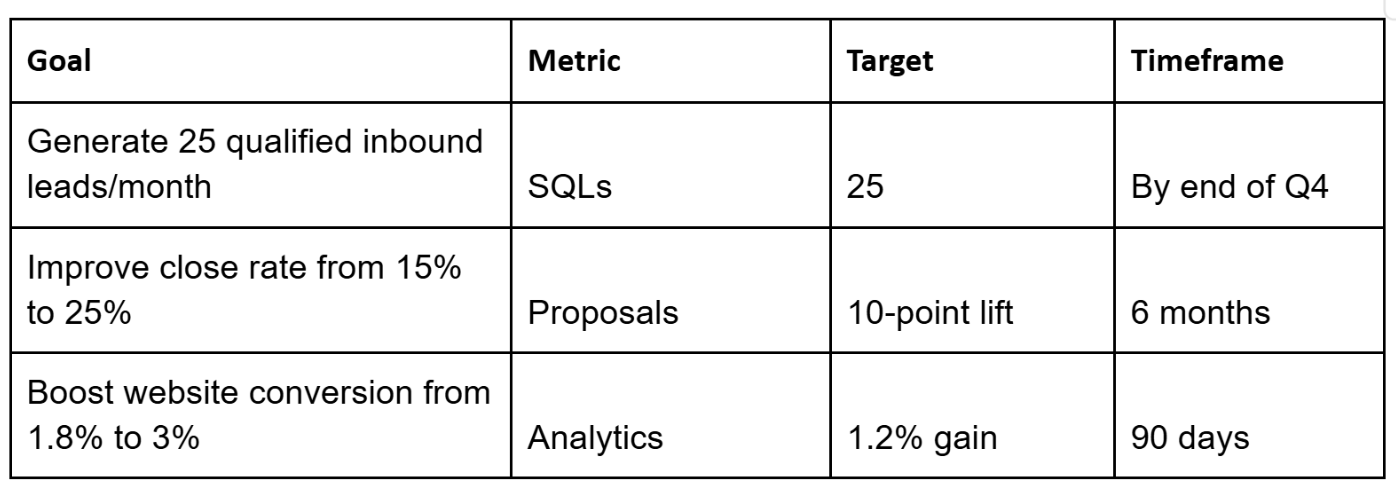
These KPIs form the core of your agency's digital strategy. Track them weekly or automate through dashboards.
Read: 11 Most Important Marketing Agency KPIs to Track Every Month
Step 4: Craft Your Strategy & Positioning
Your positioning should tell clients exactly what problem you solve and what result they can expect.
Example: We help brands reduce ad waste by 30% in 60 days using first-party data.
Make it measurable. Then back it with proofs like testimonials, screenshots, and before-and-after metrics. Prospects trust what they can see.
The aim is that your SEO, design, or advertising agency strategy be easily explainable in under 10 seconds; if you can’t do that, your clients can’t either.
Step 5: Choose the Right Channels & Tactics
Don’t spread yourself too thin. Pick a few channels and master them.
- Inbound: Blog content, SEO, webinars, or a simple newsletter.
- Outbound: Personalized LinkedIn DMs or cold emails with value upfront.
- Partnerships: Collaborate with software vendors, PR firms, or design studios.
- Retention: Check-ins, loyalty discounts, referral bonuses.
For instance, you can land several discovery calls each month just by posting one thought-leadership thread weekly on LinkedIn and following up manually.
Step 6: Budgeting & Resource Allocation
Even lean budgets need proper structure. Consider splitting it like this:
- 40% on inbound content (blogs, videos, SEO).
- 30% on outbound (ads, email tools, event sponsorships).
- 20% on partnerships or influencer collabs.
- 10% on automation (CRM, analytics, dashboards).
If you’re alone, time is your currency; block five hours weekly for marketing. That's non-negotiable.
Step 7: Execution Timeline & Roll-out
Turn your agency marketing plan into a roadmap. If you're an SEO or content marketing agency, here's an example 6-month timeline you can work with:
- Month 1: Audit + ICP + positioning.
- Month 2: Content plan + CRM setup.
- Month 3: Launch inbound campaigns + test ads.
- Month 4–5: Optimize funnels, collect feedback.
- Month 6: Scale channels that perform, cut the rest.
Use Trello, Notion, or ClickUp to assign owners and track KPIs. A plan is only useful if executed consistently.
Step 8: Monitoring & Optimization
Marketing plans aren’t set in stone. Review monthly, track KPIs, and adjust messaging when needed.
The best agencies run learning cycles; every quarter, they ask:
- What worked best?
- What underperformed?
- What new experiments should we try next?
The best agencies don’t get it perfect in one shot. They keep refining nonstop.
Best Practices & Advanced Tactics
Building an agency marketing plan looks like the easy part. But sticking to it and making it deliver real, paying clients is where the real difficulty is. The agencies that grow year after year have learned to nail down the systems. Here are the practices and tactics that really move the needle.
Social Proof That Sells
Every founder says, “Our work speaks for itself.” But it doesn’t; not unless you make it speak. Your client results should be front and center across everything you do. In an ad agency marketing plan, for instance, social proof is your strongest sales asset.
You can start immediately by building “results stories” instead of plain testimonials. Pick one client win and show:
- What life looked like before they found you (low lead flow, burnt ad spend, clunky site).
- What you changed (your process, strategy, or campaign setup).
- What happened next (clear numbers: “inbound leads up 240%,” or “CPL dropped by 60%”).
Finish with a short client comment, something natural, something not polished to Grammarly fluency level. You don’t need corporate language either; you just need authenticity.
Push these stories out everywhere: emails, proposals, LinkedIn, even short videos. Treat them like ads for your own credibility.
92% of people trust recommendations from peers more than ads.
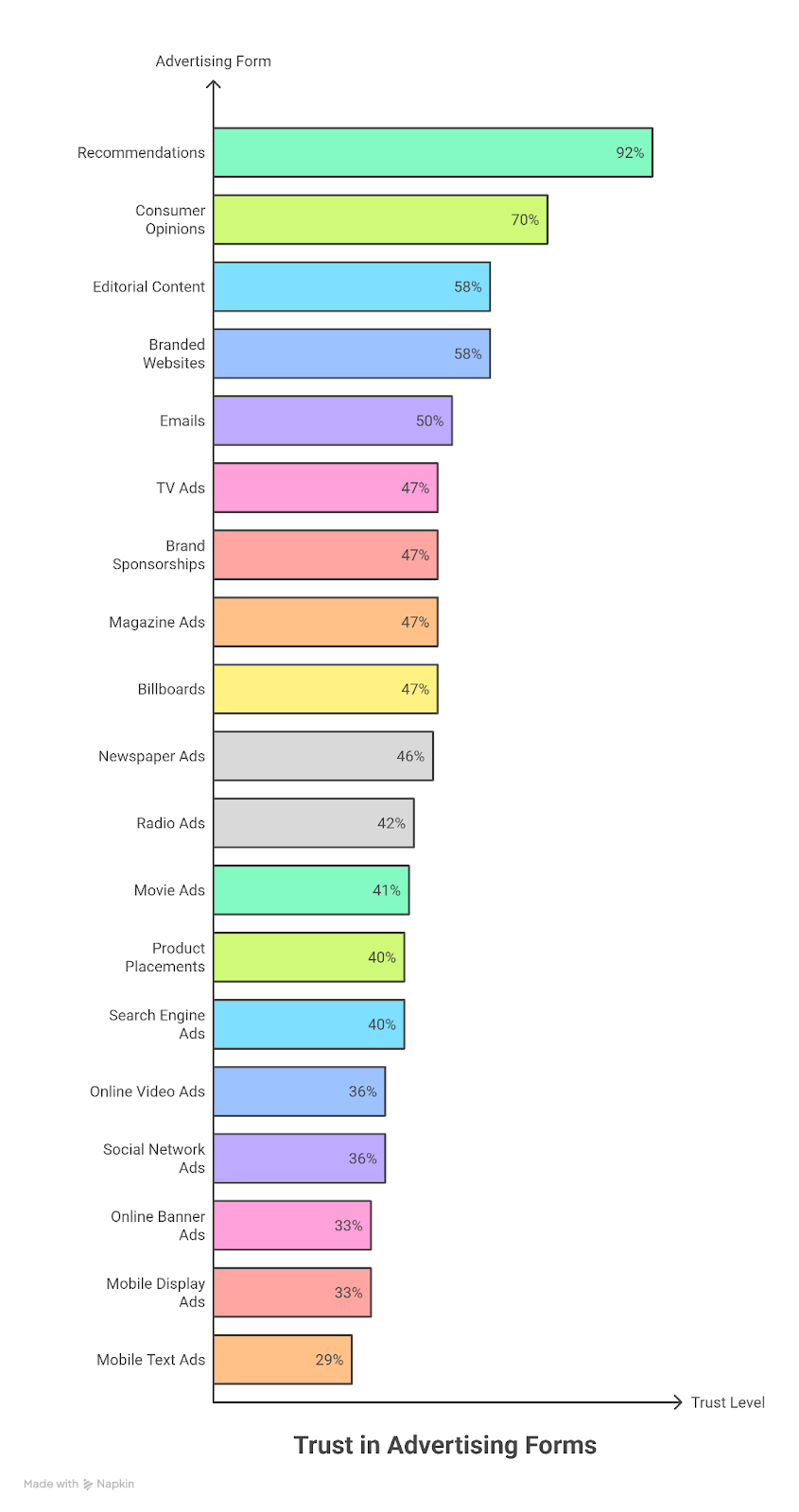
Source: Napkin/Nielsen
The same psychology drives agency buyers. When they see a business like theirs get results, they stop scrolling and start asking for a call.
Build a Content Engine That Runs Without You
Every marketing plan for a digital agency needs a system that keeps the lights on even when you’re swamped with client work. Here’s a simple rhythm that works for small teams:
- One long-form blog a month.
- One “lesson learned” post weekly on LinkedIn.
- A 10-minute video once every two weeks, then chop it up into 6–8 short clips.
That’s enough to look active on every platform. Pick three content buckets:
- Teach something: quick wins, step-by-step fixes.
- Show your process: behind the scenes of how your team solves problems.
- Share proof: what you did, why it worked, what changed.
For example, a two-person agency we know records one Zoom chat per month where they review a client’s ad campaign performance. They repurpose that into a blog, a newsletter snippet, and a two-minute video clip. That one call fuels a month’s worth of content.
Read: How to Repurpose Blog Content for Social Media
Referral Loops That Don’t Rely on Luck
The best referrals come from structure and not chance. A great agency marketing strategy builds them in from the start.
Don’t wait for clients to “remember” you. Build it into your offboarding. After the final delivery call, send a thank-you note with a single referral link or ask them directly:
“Hey, if you know anyone struggling with what we just fixed for you, feel free to send them our way. We’ll give you a small credit or discount on your next project.”
Next, create partnerships. Find 3–4 complementary businesses; maybe a PR firm, a developer, or a SaaS partner. Then, set up cross-promotions. They mention you in their newsletters, you mention them in yours.
Funnels That Close
A good marketing strategy for advertising agency teams doesn’t end at getting leads. It guides people from the first click to the final invoice. Here’s how to build a simple funnel that closes deals:
- Start with email: Once someone downloads your resource or subscribes, send them a short welcome note, then show value over 2 to 3 weeks, from quick tips to results story, and an invite to talk.
- Layer in retargeting: Run small-budget ads (even $5 to $10/day) targeting website visitors who read your blogs or watched your videos. Keep it personal. Ads that show testimonials or address cost concerns work best.
- Offer a quick audit or strategy call: Once they’ve seen your brand a few times, that low-commitment offer gets them off the fence.
Follow-ups win you deals. Companies that respond within 5 minutes are 100 times more likely to qualify leads. Find a way to automate that.
Check Out: How To Automate Sales Follow-Ups To Book More Clients
Keep Testing Everything
A digital agency strategy that never changes will eventually stop working. The market moves fast, so should you.
Test your pricing. Test your email openers. Test which type of social content brings more leads. Changing your cold email CTA from “Book a Call” to “Plan Your Next Campaign,” for instance, can instantly double your responses. Sometimes it’s that small.
Selecting Channels & Tactics That Work for Agencies
Now let’s talk about where to show up, because no matter how good your agency's digital strategy is, it’s useless if your audience never sees it.
Go All-In on Inbound
Inbound marketing is a long game. It builds reputation while you sleep. To leverage inbound marketing, focus on:
- SEO-driven blogs that target real search intent: Forget the “Top 10” fluff and try out value-driven topics like “how to get more visitors to many local store” or “how to optimize my google business profile”
- Social content: It’s still the most underrated sales channel for agency founders. Use it to share quick lessons, screenshots, or reflections from real projects on SMB-focused channels like Facebook, TikTok & Instagram.
- Case studies: One solid transformation story can pull in months of organic leads.
- Video explainers: A 2-minute clip explaining how you improved conversion rates can outperform a thousand-word blog.
If you’re not filling the top of your funnel, you can’t nurture anyone through it. Keep new eyes coming in, or everything else stops.
Mix in Smart Outbound
Outbound doesn’t have to feel spammy. Cold outreach still works. It’s just that lazy cold outreach doesn’t.
You can use Synup’s prospecting tool to get contact data for your target SMB accounts. And then use our SEO & website audits to find gaps in their online presence. Then write a pitch that converts. Mention something specific about their business. Keep it short, and end with curiosity.
Then combine it with targeted ads. If your ICP hangs out on LinkedIn, run short testimonial videos or quick before-and-after metrics as ads. Small budgets and big precision.
And don’t forget the offline side; niche conferences and networking events still close deals faster than any funnel. People buy from people. Remember?
Partnerships: The Shortcut to Scale
Partnerships are where small agencies punch above their weight. Find non-competing partners (like a web dev agency teaming up with a video crew) and co-host a webinar or write a shared guide. You both get visibility, credibility, and leads without doubling the work.
Be clear about what each side gets and how leads are tracked. When you do it right, it’s the most cost-efficient client acquisition tactic for agencies out there.
Content That Pulls Clients In
Don’t post for the algorithm. Post for trust. Three content themes work every time:
- Results stories: Quick recaps of how you solved a real problem.
- Behind the scenes: Show your process, including the tools, frameworks, and brainstorms.
- Lessons learned: Honest breakdowns of mistakes and what you fixed.
Choose Channels Based on Your Stage
Don’t copy what big agencies do. Choose channels that fit your bandwidth.
- Solo or early-stage: Focus on inbound content and social media outreach for low cost, high-impact reach.
- Scaling: Layer in outbound and referral loops for predictable growth.
- Mature: Add partnerships, speaking gigs, and paid placements for reach.
Every stage has its lane. Grow into yours instead of forcing a strategy that doesn’t fit your size.
Tools & Templates That Keep It Tight
A killer agency marketing plan is useless if your team can’t execute it. Tools don’t make strategy, but they make it manageable.
Plan and Track Everything
Use Notion, ClickUp, or even Google Sheets. It's not about drowning in software but staying organized. Have three tabs minimum:
- Roadmap: quarterly priorities.
- Goal tracker: metrics tied to real outcomes (leads, deals, revenue).
- Lessons learned: what to repeat and what to ditch next cycle.
Measure the Right Stuff
You don’t need dozens of dashboards but one clear view. Google Analytics for traffic, and Synup’s dashboard for local seo visibility, reputation, and campaign performance.
Keep CRM and Automation Simple
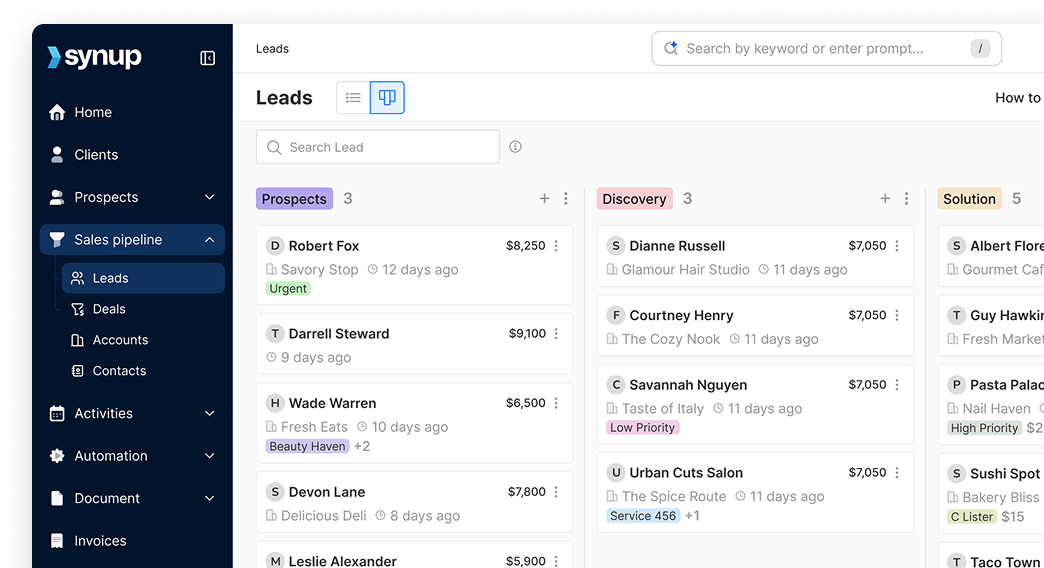
If you have too many follow-ups to make, automate them. Tools like Synup OS let you manage your pipeline, score leads, and schedule follow-ups automatically.
Use Plug-and-Play Templates
Speed matters. It makes sense to build once and reuse forever:
- ICP Worksheet: industry, size, pain points, budgets.
- Content Calendar: date, channel, topic, CTA, owner.
- Budget Tracker: spend, cost per lead, conversions, ROI.
Templates keep your agency strategy transparent, accountable, and easy to review when numbers dip.
Scaling Your Marketing Plan
Scaling your marketing plan for agency work is about rhythm.
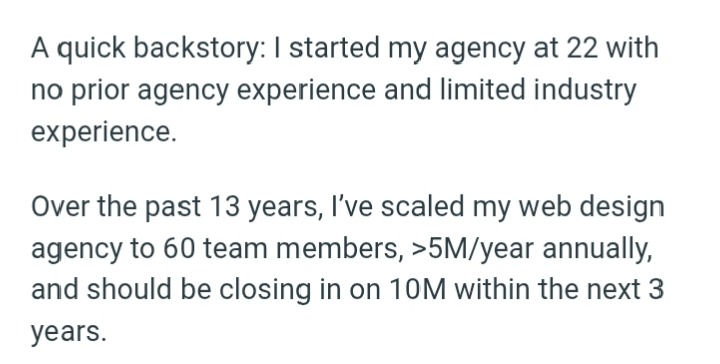
Take the story of one founder who started his web design agency at 22 with no industry connections or money, but persevered with skill and consistency. Over 13 years, he built a 60-person team and crossed $5M in yearly revenue, now pushing toward $10M.
Here are his lessons:
- Pick one niche and go deep before expanding.
- Keep showing proof with case studies, reviews, and visible results.
- Milk free channels like social, content, and directories until they stop giving.
- Reinvest profits into better tools and small ad tests.
Before paid ads, he built a process: record 2 videos a month, chop them into short clips, post daily, and engage every comment. That rhythm made his brand familiar in his space long before spending a cent.
When you start retargeting, focus on warm traffic first with your website visitors and newsletter readers. Run small-budget “reminder” ads: client testimonials, pricing breakdowns, and FAQ videos.
Keep goals flexible. As your team grows, update the ICPs, offers, and budgets quarterly. Bring in a growth lead once you’re struggling with too many campaigns yourself. Automate what you repeat, and keep tracking your customer acquisition cost (CAC) versus lifetime value (LTV). Remember that new clients still cost up to 25 times more to win than to retain. So keep old ones happy.
Scaling is not about doing more but repeating what works and deleting what doesn’t.
Conclusion & Next Steps
A high-performing agency marketing plan is about doing the right things repeatedly until growth becomes predictable.
An agency marketing plan requires consistency and a structured system grounded in data. Great agencies grow by planning, tracking, and continually improving.
Treat your agency like your best-paying client, and your marketing will finally start paying you back. Get your systems in order and commit to refining them every quarter. And when you’re ready to centralize everything, from lead tracking to visibility reports, Synup’s Agency OS keeps it all in one clean dashboard so you can grow without the tool sprawl. Start now. Your future clients are already searching for you.
Frequently Asked Questions
- What’s an agency marketing plan, and why does it matter?
It’s a structured roadmap that guides how your agency attracts, converts, and retains clients. It covers your audience, offers, channels, and KPIs so you’re not guessing where growth will come from. Without one, you’ll always be chasing leads instead of building predictable revenue.
- How do I figure out my ideal client profile (ICP)?
Start with the clients you liked working with; the ones who paid well, respected timelines, and got solid results. Look at what industry they’re in, how big they are, and what problems they usually face. That’s the kind of client you want more of.
- When should I update my agency marketing plan?
Every few months, or anytime something big shifts, like a new service, a team change, or a dip in results. A marketing plan isn’t something you write once and shelve. It should grow and change with your agency, just as everything else does.